 Real photograph
 Saltwater crocodile
Crocodylus porosus
say it krok-oh-DY-lus por-OH-sus
Why we love them
The saltwater crocodile is the largest reptile on Earth. A big male can grow to about six metres long, which is longer than a small car, and weigh as much as a thousand kilograms or more. Females are much smaller, usually staying under three metres. Their tough, scaly skin is dark on top and pale underneath.
These crocodiles live where warm rivers meet the sea, in muddy estuaries, mangrove swamps, and along the coast. They are strong swimmers and can move between saltwater and freshwater. You can find them from the east coast of India, across Southeast Asia, all the way to northern Australia.
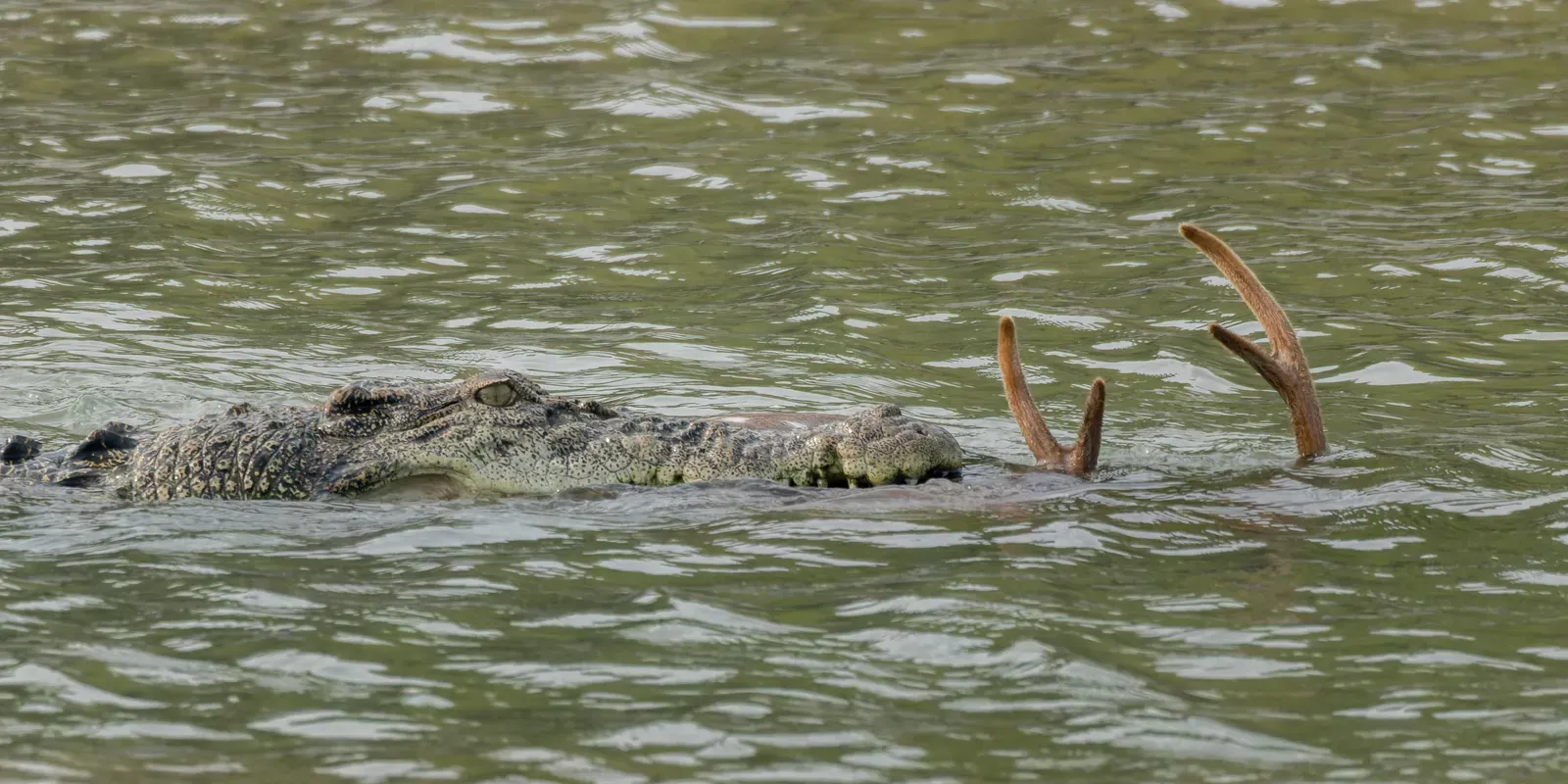
A saltwater crocodile is a patient hunter. It floats almost hidden in the water, with just its eyes and nose showing, and waits very quietly. When a fish, bird, or other animal comes close, the crocodile moves in a sudden, quick burst. It eats many kinds of food and can go a long time between meals.
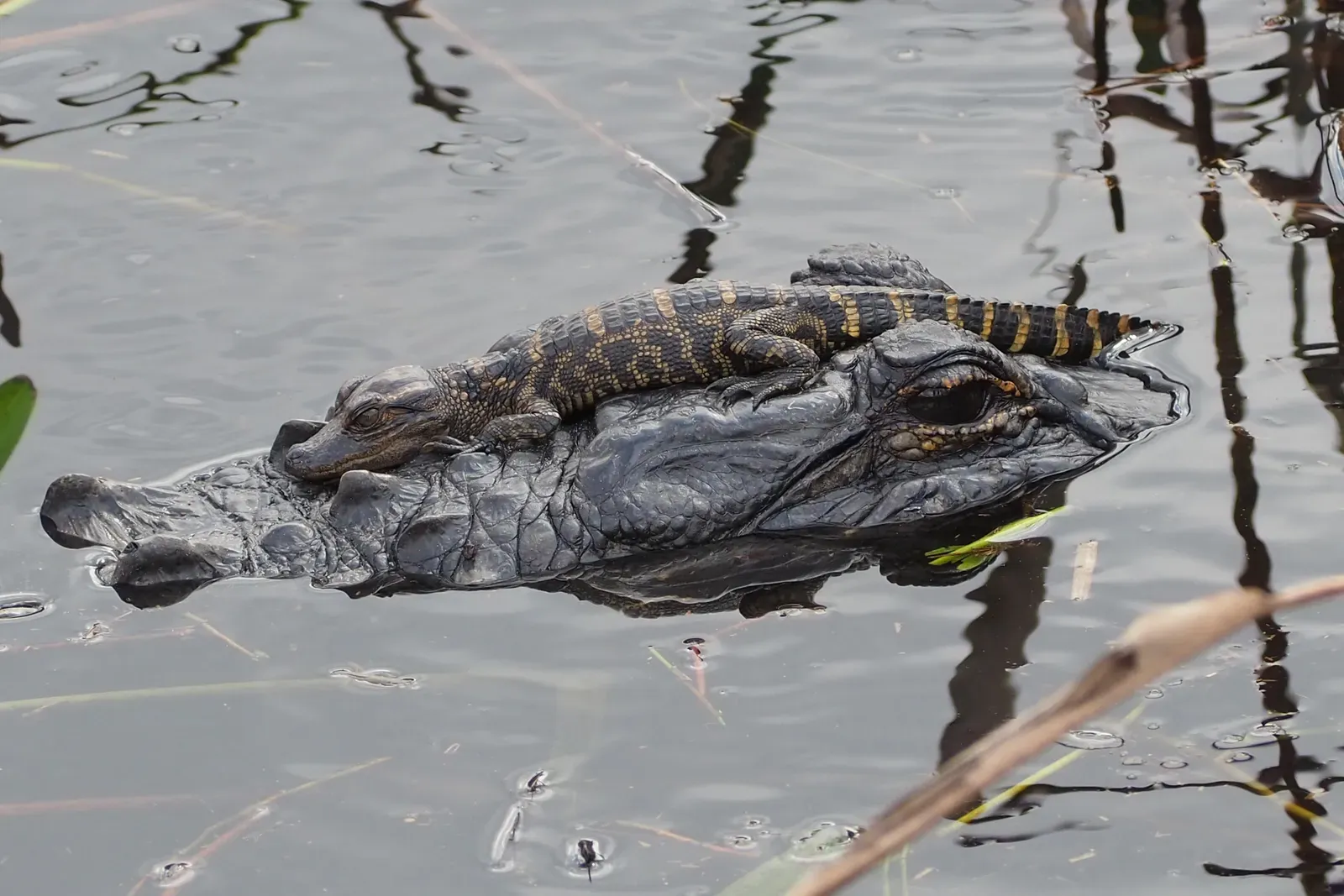
Baby crocodiles start out tiny. A mother builds a big nest from mud and plants and lays her eggs inside. She stays close by to guard them. When the babies are ready, they make little chirping sounds, and she carefully digs them out and carries them down to the water in her mouth, keeping them safe.
There are healthy numbers of saltwater crocodiles in the wild today, and experts list them as least concern. Long ago they were hunted for their skin, and in some places they are still hunted or lose the wild wetlands they need. Careful rules and protected areas help these ancient reptiles keep thriving.
My home
River, estuary, mangrove, wetland, coast
Where I live
Asia, Oceania
What I eat
Fish, crustaceans, birds, mammals
How long I am
2.5–6.3 m
How heavy I am
1500 kg
The saltwater crocodile is the biggest reptile alive today, and a large male can grow longer than a small car.
It is a patient hunter that waits very still and almost hidden in the water, then makes a fast surprise move.
A mother crocodile builds a big mound nest, guards her eggs, and gently carries her tiny hatchlings to the water in her mouth.
Every saltwater crocodile can feel happy, scared and loved — just like you.
Looking after my friends
Doing wellThere are lots of these animals in the wild right now. That is good news!
You can help by learning their names, keeping wild places clean, and telling someone why this animal matters.
Where this came from
- Crocodylus porosus (Saltwater Crocodile) — Red List Assessment — IUCN Red List of Threatened Species
- Crocodylus porosus (Saltwater crocodile) — Animal Diversity Web, University of Michigan Museum of Zoology
- Saltwater crocodile — Wikipedia