 Real photograph
 Chinese Giant Salamander
Andrias davidianus
say it CHY-neez JY-uhnt SAL-uh-man-der
Why we love them
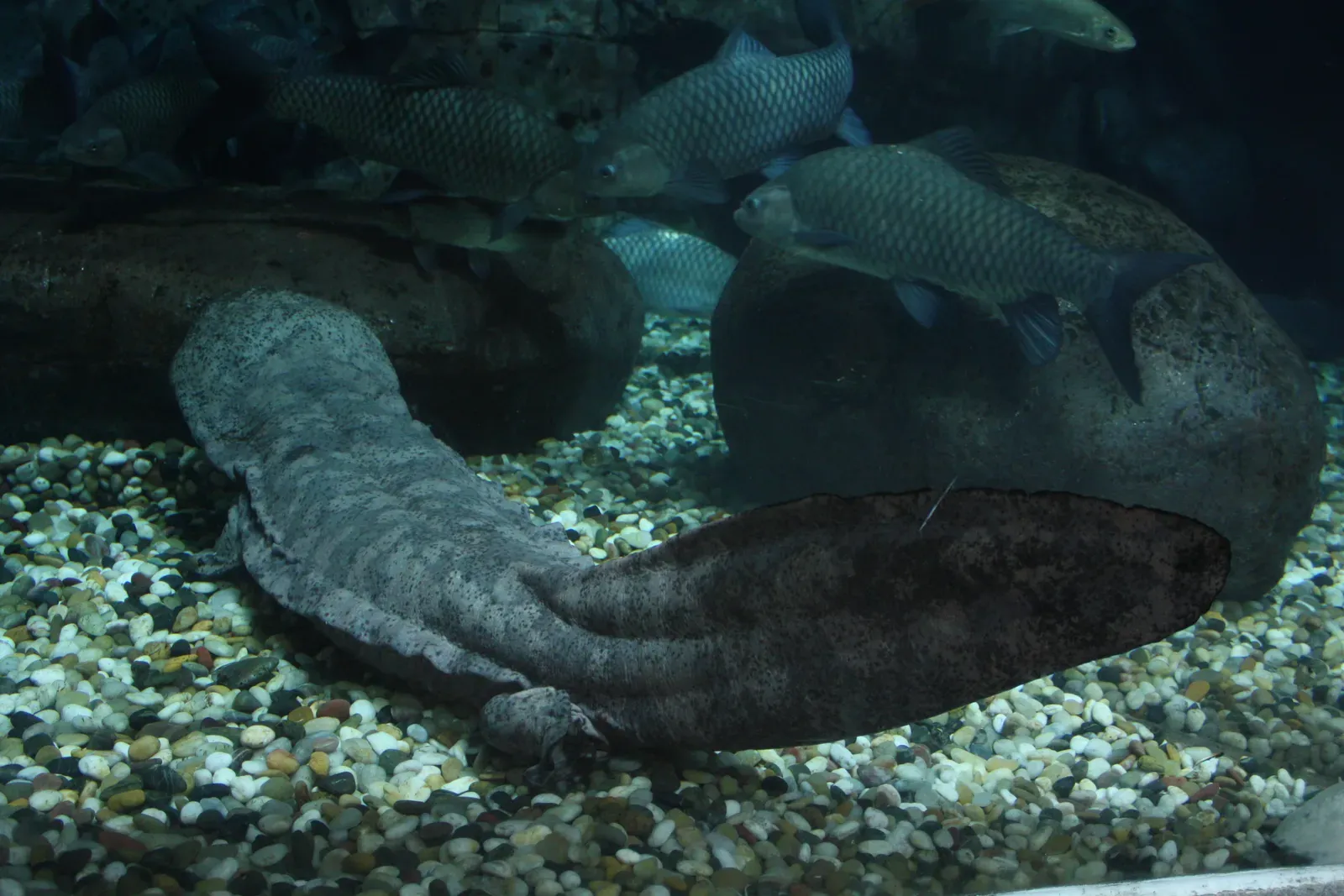
The Chinese giant salamander is a gentle giant of cool, clear mountain streams in China. It is one of the largest amphibians on Earth, and the biggest individuals can grow up to about 1.8 metres long, which is longer than most grown-ups are tall. With its wide, flat head, wrinkly brown skin, and slow, easy-going ways, it spends almost its whole life underwater, resting among rocks and hidden crevices along the stream bank.
Even though it is so big, this salamander is a calm and quiet animal. Its eyes are very small and it cannot see very well. Instead, it feels for its food using rows of little bumps along its body that sense the smallest ripples in the water. When a fish or crab swims close, the salamander can tell exactly where it is, even in dark, muddy water.
As a carnivore, the Chinese giant salamander eats freshwater crabs, fish, frogs, shrimp, insects, and worms. It likes cool water best and becomes sleepy and stops eating when the stream grows too warm. That is why it needs clean, chilly, fast- flowing mountain streams to feel at home, the kind of streams that tumble down through forested hills.
This wonderful animal is also very ancient. Its family has changed very little for millions of years, so it is sometimes called a living fossil. That means today’s giant salamanders look much like their long-ago relatives that shared the world with animals of the distant past. Meeting one is a little like meeting a creature from another time.
Sadly, the Chinese giant salamander is critically endangered, which means it is at great risk in the wild. Its numbers have fallen because too many were collected for food, because streams have been damaged or polluted, and because dams have changed the rivers. This is why people are working hard to protect it, cleaning up streams, guarding its home, and raising young salamanders to give this gentle giant of the mountains a brighter future.
My home
Mountain stream, river, freshwater, cave
Where I live
Asia
What I eat
Freshwater crabs, fish, frogs, shrimp, insects, worms
How long I am
1.8 m
How long I live
60 years
The Chinese giant salamander is one of the largest amphibians on Earth, with exceptional animals growing up to about 1.8 metres long, longer than most grown-ups are tall.
It has tiny eyes and cannot see very well, so it feels for its food using rows of little bumps along its body that sense the smallest ripples in the water.
Its family has changed very little for millions of years, which is why it is sometimes called a living fossil.
Every chinese giant salamander can feel happy, scared and loved — just like you.
Looking after my friends
Needs lots of helpVery few are left in the wild — and many kind people are working hard to save them.
You can help by learning their names, keeping wild places clean, and telling someone why this animal matters.
Where this came from
- Andrias davidianus (Chinese Giant Salamander) — Red List Assessment — IUCN Red List of Threatened Species
- Andrias davidianus (Chinese giant salamander) — Animal Diversity Web, University of Michigan Museum of Zoology
- Chinese giant salamander — Wikipedia