 Real photograph
 Cane Toad
Rhinella marina
say it KAYN TOHD
Why we love them
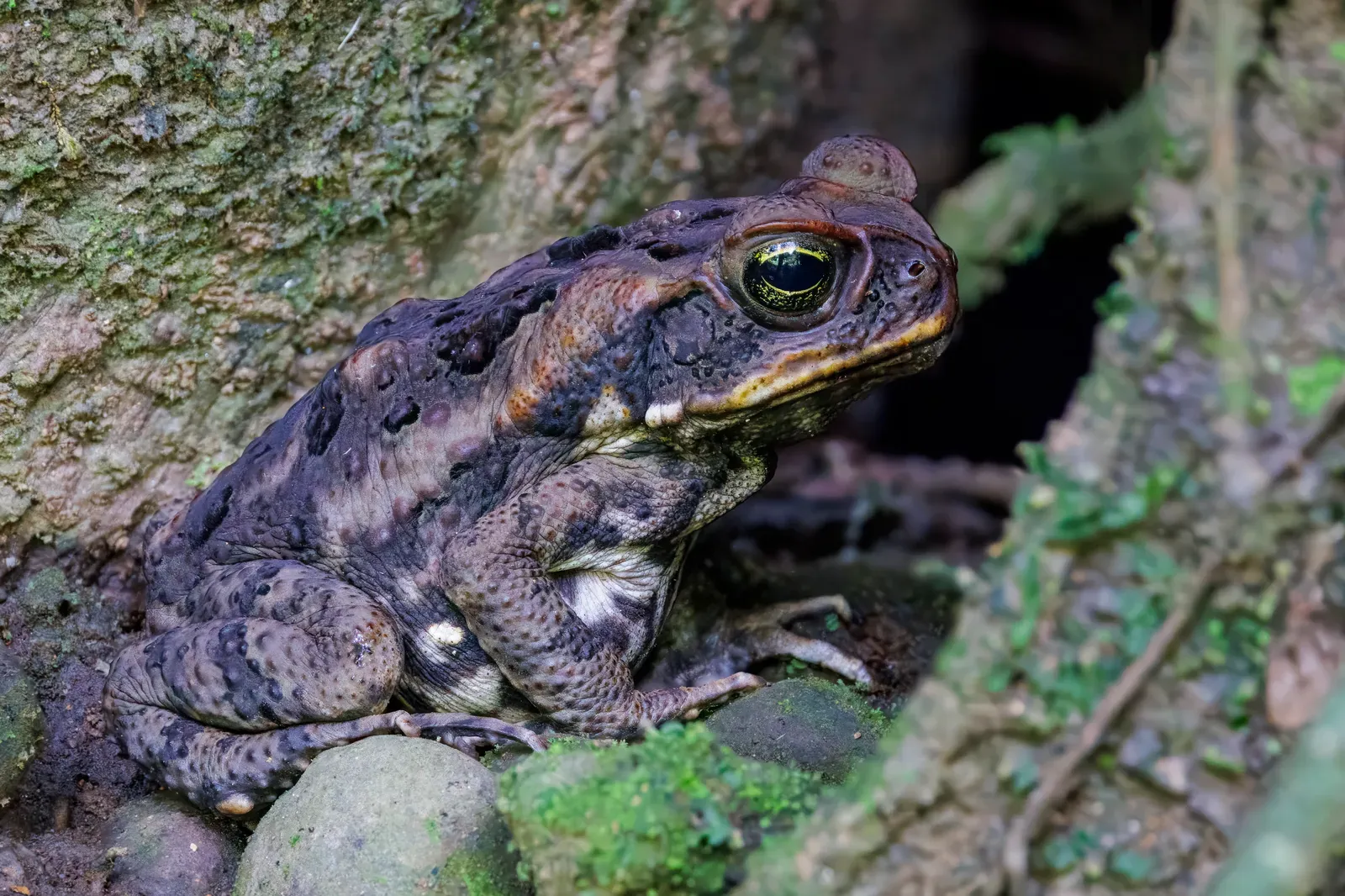
The cane toad is a big, chunky toad with dry, warty, brown or olive skin and bony ridges above its eyes. It is among the largest true toads. Most are about 10 to 15 centimetres long, but the biggest recorded females can reach a whopping 24 centimetres — nearly as wide as a dinner plate. Toads this large are quite a sight when they come out to hunt.
Like other toads, the cane toad is a patient hunter. It mostly comes out at night and snaps up almost anything that moves — beetles, ants, snails, and other little creatures. It even eats small mice sometimes. A cane toad finds its food by watching for movement and by using its good sense of smell.
Behind each eye, a cane toad has a large gland that makes a milky poison. When another animal bothers the toad, the gland lets out this fluid. The poison tastes very bad, so predators quickly learn to leave the toad alone. This clever defence helps the cane toad stay safe without having to run or fight.
Cane toads come from the warm lands of Central and South America, where they are just one ordinary animal among many. Long ago, people carried them to faraway places like Australia, hoping the toads would eat insects that damaged sugar-cane crops. The toads did not do that job very well, but they liked their new homes and spread across huge areas.
Because they are so good at surviving, cane toads are listed as Least Concern, which means there are plenty of them in the wild. In the places where they were brought by people, scientists and rangers now study them carefully to understand how they fit in and how to protect the local animals that share their home.
My home
Grassland, forest, wetland
Where I live
North America, South America, Oceania
What I eat
Insects, ants, beetles, snails, small rodents, invertebrates
How long I am
0.1–0.24 m
How long I live
10 years
The cane toad is among the largest true toads, and the biggest recorded females can grow up to 24 centimetres long — about the size of a dinner plate.
It makes a milky poison in two big glands behind its eyes, so other animals learn to leave it alone.
Cane toads come from Central and South America, but people carried them to places like Australia to eat crop insects, and there they spread far and wide.
Every cane toad can feel happy, scared and loved — just like you.
Looking after my friends
Doing wellThere are lots of these animals in the wild right now. That is good news!
You can help by learning their names, keeping wild places clean, and telling someone why this animal matters.
Where this came from
- Rhinella marina (Cane Toad) — Red List Assessment — IUCN Red List of Threatened Species
- Rhinella marina (Cane Toad) — Animal Diversity Web, University of Michigan Museum of Zoology
- Cane toad — Wikipedia