Today's animal friend · 19 July 2026
Plains Zebra: The Grassland Friend in a One-of-a-Kind Coat
No two plains zebras wear exactly the same stripes. Follow these alert, sociable grazers from a foal’s soft brown-and-white beginnings to the wide grasslands and savannas they call home—and discover a kind way to care about their future.
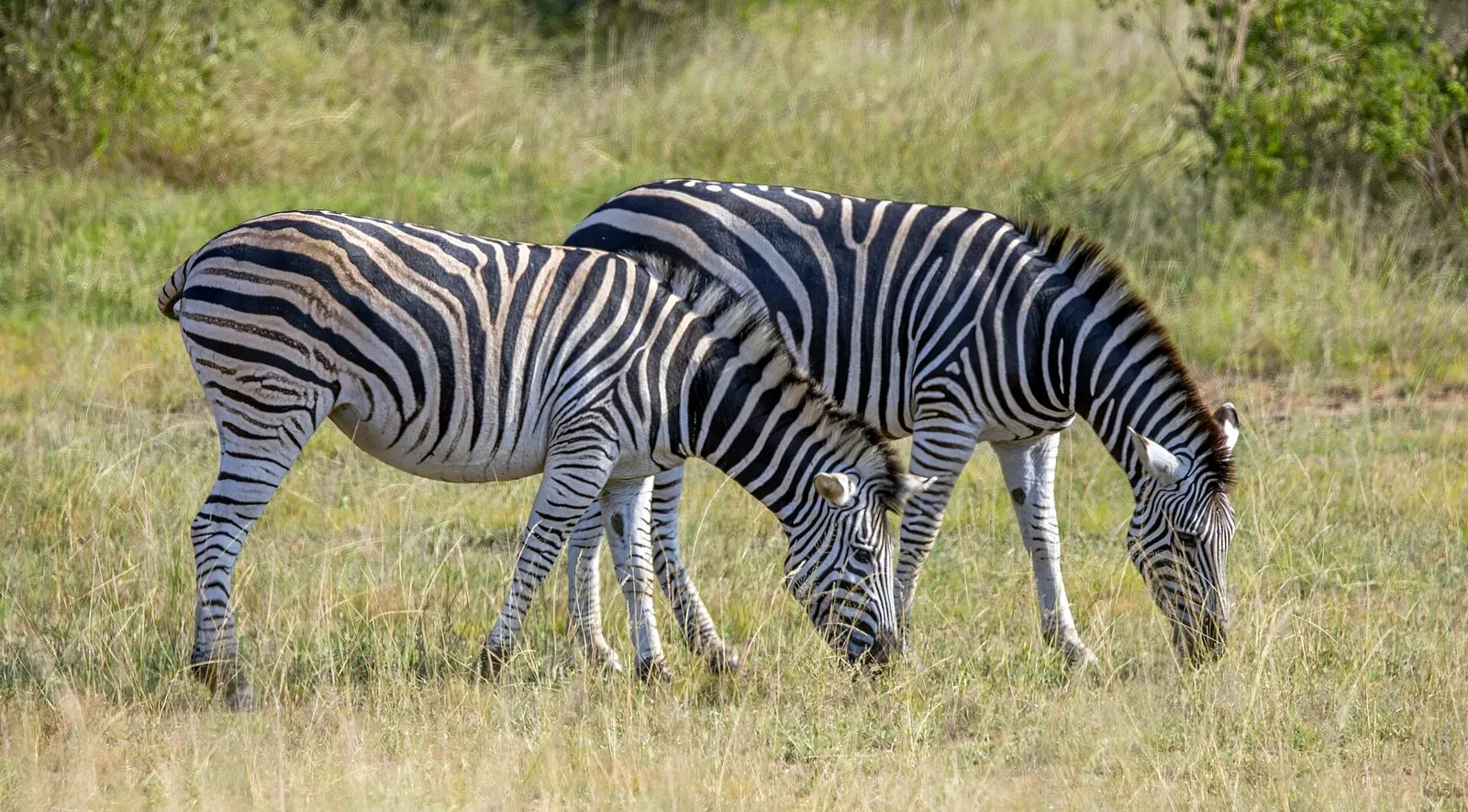
No two plains zebras wear exactly the same stripes. Follow these alert, sociable grazers from a foal’s soft brown-and-white beginnings to the wide grasslands and savannas they call home—and discover a kind way to care about their future.
A plains zebra is never just “a zebra”
At first glance, a plains zebra can look like a creature drawn with the world’s boldest black-and-white pen. Look again, though, and each animal becomes an individual. Every plains zebra has its own stripe pattern, with no two looking exactly alike. It is a lovely reminder that a herd is not one big blur of stripes: it is made of many distinct lives moving together across open country.
The plains zebra is also called the common zebra or Burchell’s zebra, and its scientific name is Equus quagga. It belongs to the horse family, Equidae, alongside other members of the genus Equus. With a sturdy, horse-shaped body, tall ears, and a dramatic coat, it is one of the most familiar wild animals of Africa—but familiar does not mean ordinary.
A grown plains zebra stands about 127 to 140 centimetres at the shoulder and measures roughly 217 to 246 centimetres from head to body. Adults vary in weight, too. Those figures are useful for imagining its size, but the more memorable picture is this: a powerful grazing animal built for an active life in broad, sunny landscapes.
Evidence: IUCN Red List of Threatened Species: Equus quagga (Plains Zebra) — IUCN Red List conservation status; Wikipedia (Wikimedia Foundation): Plains zebra — Wikipedia; Animal Diversity Web, University of Michigan Museum of Zoology: Equus quagga — Animal Diversity Web
Its home is the open African landscape
Plains zebras live in parts of eastern and southern Africa, in a distribution that is now fragmented rather than one unbroken sweep across the continent. Their preferred places include grasslands, savannas, and open woodland. They generally avoid true desert, dense rainforest, and permanent wetlands. In other words, they belong where there is room to move, grass to crop, and a clear view across the land.
They are mainly active in daytime and around twilight. A zebra’s day can be understood as a steady search for food and water: walking, grazing, listening, and keeping pace with companions. Plains zebras need regular access to drinking water, so water shapes where they can comfortably live.
At certain times, family groups and other zebras may gather into much larger herds and travel or commute seasonally toward fresh grass. It is tempting to picture this only as a grand wildlife spectacle, but it is also a practical response to a changing landscape. A green patch today may be dry later; open routes help a herd reach what it needs.
Evidence: Wikipedia (Wikimedia Foundation): Plains zebra — Wikipedia; IUCN Red List of Threatened Species: Equus quagga (Plains Zebra) — IUCN Red List conservation status; Animal Diversity Web, University of Michigan Museum of Zoology: Equus quagga — Animal Diversity Web
Grass is the main course—and family is close behind
Plains zebras are herbivores. Grass is their main food, and they may also eat leaves, twigs, and other browse when grass is poor. Their grazing matters beyond a single hungry zebra: they are part of the living pattern of African grasslands, sharing open country with other hoofed animals and, in turn, being prey for large carnivores such as lions and spotted hyenas.
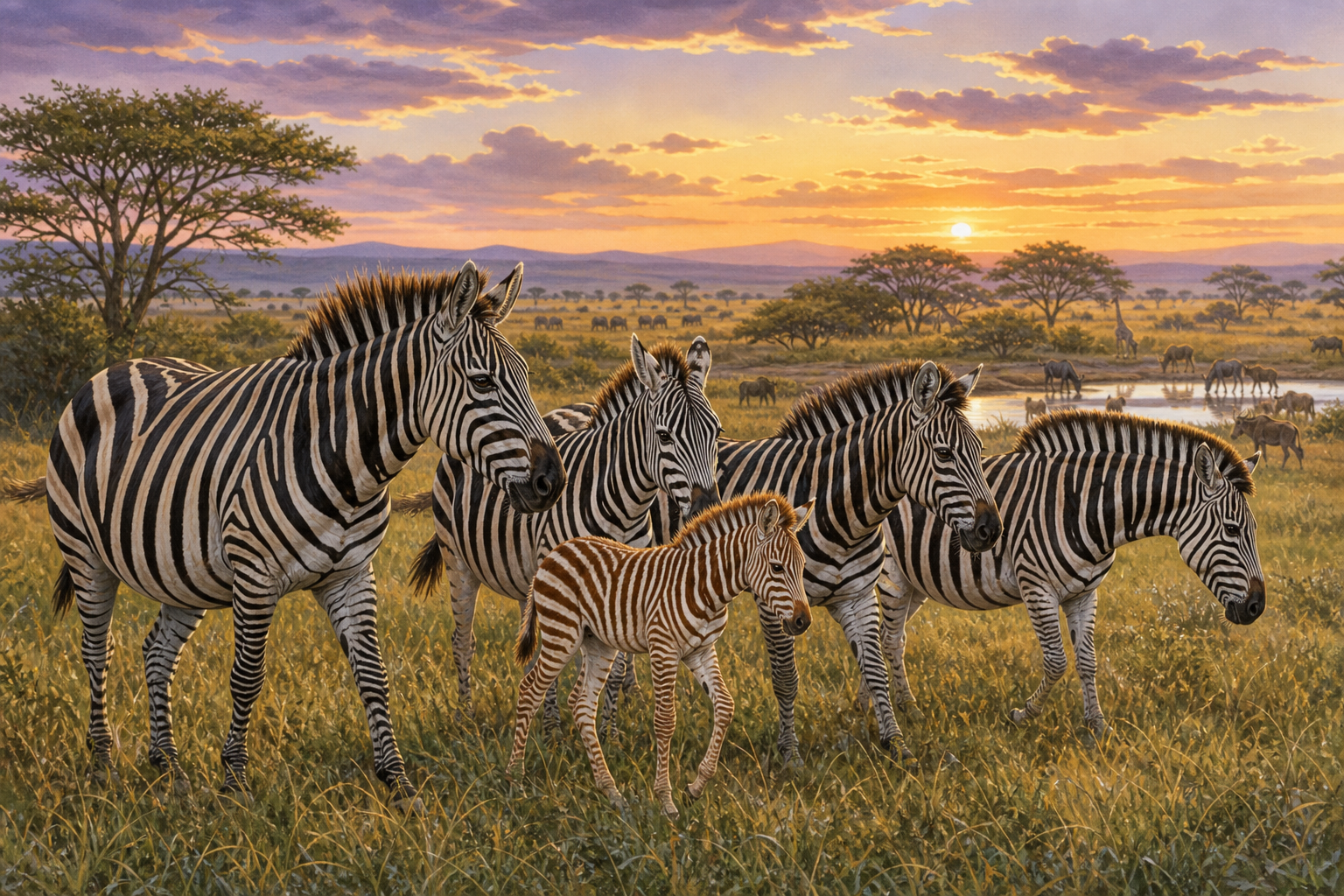
Their social world is just as important as their menu. Plains zebras commonly live in family groups led by one stallion with several mares and their foals. There can also be bachelor groups, while several family groups may join a larger herd. These gatherings are mobile, not a rigid crowd, and the relationships within a small family unit can remain especially important.
A foal begins life in a softer brown-and-white coat, which gradually changes to the familiar black-and-white look as it grows. Imagine learning your first steps while surrounded by striped adults, moving through grass together. For a young zebra, the herd is not scenery. It is its family, company, and daily world.
Evidence: Wikipedia (Wikimedia Foundation): Plains zebra — Wikipedia; IUCN Red List of Threatened Species: Equus quagga (Plains Zebra) — IUCN Red List conservation status; Animal Diversity Web, University of Michigan Museum of Zoology: Equus quagga — Animal Diversity Web
Why the stripes are more than a pattern
A zebra’s stripes make it instantly recognisable to us, yet their most charming feature may be their individuality. Like a handwritten signature, each pattern belongs to one animal. This gives us a gentle way to practise paying attention: instead of seeing “some zebras,” we can imagine noticing one particular mare, foal, or stallion among the moving lines of a herd.
The stripes also suit the zebra’s whole way of life. They are seen amid grass, dust, daylight, and other zebras—not against a blank white page. We do not need every mystery of the coat solved to appreciate it. Nature is full of patterns that are both beautiful and useful, and the plains zebra’s coat invites wonder before it invites an answer.
That individuality is a useful conservation thought, too. A population estimate can help scientists understand the big picture, but each number represents animals with their own patterns, families, journeys, and needs. Caring about a species starts with noticing that its members are not interchangeable.
Evidence: Wikipedia (Wikimedia Foundation): Plains zebra — Wikipedia; Animal Diversity Web, University of Michigan Museum of Zoology: Equus quagga — Animal Diversity Web; IUCN Red List of Threatened Species: Equus quagga (Plains Zebra) — IUCN Red List conservation status
The future of the striped herds needs open space
The IUCN assessment context listed the plains zebra as Near Threatened in 2016. The available estimate placed the wild population at about 500,000, with declines reported in many range countries. That is a large number of animals, yet it should not make us casual: a species can be widespread and still be losing ground in important places.
The major pressures cited include hunting, habitat loss, and competition with livestock for grazing. When open land is turned to other uses or routes between suitable areas are broken up, a zebra herd has fewer choices for finding grass and water. The challenge is not simply whether zebras exist in one protected place; it is whether enough connected, workable habitat remains across their range.
There is room for hope in practical care. Protecting connected savanna reserves, reducing illegal hunting, and managing conflict around livestock can help herds persist. Young readers can support that hopeful outlook by learning from trustworthy conservation groups, valuing wild places, and speaking about animals as neighbours with lives of their own rather than as decorations in a landscape.
Evidence: IUCN Red List of Threatened Species: Equus quagga (Plains Zebra) — IUCN Red List conservation status; Wikipedia (Wikimedia Foundation): Plains zebra — Wikipedia; Animal Diversity Web, University of Michigan Museum of Zoology: Equus quagga — Animal Diversity Web
A zebra-inspired kindness at the table
Watching a plains zebra graze can make an everyday idea feel fresh: plants are not merely a background for animal life. Grasslands, leaves, seeds, fruits, grains, beans, and vegetables are part of a shared living world. For people, the World Health Organization describes healthy dietary patterns in broad terms that include a variety of whole grains, vegetables, fruit, pulses, nuts, and seeds. Food needs differ from person to person, so any family considering dietary changes can talk them through with a trusted adult and a qualified health professional.
Choosing more plant-based meals can also be a quiet act of care for the places animals need. The IPCC finds that shifts toward sustainable, healthy, more plant-based diets can reduce food-system emissions and pressure on land and biodiversity. That does not demand perfection or turn food into a reason to judge anyone. It is an invitation to be curious: perhaps try a bean dish, a lentil soup, a vegetable-packed wrap, or another plant-forward favourite.
The plains zebra cannot choose what humans grow or eat. We can. When we choose nourishing plant foods more often, we can extend the same respect we feel for a striped herd on the savanna to animals and habitats closer to home.
Evidence: World Health Organization: Healthy diet; Intergovernmental Panel on Climate Change: Climate Change 2022: Mitigation of Climate Change — Chapter 7; Wikipedia (Wikimedia Foundation): Plains zebra — Wikipedia
One small choice, made with many lives in mind
A zebra’s life depends on healthy open land, water, and plant growth. Human food choices are connected to land, too. The World Health Organization includes whole grains, vegetables, fruits, pulses, nuts, and seeds in its general guidance on healthy diets, while recognising that people’s individual needs vary.
The IPCC reports that sustainable, healthy diets with a stronger plant-based emphasis can lower pressure on land and biodiversity and reduce food-system emissions. A gentle family experiment—enjoying more meals built around beans, lentils, grains, vegetables, and fruit—can be a positive way to include animals in our circle of concern. Ask a trusted adult for help if you want to explore new eating habits; kindness works best when it is thoughtful, nourishing, and shared.
Evidence: World Health Organization: Healthy diet; Intergovernmental Panel on Climate Change: Climate Change 2022: Mitigation of Climate Change — Chapter 7
Questions people ask
What does a plains zebra eat?
It is a herbivore that mainly grazes on grass. When grass is poor, it may also eat leaves, twigs, and other browse, and it needs regular access to drinking water.
Evidence: Wikipedia (Wikimedia Foundation): Plains zebra — Wikipedia; IUCN Red List of Threatened Species: Equus quagga (Plains Zebra) — IUCN Red List conservation status; Animal Diversity Web, University of Michigan Museum of Zoology: Equus quagga — Animal Diversity Web
Are all zebra stripes the same?
No. Each plains zebra has its own individual stripe pattern, so no two look exactly alike.
Evidence: Wikipedia (Wikimedia Foundation): Plains zebra — Wikipedia; Animal Diversity Web, University of Michigan Museum of Zoology: Equus quagga — Animal Diversity Web; IUCN Red List of Threatened Species: Equus quagga (Plains Zebra) — IUCN Red List conservation status
Do plains zebras live alone?
Usually not. They live in family groups with a stallion, several mares, and foals; bachelor groups also occur, and family groups can gather into larger herds.
Evidence: Wikipedia (Wikimedia Foundation): Plains zebra — Wikipedia; IUCN Red List of Threatened Species: Equus quagga (Plains Zebra) — IUCN Red List conservation status; Animal Diversity Web, University of Michigan Museum of Zoology: Equus quagga — Animal Diversity Web
Why do plains zebras need conservation attention?
They were assessed as Near Threatened in 2016. Hunting, habitat loss, and competition with livestock can make it harder for herds to find and move between the grassland habitats they need.
Evidence: IUCN Red List of Threatened Species: Equus quagga (Plains Zebra) — IUCN Red List conservation status; Wikipedia (Wikimedia Foundation): Plains zebra — Wikipedia
Read the evidence
Sources behind this story
- Equus quagga (Plains Zebra) — IUCN Red List conservation status — IUCN Red List of Threatened Species
- Plains zebra — Wikipedia — Wikipedia (Wikimedia Foundation)
- Equus quagga — Animal Diversity Web — Animal Diversity Web, University of Michigan Museum of Zoology
- Healthy diet — World Health Organization
- Climate Change 2022: Mitigation of Climate Change — Chapter 7 — Intergovernmental Panel on Climate Change
Health information is general education, not personal medical advice. Young readers should make food choices with a trusted adult and qualified health professional.