Today's animal friend · 18 July 2026
Orcas: Ocean Families with Voices of Their Own
A pod travelling through blue water is more than a dramatic wildlife sight. Orcas share calls, learn traditions, and depend on particular homes and food webs—inviting us to look after the sea with care.
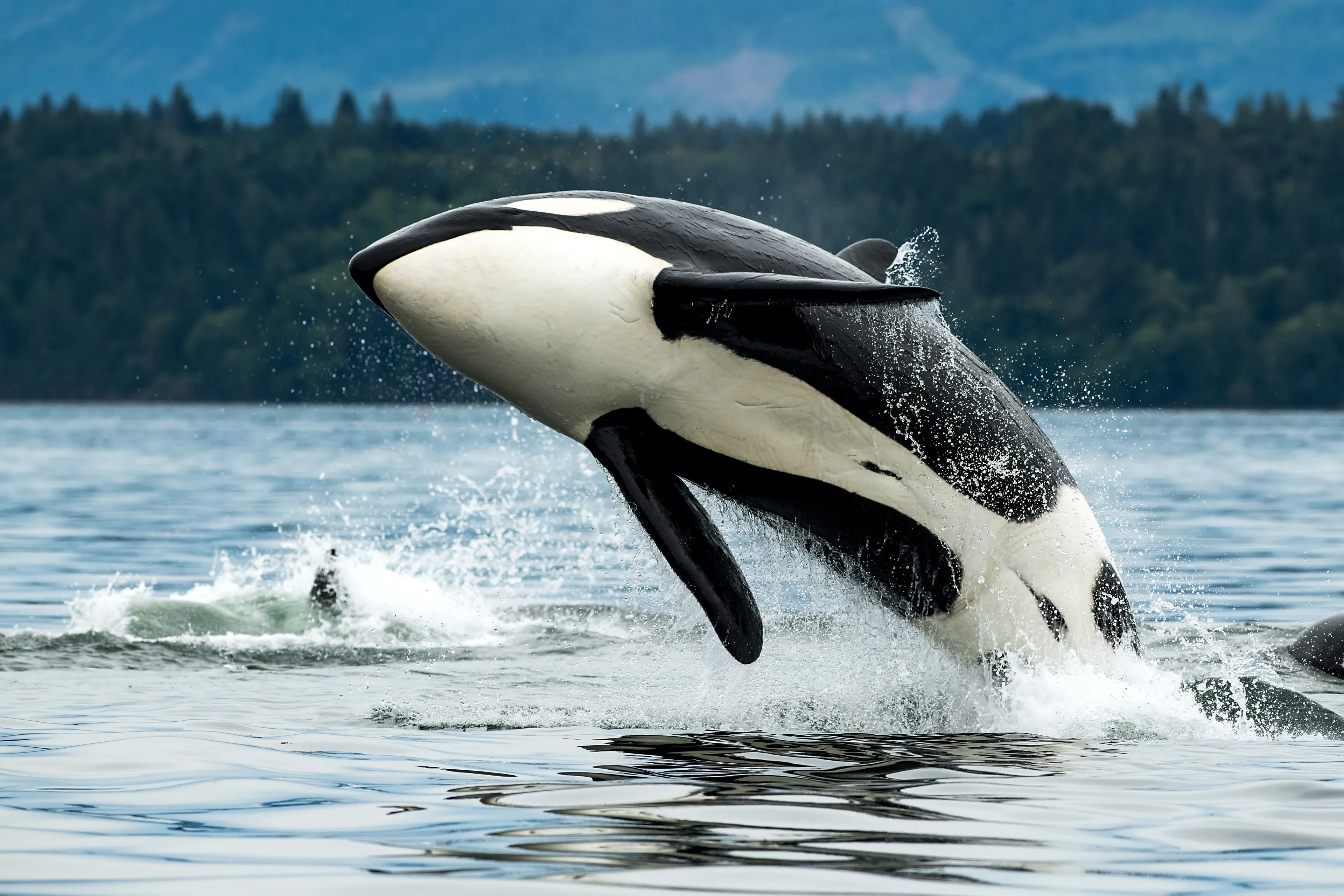
A pod travelling through blue water is more than a dramatic wildlife sight. Orcas share calls, learn traditions, and depend on particular homes and food webs—inviting us to look after the sea with care.
An orca is the dolphin family’s giant
The orca, Orcinus orca, is commonly called a killer whale. Despite that familiar name, it is the largest member of the dolphin family. Orcas are mammals: they breathe air at the surface, give birth to live young, and belong to a lively branch of ocean animals that includes dolphins. Their bold black-and-white colouring is famous, but a glimpse of an orca’s fin or back still feels like a small piece of wild magic appearing above the waves.
Adults are powerful, wide-ranging animals, commonly measuring roughly 5 to 10 metres in length. They can weigh many tonnes and may live for decades; females can sometimes live considerably longer than males. These broad figures are useful for imagining their scale, but no two orcas—or populations—have exactly the same life story.
Orcas occur in oceans worldwide, in coastal waters as well as the open ocean, from polar seas to warmer regions. One species name covers animals living in very different places. That matters: a pod’s food, travel routes, social patterns, and conservation needs can be shaped by the waters it knows best. Learning about orcas means holding both ideas at once: they are globally distributed, yet deeply connected to particular local seas.
Evidence: NOAA Fisheries: Killer Whale | NOAA Fisheries; Wikipedia: Orca
Pods turn a vast ocean into a familiar place
For many orcas, family life is central. They live in social groups known as pods, and in some well-studied populations young animals remain with maternal relatives for many years. Imagine the ocean as an enormous moving map of currents, weather, prey, and sound. Familiar companions can help make that map feel like home.
Orcas communicate with clicks, whistles, and calls. In some populations, particular calls are learned and passed between generations. Scientists and wildlife educators sometimes compare these shared sounds to family badges: they can help signal connection among relatives. It is a gentle reminder that communication is not only about making noise. It can be about recognition, belonging, and carrying a group’s traditions onward.
Pod life varies among populations, so it is best not to imagine every orca family following one identical pattern. Still, the evidence of learned calls and long-lasting social ties makes an important point. A pod is not simply a group of impressive animals gathered for our viewing pleasure. It is a set of relationships continuing below the surface, whether or not anyone is watching from shore or a boat.
Evidence: NOAA Fisheries: Killer Whale | NOAA Fisheries; Wikipedia: Orca
There is no single orca menu—or hunting style
Orcas are carnivores and apex predators, meaning they hunt near the top of food webs in the places where they feed. Yet “orca diet” is not one neat menu. Some populations specialise in fish, including salmon. Others eat marine mammals such as seals, dolphins, or whales. Sharks and rays can also be prey. What an individual or pod eats depends greatly on its population, traditions, and surroundings.
They may hunt cooperatively, using coordinated techniques that are learned within their groups. Teamwork can make it possible to find or catch prey that would be difficult for one animal alone. This is not a reason to cast orcas as sea monsters or action-film heroes. Hunting is part of survival, and their varied strategies show how closely a pod’s knowledge is tied to its home waters.
That closeness is why healthy food webs matter. A change in an important prey species can affect the orcas that rely on it, alongside many other animals and people connected to the same coast. Looking beyond an orca’s striking surface pattern leads to a bigger picture: fish runs, kelp beds, currents, shorelines, and smaller creatures all belong to an ocean community.
Evidence: NOAA Fisheries: Killer Whale | NOAA Fisheries; Wikipedia: Orca
A worldwide species can still face local troubles
At a global level, orcas are commonly listed as Data Deficient by the IUCN. That phrase does not mean that orcas are known to be safe everywhere, nor does it mean every population is endangered. It means there is not enough information for a confident picture of the species across all of its vast range. Counting and understanding a worldwide marine animal is difficult, especially when populations differ so much from one another.
Local stories can be much clearer—and more urgent. Some populations, including Southern Resident killer whales in the Pacific Northwest, receive focused conservation attention. Pressures documented for orcas include chemical contaminants, vessel traffic and underwater noise, entanglement in fishing gear, oil spills, and too little of the prey that particular populations need. The seriousness of each pressure varies by place, but all can interfere with feeding, travelling, communication, or family life.
Hope is strongest when it is practical. Protecting important prey runs, reducing contaminants, lowering vessel disturbance, and supporting recovery efforts designed for specific populations can make a real difference. Young ocean friends can help, too: keep litter out of drains and beaches, learn from reliable local wildlife groups, and encourage adults to follow regional marine-wildlife guidance. Care for the sea is built from many patient choices.
Evidence: IUCN Red List of Threatened Species: Orcinus orca (Killer Whale) — IUCN Red List Assessment; NOAA Fisheries: Killer Whale | NOAA Fisheries; Wikipedia: Orca
The best wildlife encounter lets the animal lead
It is easy to admire an orca for strength, size, and dramatic colour. Its quieter wonders may be even more lasting: a familiar call carried through water, relatives travelling together, and knowledge passed along within a pod. Those details invite us to see wild animals not as scenery or entertainment, but as fellow inhabitants of a living planet with lives that matter to them.
If you are lucky enough to see an orca in the wild, let its needs guide the moment. Watch quietly, follow local rules, keep an appropriate distance, and never expect an animal to approach for a better photograph. A respectful view—perhaps only a distant fin, a breath, and then blue water again—can be the best kind of memory.
Orcas do not need extra myths to be extraordinary. Their real lives already hold mystery: families navigating immense waters, different communities using different calls, and a world of underwater connections that people are still learning to understand. Curiosity, paired with humility, is a wonderful way to meet them.
Evidence: NOAA Fisheries: Killer Whale | NOAA Fisheries; Wikipedia: Orca
A kind plate can be one thread of ocean care
Caring about orcas can begin with wonder at a pod’s family life, then grow into care for the wider web of life. A plant-forward meal is one quiet way to practise the idea that animals are fellow beings, not simply things to use. Beans, lentils, vegetables, fruit, whole grains, nuts, and seeds offer colourful ingredients for meals made with curiosity and kindness.
The World Health Organization describes healthy diets in general as varied and rich in foods such as whole grains, vegetables, fruit, pulses, nuts, and seeds. The IPCC reports that shifts toward sustainable, healthy, more plant-based diets can help reduce food-system emissions and pressure on land and biodiversity. This is not a demand for perfection, and it is never a reason to judge another family’s food traditions, budget, or access.
If your household is interested, try a plant-forward favourite with a trusted adult: a bean burrito, lentil soup, vegetable pasta, or chickpea curry. Major dietary changes are something to discuss with a trusted adult and a qualified health professional, because people’s needs differ. The invitation is simply to notice that thoughtful choices at a table can be part of a larger habit of care for animals and the planet.
Evidence: World Health Organization: Healthy diet; Intergovernmental Panel on Climate Change: Climate Change 2022: Mitigation of Climate Change — Chapter 7
Questions people ask
Are orcas whales or dolphins?
Orcas are commonly called killer whales, and they are the largest members of the dolphin family. Dolphins are marine mammals, so an orca must surface to breathe air.
Evidence: NOAA Fisheries: Killer Whale | NOAA Fisheries; Wikipedia: Orca
Why do orca pods have different calls?
In some populations, calls are learned and shared across generations. These sounds can work like family badges, helping signal social connection within a group.
Evidence: NOAA Fisheries: Killer Whale | NOAA Fisheries; Wikipedia: Orca
Do all orcas eat the same food?
No. Diet depends on the population and its habitat. Some specialise in fish such as salmon, while others hunt marine mammals; sharks and rays may also be prey.
Evidence: NOAA Fisheries: Killer Whale | NOAA Fisheries; Wikipedia: Orca
What does Data Deficient mean?
It means there is not enough information to confidently assess the species’ global conservation situation. Local orca populations can still face very different levels of risk.
Evidence: IUCN Red List of Threatened Species: Orcinus orca (Killer Whale) — IUCN Red List Assessment; Wikipedia: Orca
How can I watch orcas respectfully?
Follow local wildlife-watching rules, give animals space, stay quiet, and let them choose where to travel. Their welfare matters more than getting close.
Read the evidence
Sources behind this story
- Orcinus orca (Killer Whale) — IUCN Red List Assessment — IUCN Red List of Threatened Species
- Killer Whale | NOAA Fisheries — NOAA Fisheries
- Orca — Wikipedia
- Healthy diet — World Health Organization
- Climate Change 2022: Mitigation of Climate Change — Chapter 7 — Intergovernmental Panel on Climate Change
Health information is general education, not personal medical advice. Young readers should make food choices with a trusted adult and qualified health professional.