Today's animal friend · 16 July 2026
Cheetah: The Quiet Cat Built for a Brilliant Burst
From the dark “tear marks” on its face to the gentle chirps it uses instead of a roar, the cheetah is a remarkable neighbour in Africa’s open landscapes—and a vulnerable one.
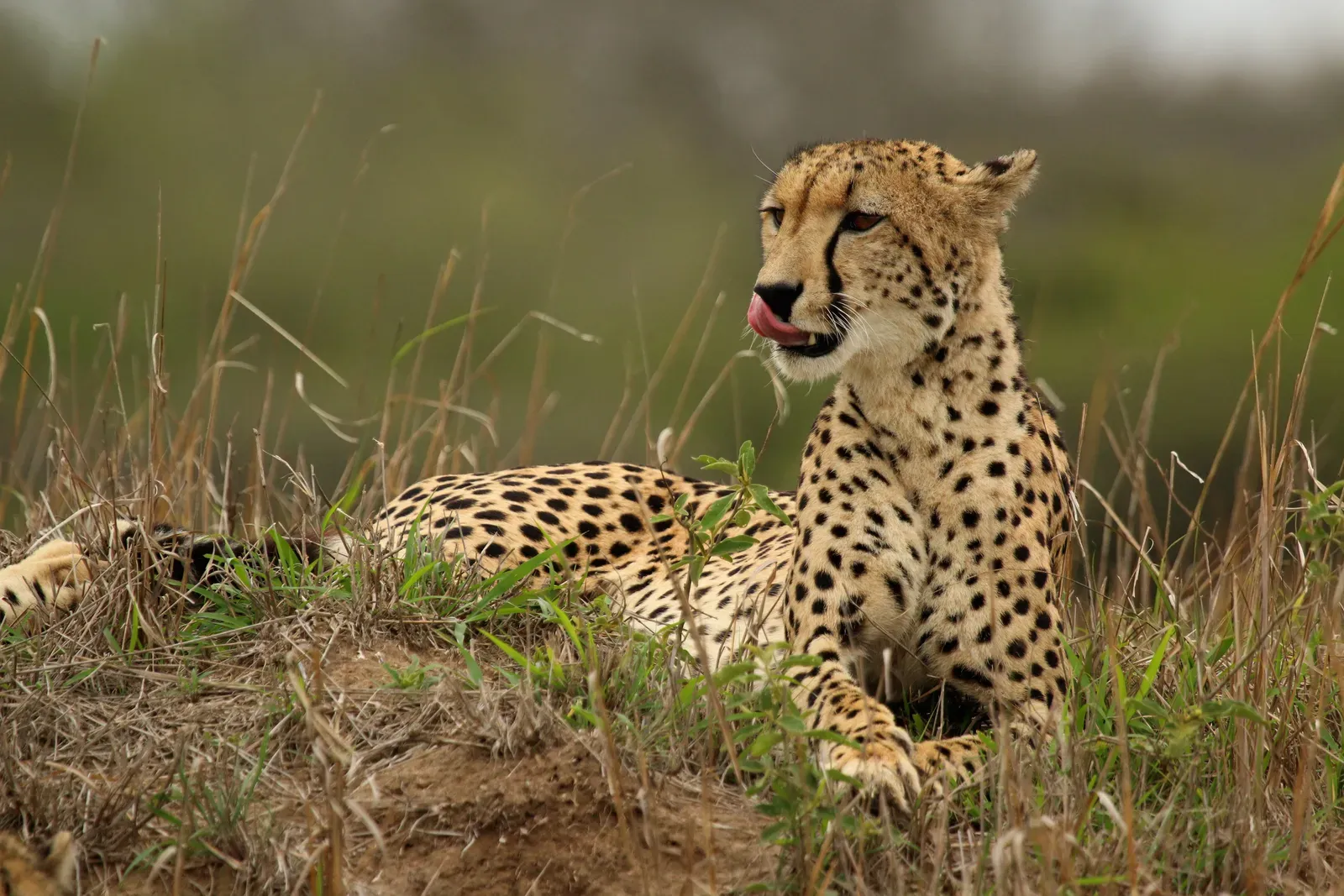
From the dark “tear marks” on its face to the gentle chirps it uses instead of a roar, the cheetah is a remarkable neighbour in Africa’s open landscapes—and a vulnerable one.
Meet the cheetah: a cat with a lightning-fast moment
The cheetah, whose scientific name is Acinonyx jubatus, is a member of the cat family. It is famous as the fastest land mammal, but that title can make us imagine an animal that is always racing. In truth, a cheetah’s dazzling speed belongs to a short, carefully chosen burst. Before and after it, there is watching, walking, resting, and saving energy.
A cheetah looks unlike any other cat. It has a slim body, long legs, a small rounded head, a sandy coat sprinkled with black spots, and a long tail. Two dark lines travel from the corners of its eyes down toward its mouth. These are called tear marks, though they are not tears at all. They give its face a thoughtful, almost painted look.
Adults stand about 67 to 94 centimetres at the shoulder. Their head-and-body length is about 1.1 to 1.5 metres, and they may weigh from about 21 to 65 kilograms. Those measurements describe a cat made for swift movement across open ground—not a huge cat, but an extraordinarily specialised one.
Evidence: IUCN Red List of Threatened Species: Acinonyx jubatus (Cheetah) — Red List Assessment; World Wildlife Fund (WWF): Cheetah; Wikipedia: Cheetah; Convention on the Migratory Species of Wild Animals (CMS): Acinonyx jubatus — CMS species page; San Diego Zoo Wildlife Alliance: Cheetah | San Diego Zoo Animals & Plants
A sprint is not the whole hunt
Cheetahs live mainly in open and semi-open places: grasslands, savannas, deserts, open woodland, and some mountain areas. Their remaining populations occur mostly in parts of Africa, with a very small Asiatic population in Iran. These are not one unbroken cheetah kingdom; today, many populations are separated from one another by changed and fragmented landscapes.
In these wide spaces, a cheetah hunts chiefly during the day, and can also be active around twilight. Its usual prey includes small- to medium-sized hoofed animals such as gazelles and impalas. It may also hunt other animals, including hares or young wildebeest in some places. The animal does not simply dash off across the horizon. It first stalks close, then launches a brief, high-speed chase.
At top speed, a cheetah can reach roughly 93 to 104 kilometres an hour. That is an astonishing feat, yet it cannot be maintained for long. After a sprint, the cheetah needs recovery. Thinking of speed as a precious tool rather than a permanent superpower helps us see the skill in every chase: timing, attention, and a careful use of strength.
Evidence: World Wildlife Fund (WWF): Cheetah; Wikipedia: Cheetah; Convention on the Migratory Species of Wild Animals (CMS): Acinonyx jubatus — CMS species page; San Diego Zoo Wildlife Alliance: Cheetah | San Diego Zoo Animals & Plants
Listen closely: this big cat does not roar
A cheetah cannot roar in the way a lion does. Instead, it has a surprising sound-world of chirps, purrs, and other calls. Some of its sounds can seem almost birdlike. This is a lovely reminder that the word “cat” holds many different voices, from the familiar purr of a companion animal to the calling of a cheetah on a vast savanna.
Cheetahs have their own ways of being together, too. Females usually raise their cubs alone. A mother keeps close contact with her young and teaches them the practical skills of life. Cubs can stay with their mother until about 18 months of age. Adult males may live alone, but some form small groups called coalitions; these are often brothers.
There is no single cheetah personality or household arrangement. Still, these patterns show an animal with relationships, communication, and a long learning period. A cub does not arrive knowing how to choose a hiding place, follow its mother, or understand the changing signals of its home. Like young animals everywhere, it learns step by step.
Evidence: World Wildlife Fund (WWF): Cheetah; Wikipedia: Cheetah; San Diego Zoo Wildlife Alliance: Cheetah | San Diego Zoo Animals & Plants
Why open land matters to cheetahs
Cheetahs are specialised predators of open landscapes. By hunting medium-sized prey animals, they are part of larger food webs that connect plants, grazing animals, predators, scavengers, weather, water, and people. A healthy landscape is not merely an empty racing track for a cheetah. It is a living neighbourhood with room for many species.
That neighbourhood has become harder to hold together. The cheetah is listed as Vulnerable on the IUCN Red List, with a decreasing population trend. A commonly reported global estimate is about 6,500 cheetahs in the wild. The small population in Iran is especially precarious and is described as Critically Endangered. Numbers can never tell the entire story, but they tell us that every remaining connected habitat matters.
Cheetahs face habitat loss and degradation, fewer wild prey animals, conflict with people, and poaching. Fragmented populations may also be more vulnerable to disease. Drought and overgrazing can further change the open places cheetahs need. These are complicated challenges, which is why caring for cheetahs means caring for whole landscapes and the people who share them.
Evidence: IUCN Red List of Threatened Species: Acinonyx jubatus (Cheetah) — Red List Assessment; World Wildlife Fund (WWF): Cheetah; Wikipedia: Cheetah; Convention on the Migratory Species of Wild Animals (CMS): Acinonyx jubatus — CMS species page
Hope looks like room to move
The hopeful part of the cheetah story is not a single magic solution. It is many practical acts working together: protecting habitat, supporting wild prey, reducing poaching, and helping people and cheetahs share land more safely. Conservation also benefits from cooperation across borders, because wildlife does not recognise the lines on a map.
International work through the Convention on the Migratory Species is one example of countries coordinating around species that need connected landscapes. On the ground, the aim is wonderfully clear even when the work is difficult: make space for wild animals and support communities living alongside them.
Young readers can be part of the caring circle without needing to travel to a savanna. Learn whose land and wildlife are being protected. Choose trustworthy conservation groups to explore with a family, school, or library. Share accurate cheetah facts rather than treating wild animals as costumes, jokes, or decorations. Most of all, let admiration grow into attention. A cheetah is not only “the fast one”; it is a wild individual whose home deserves a future.
Evidence: Convention on the Migratory Species of Wild Animals (CMS): Acinonyx jubatus — CMS species page; World Wildlife Fund (WWF): Cheetah; Wikipedia: Cheetah; IUCN Red List of Threatened Species: Acinonyx jubatus (Cheetah) — Red List Assessment
Try a cheetah-style way of noticing
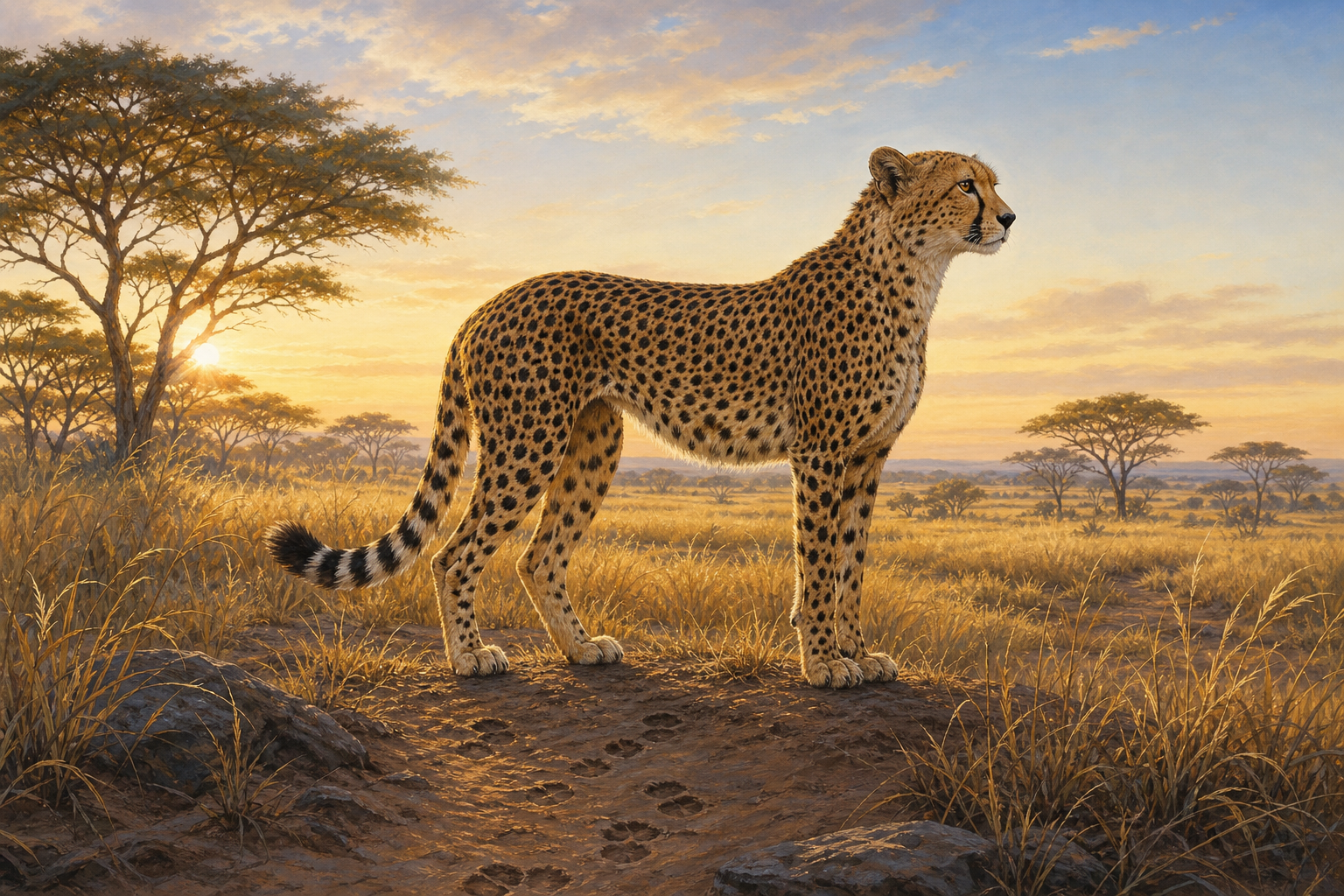
Imagine you are looking across a grassland at first light. Rather than searching only for a blur of speed, notice the small details: the gold-and-black coat against dry grass, the upright alertness before movement, the long tail that helps with balance and steering, and the dark facial marks framing watchful eyes. A cheetah’s famous sprint begins with stillness.
That is a useful way to meet wildlife anywhere. Pause. Look for the habitat as well as the animal. Ask what food, water, shelter, and safe space might be needed there. A creature’s most astonishing ability is only one chapter in its life. The cheetah’s chapter happens to be a very fast one—but it is also a story of patience, family, communication, and home.
Evidence: Wikipedia: Cheetah; World Wildlife Fund (WWF): Cheetah; San Diego Zoo Wildlife Alliance: Cheetah | San Diego Zoo Animals & Plants; Convention on the Migratory Species of Wild Animals (CMS): Acinonyx jubatus — CMS species page
A kind choice can begin at the dinner table
Caring about cheetahs can widen our circle of kindness to other animals and to the places they need. One gentle everyday step is to enjoy more plant-based meals—perhaps a bean-and-vegetable stew, lentil tacos, a chickpea sandwich, or a favourite fruit-and-grain breakfast—while treating animals as fellow living beings rather than things.
The World Health Organization describes healthy diets in terms of variety and foods such as whole grains, vegetables, fruits, pulses, nuts, and seeds. The IPCC reports that shifts toward sustainable, healthy, more plant-based diets can lower food-system emissions and reduce pressure on land and biodiversity. Food choices are personal, and young people should involve a trusted adult and qualified health professional for individual dietary guidance. But choosing a plant-forward meal now and then can be a cheerful, compassionate way to practise care for animals, climate, and wild homes.
Evidence: World Health Organization: Healthy diet; Intergovernmental Panel on Climate Change: Climate Change 2022: Mitigation of Climate Change — Chapter 7
Questions people ask
Where do cheetahs live?
They live mainly in fragmented populations across parts of Africa, in habitats including savannas, grasslands, deserts, open woodland, and some mountain areas. A very small Asiatic population remains in Iran.
Evidence: World Wildlife Fund (WWF): Cheetah; Wikipedia: Cheetah; Convention on the Migratory Species of Wild Animals (CMS): Acinonyx jubatus — CMS species page; San Diego Zoo Wildlife Alliance: Cheetah | San Diego Zoo Animals & Plants
What do cheetahs eat?
They are carnivores that mainly hunt small- to medium-sized hoofed animals, especially gazelles and impalas. In some places they may also take prey such as hares or young wildebeest.
Evidence: IUCN Red List of Threatened Species: Acinonyx jubatus (Cheetah) — Red List Assessment; World Wildlife Fund (WWF): Cheetah; Wikipedia: Cheetah; Convention on the Migratory Species of Wild Animals (CMS): Acinonyx jubatus — CMS species page; San Diego Zoo Wildlife Alliance: Cheetah | San Diego Zoo Animals & Plants
Are cheetahs really faster than every other land animal?
Yes. They are the fastest land mammals. Reliable reports place their top sprint at roughly 93–104 kilometres per hour, but only for short distances.
Evidence: World Wildlife Fund (WWF): Cheetah; Wikipedia: Cheetah; San Diego Zoo Wildlife Alliance: Cheetah | San Diego Zoo Animals & Plants
Why do cheetahs have dark lines on their faces?
The dark lines running from the eyes toward the mouth are called tear marks, or malar stripes. They are one of the cheetah’s most recognisable features.
Evidence: Wikipedia: Cheetah; San Diego Zoo Wildlife Alliance: Cheetah | San Diego Zoo Animals & Plants
How can people help cheetahs?
Helpful conservation includes keeping habitat connected, protecting wild prey, reducing poaching and conflict killings, and working with communities and governments across the cheetah’s range.
Evidence: Convention on the Migratory Species of Wild Animals (CMS): Acinonyx jubatus — CMS species page; World Wildlife Fund (WWF): Cheetah; Wikipedia: Cheetah
Read the evidence
Sources behind this story
- Acinonyx jubatus (Cheetah) — Red List Assessment — IUCN Red List of Threatened Species
- Cheetah — World Wildlife Fund (WWF)
- Cheetah — Wikipedia
- Acinonyx jubatus — CMS species page — Convention on the Migratory Species of Wild Animals (CMS)
- Cheetah | San Diego Zoo Animals & Plants — San Diego Zoo Wildlife Alliance
- Healthy diet — World Health Organization
- Climate Change 2022: Mitigation of Climate Change — Chapter 7 — Intergovernmental Panel on Climate Change
Health information is general education, not personal medical advice. Young readers should make food choices with a trusted adult and qualified health professional.