 Real photograph
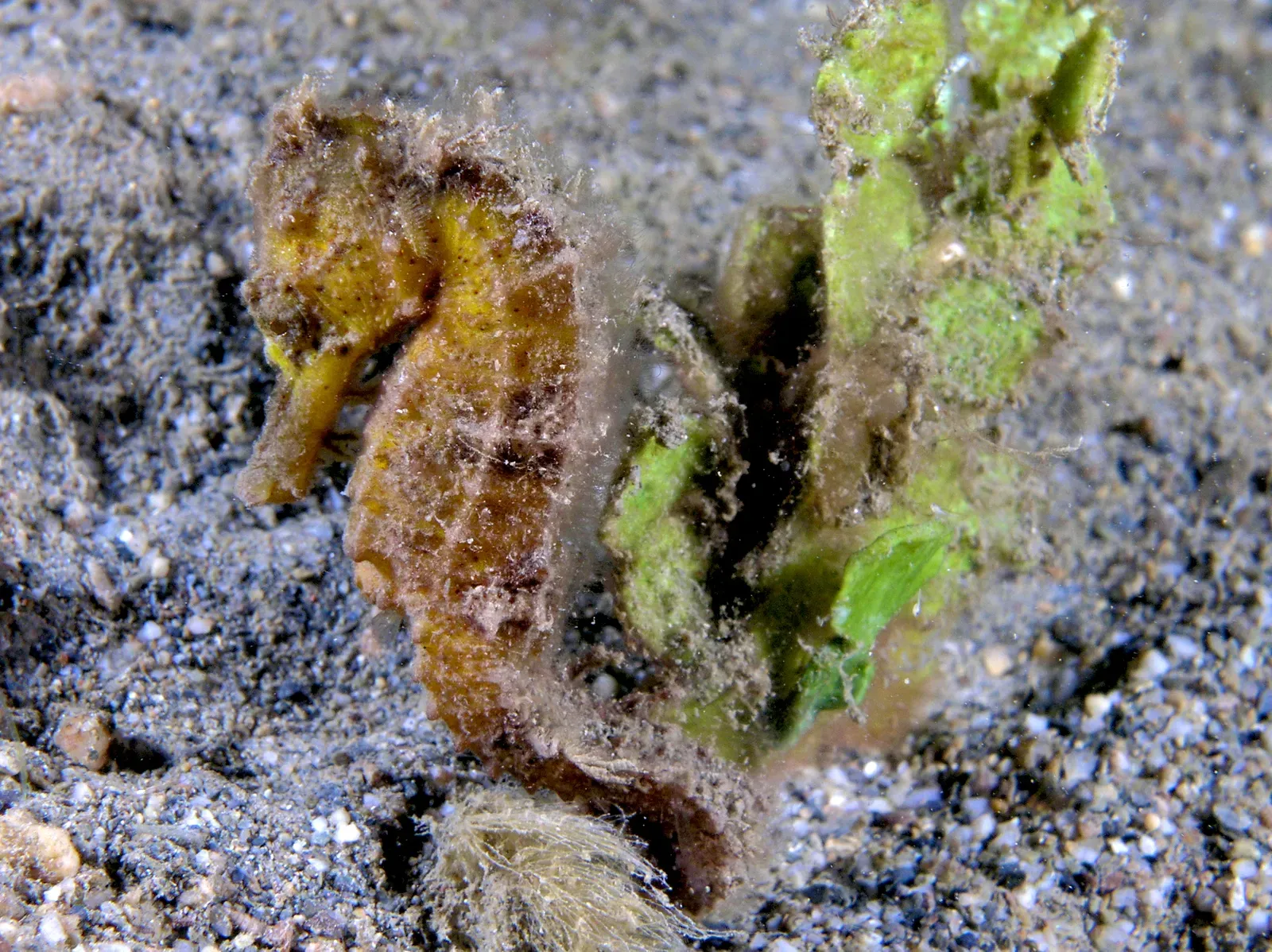
 Yellow seahorse
Hippocampus kuda
say it SEE-hors
Why we love them
The yellow seahorse is a small fish with a curly tail and a head shaped a little like a tiny horse. It does not swim flat like most fish. Instead it stands up tall in the water and moves along slowly by fluttering a little fin on its back.
Seahorses live in warm, shallow seas, among swaying seagrass and coral. To keep from drifting away in the current, a seahorse wraps its curly tail around a plant and holds on tight, a bit like an anchor.
It has a long snout and no teeth at all. A seahorse hunts by sucking up tiny shrimp and baby fish through its snout like a straw, snapping them up one at a time all through the day.
Seahorses have a very special way of having babies. The mother places her eggs into a pouch on the father’s tummy, and it is the father who carries them until the tiny babies are ready to swim out on their own.
There are fewer yellow seahorses in the sea than there once were, because too many have been collected and some of their seagrass homes have been damaged. People who love the ocean are working hard to look after seahorses and keep their homes safe.
My home
Seagrass beds, estuaries, lagoons, coral reef, coastal shallows
Where I live
Pacific Ocean, Indian Ocean
What I eat
Tiny shrimp, plankton, baby fish
How long I am
0.3 m
It is the father seahorse who carries the babies, keeping the eggs safe in a special pouch on his tummy.
A seahorse holds onto seagrass and coral with its curly tail so the current cannot carry it away.
A seahorse has no teeth, so it sucks up tiny shrimp and plankton through its long snout like a straw.
Every yellow seahorse can feel happy, scared and loved — just like you.
Looking after my friends
Needs our helpTheir numbers are getting smaller, so people are working to protect their homes.
You can help by learning their names, keeping wild places clean, and telling someone why this animal matters.
Where this came from
- Hippocampus kuda (Spotted / Yellow Seahorse) — IUCN Red List status — IUCN Red List of Threatened Species
- Hippocampus kuda (Spotted seahorse) — FishBase Summary — FishBase
- Hippocampus kuda — Wikipedia — Wikipedia