 Real photograph
 Western honey bee
Apis mellifera
say it AY-piss mel-IF-er-uh
Why we love them
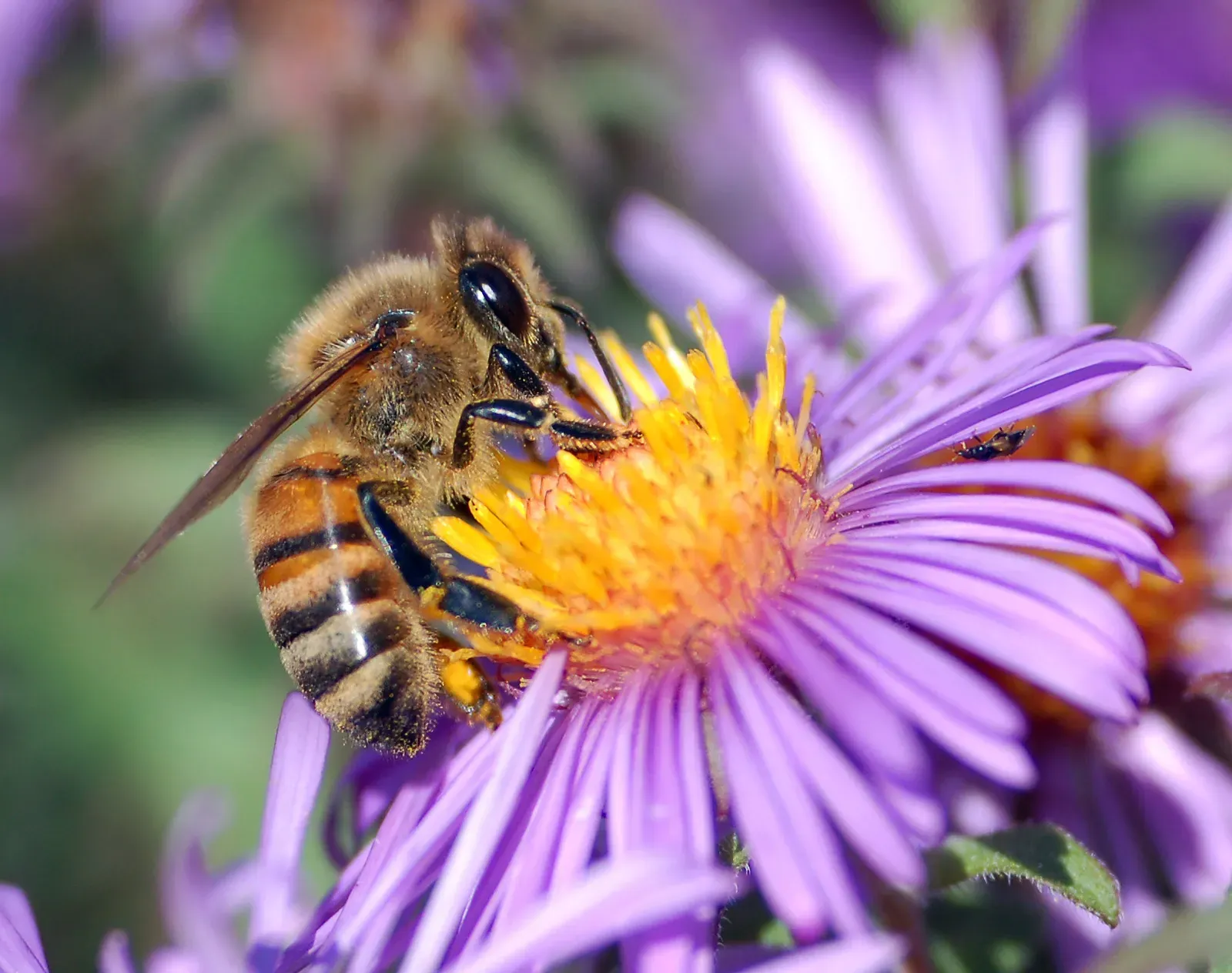
The western honey bee is a small, fuzzy insect with golden-and-brown stripes and four clear wings. It spends warm days flying from flower to flower, drinking a sweet juice called nectar and gathering dusty yellow pollen on its legs. Back home, the bees turn that nectar into honey to eat when flowers are scarce.
Honey bees live together in a big family called a colony. In summer a single hive can hold tens of thousands of bees, and they all share the work. Some clean, some care for the babies, some guard the door, and some fly out to find food. At the centre of it all is one queen, the mother of nearly every bee in the hive.
Bees are wonderful talkers, even though they never make a sound with a voice. When a bee finds a good patch of flowers, she comes home and does a little wiggling dance. The way she waggles tells the other bees which direction to fly and how far to go. Then off they buzz to bring back more food.
As bees move from bloom to bloom, they carry pollen with them. This helps flowers make seeds and fruit, so apples, strawberries, and many other plants can grow. Farmers and gardeners are very glad of the quiet, hard work that bees do.
Scientists do not yet know exactly how many western honey bees live wild in Europe. A 2014 European assessment called the species “data deficient” because managed hive counts do not reveal how wild colonies are doing. We can help pollinators by planting many kinds of flowers across the seasons and avoiding pesticides where possible.
My home
Meadow, garden, woodland, farmland
Where I live
Africa, Asia, Europe
What I eat
Nectar, pollen
How long I am
0.012–0.02 m
How long I live
0.1–5 years
Honey bees turn flower nectar into honey and store it inside the hive.
A dancing bee can tell the others where to find flowers by waggling in a special way.
One busy hive in summer can be home to tens of thousands of bees.
Every western honey bee can feel happy, scared and loved — just like you.
Looking after my friends
Still a mysteryScientists are still learning about them to find out how they are doing.
You can help by learning their names, keeping wild places clean, and telling someone why this animal matters.
Where this came from
- Apis mellifera (Western Honey Bee) — European Red List of Bees assessment — IUCN Red List of Threatened Species
- Honey Bees — Bee Research and Pollination — USDA Agricultural Research Service
- What is a honey bee? — Natural History Museum — Natural History Museum, London
- Gardening for Pollinators — United States Department of Agriculture, Forest Service