 Real photograph
 Seven-spot ladybird
Coccinella septempunctata
say it kok-sih-NEL-uh sep-tem-punk-TAH-tuh
Why we love them
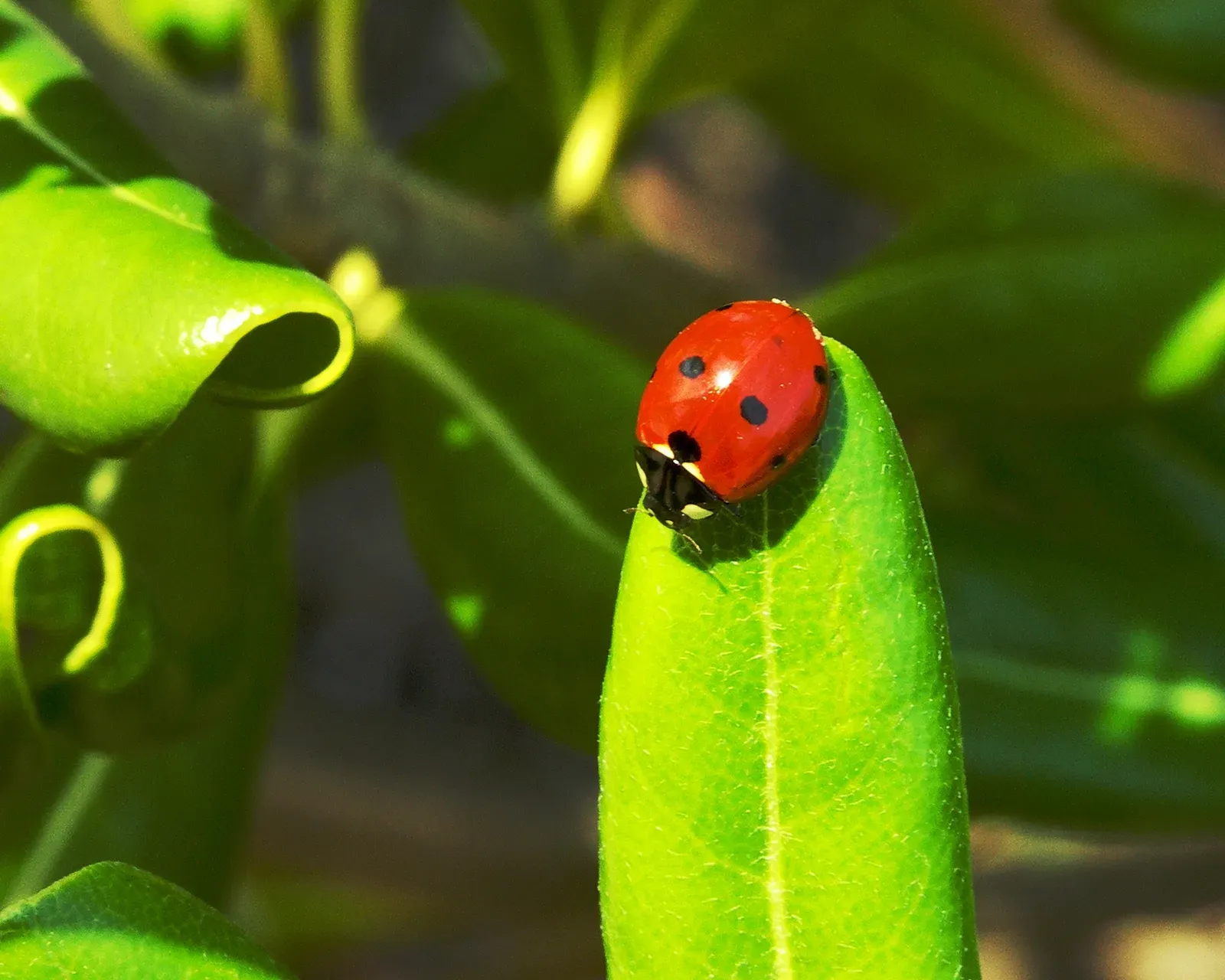
The seven-spot ladybird is a tiny, round beetle no bigger than a pea. It has shiny red wing cases with seven neat black spots, a little black head, and two small white patches that look like cheeks. It is one of the most common ladybirds in gardens, meadows, and parks across Europe, Asia, and North Africa, and it is often the very first ladybird a child learns to spot.
Ladybirds are a gardener’s best friend. Both the grown-up beetles and their spiky little babies love to eat aphids, the tiny soft bugs that crowd onto plants and nibble the leaves. One busy ladybird can gobble up a great many aphids, which helps flowers, fruit, and vegetables grow big and healthy. When aphids are hard to find, ladybirds will also sip nectar and nibble pollen from flowers.
That cheerful red colour is not just pretty, it is a clever warning. It tells hungry birds, “I would taste horrible, please leave me alone.” If a ladybird is still bothered, it can leak a drop of bitter, smelly liquid from its legs to say the same thing even more clearly. Most creatures quickly learn to leave the bright little beetle in peace.
A ladybird grows up in stages, a bit like a butterfly. It begins as a tiny egg, hatches into a long, spotty larva, then curls up as a pupa before finally appearing as the round, red beetle we know. When the weather turns cold, groups of ladybirds huddle together in snug, sheltered spots to sleep through the winter, waking up again when spring brings warmer days and fresh aphids to eat.
Nobody has counted all the seven-spot ladybirds in the world, and the IUCN has not given this species a conservation rating, so we honestly mark it as “not evaluated”. In some parts of Europe it has become less common where a newcomer called the harlequin ladybird competes with it. We can help by planting flowers and letting a few aphids stay in the garden, so ladybirds always have a meal.
My home
Garden, meadow, grassland, farmland, woodland
Where I live
Africa, Asia, Europe
What I eat
Aphids, pollen, nectar
How long I am
0.0065–0.0078 m
How long I live
1 years
A seven-spot ladybird has bright red wing cases with exactly seven black spots, which is how it got its name.
Ladybirds are a gardener's friend because they eat aphids, the tiny bugs that nibble on plants.
Its bright red colour is a warning that tells hungry birds it would taste horrible.
Every seven-spot ladybird can feel happy, scared and loved — just like you.
Looking after my friends
Not checked yetNo one has counted them carefully yet.
You can help by learning their names, keeping wild places clean, and telling someone why this animal matters.
Where this came from
- 7-spot ladybird — The Wildlife Trusts
- Seven-Spotted Lady Beetle — Missouri Department of Conservation
- Coccinella septempunctata — Wikipedia