 ← All animals
 bird · Otus scops
Scops owl
Gallery
4 photos Real photograph 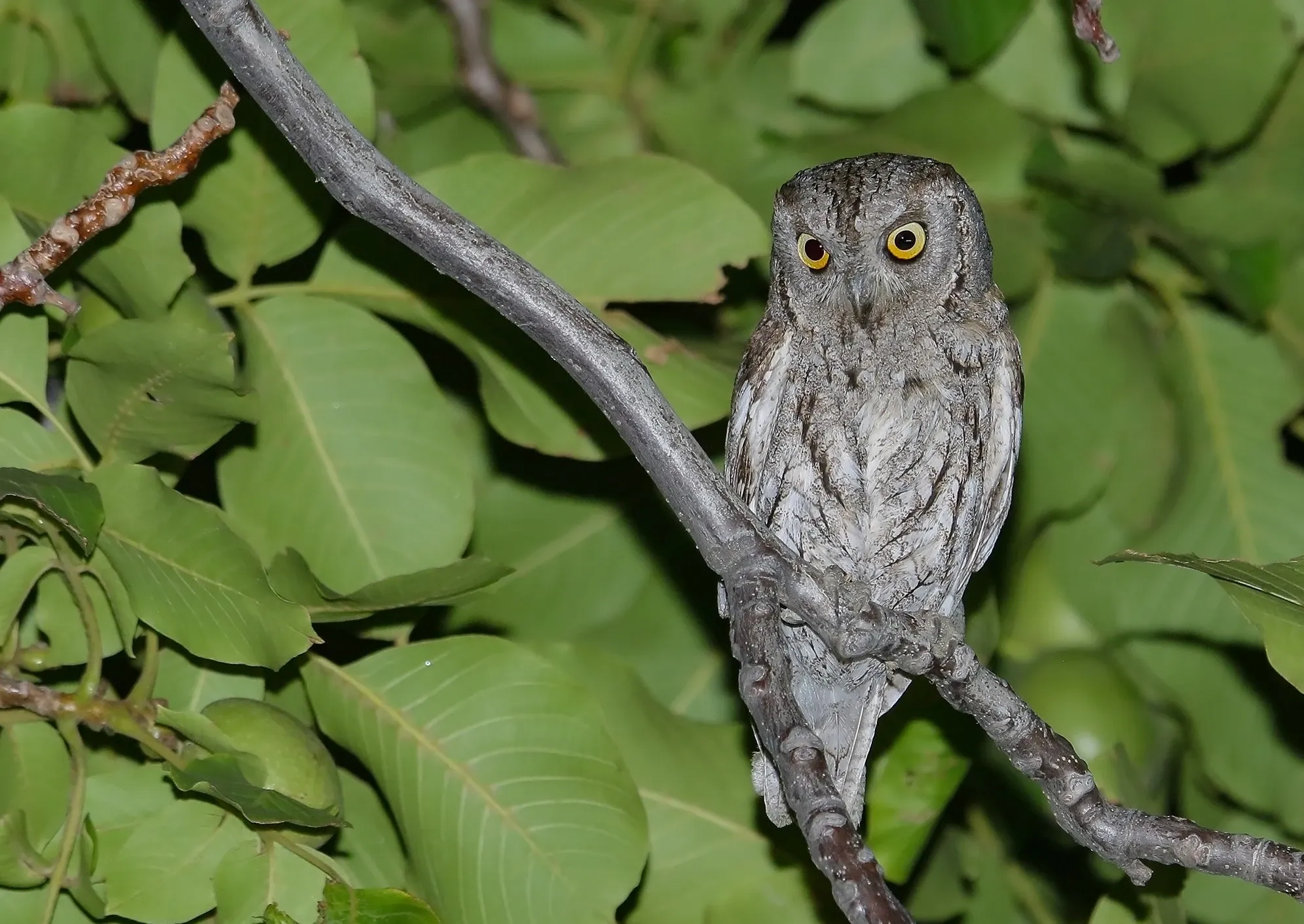 Real photograph
 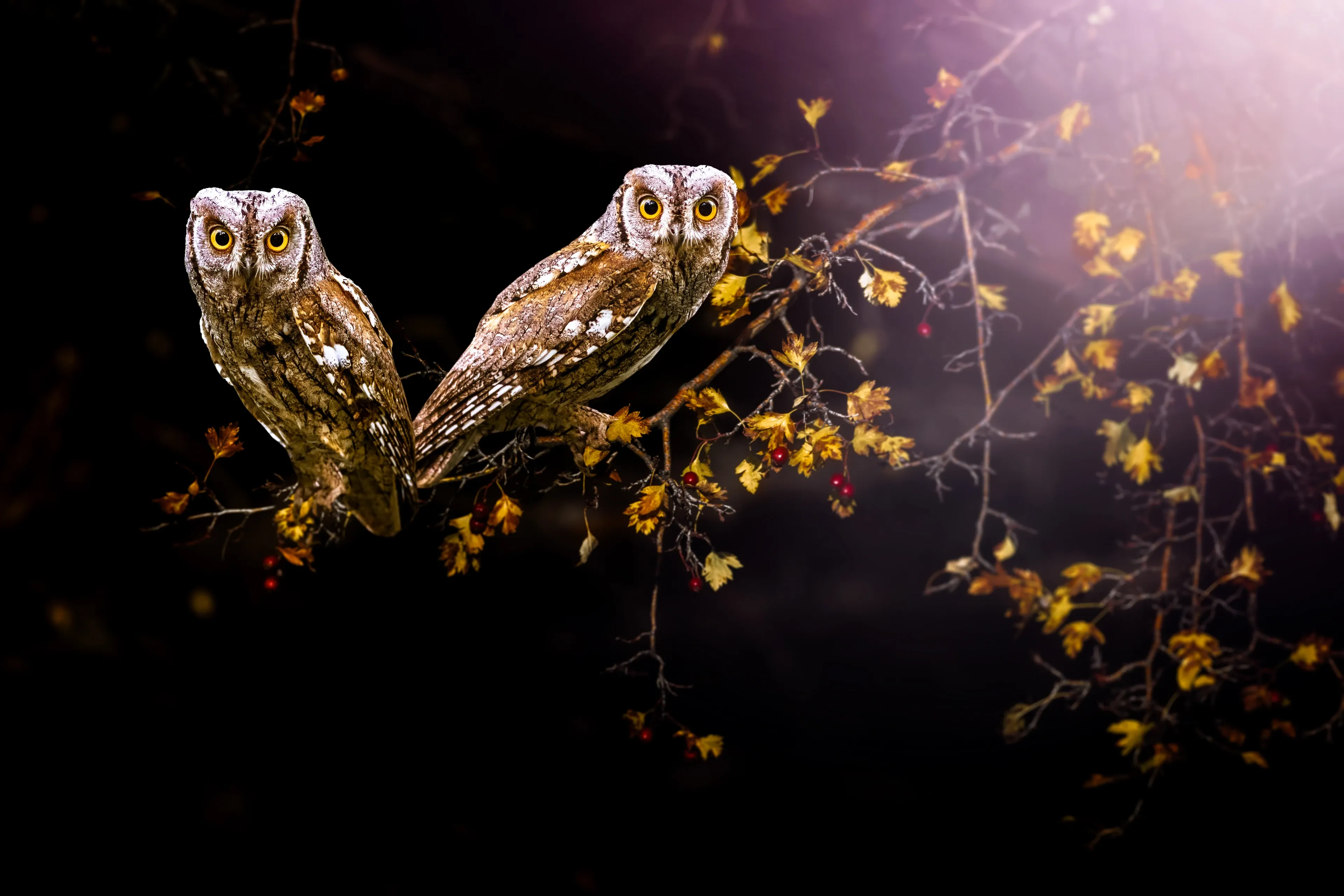 Real photograph
 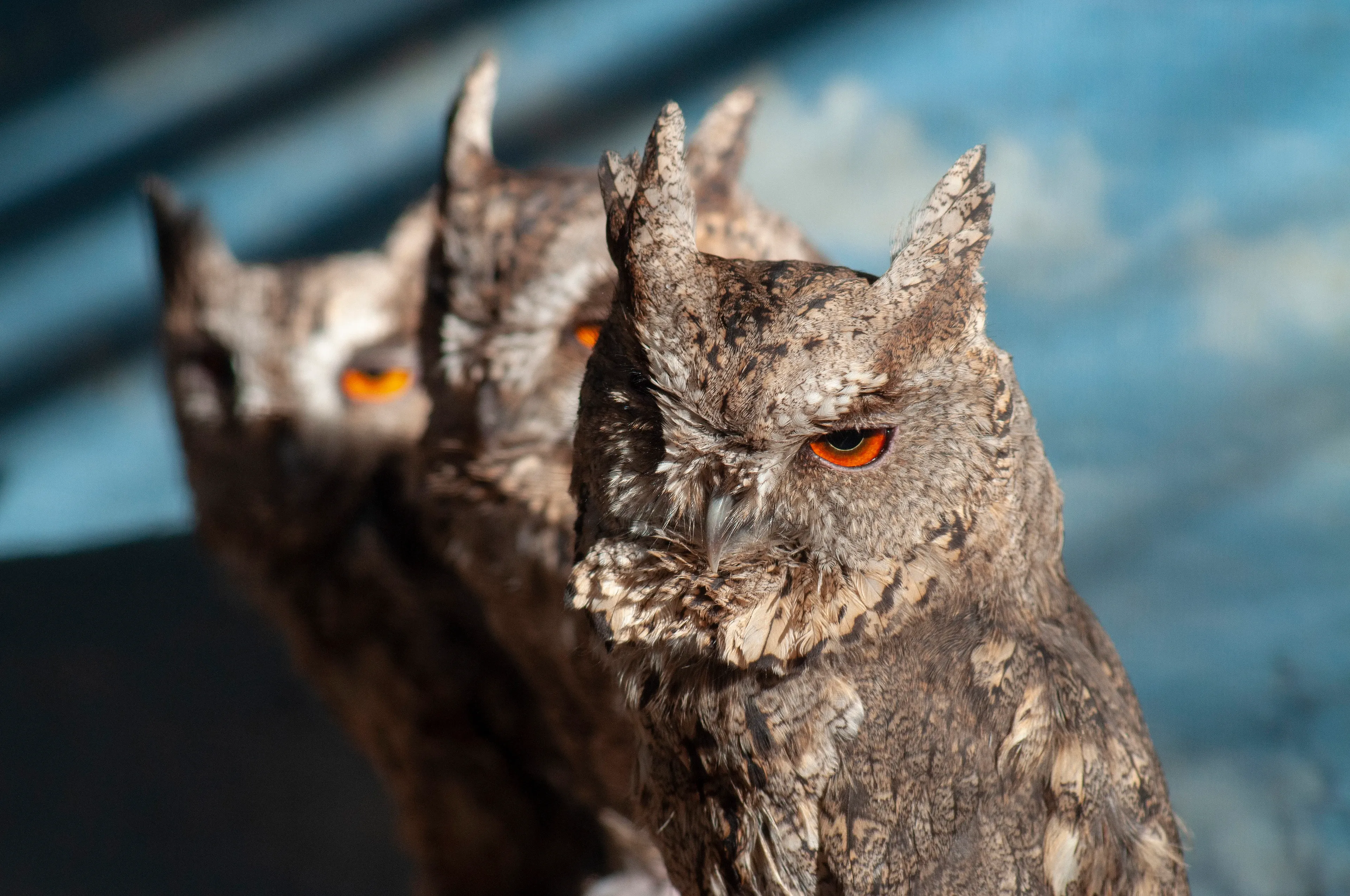 Real photograph
 Why we love them
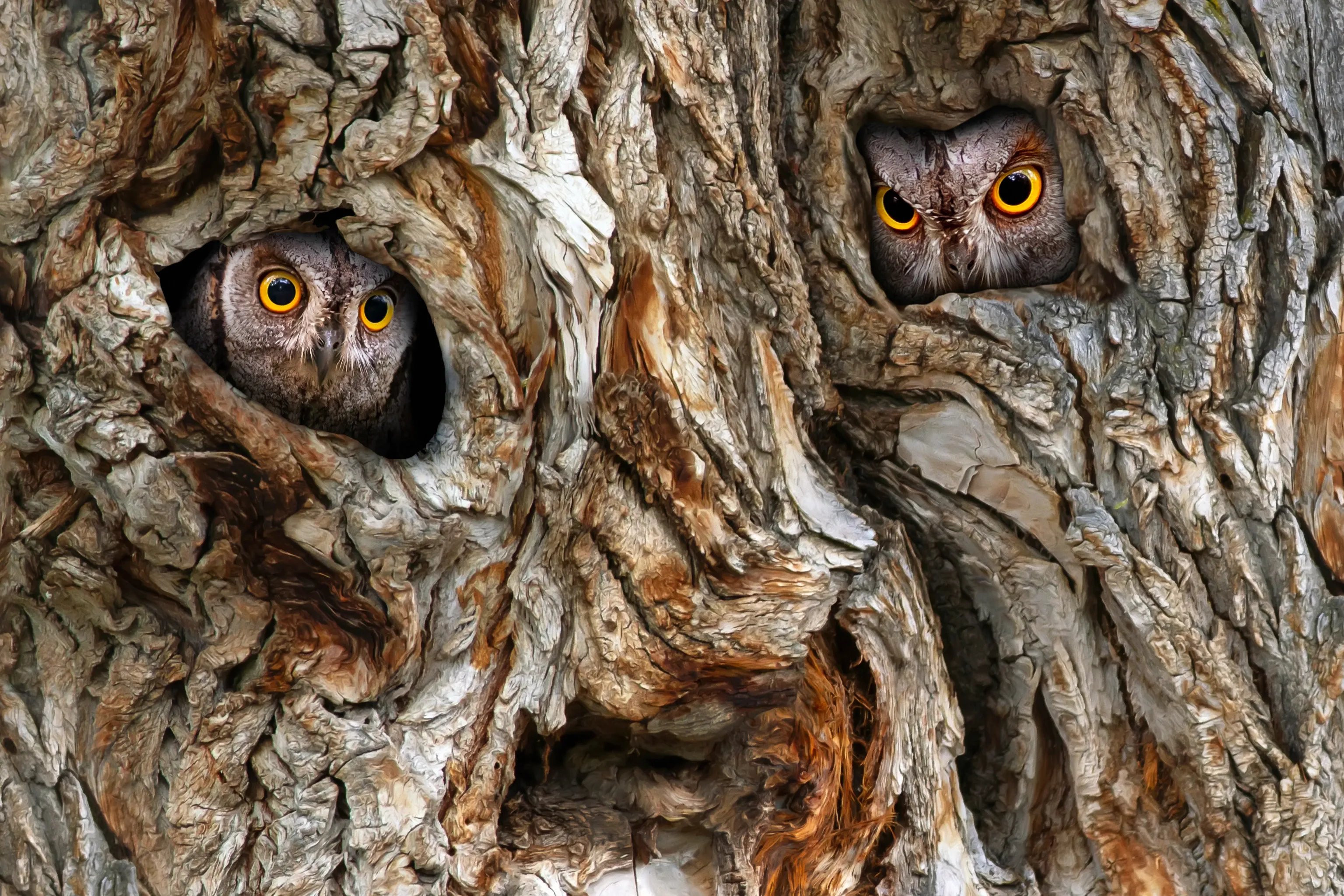
The scops owl is a tiny owl with bright yellow eyes and two little feather tufts above its head. Its grey-brown feathers are covered in fine streaks and zigzags, so a sleeping owl can look almost exactly like a piece of tree bark. It spends the day tucked quietly beside a trunk or inside a tree hole.
After sunset, the scops owl wakes and begins to hunt. It waits on a branch, listens and watches, then swoops down to catch a moth, beetle or grasshopper. Spiders and earthworms are also on the menu, and it sometimes takes a very small frog, lizard, bird or mouse.
You may hear a scops owl before you ever see one. Its call is not a long hoot, but one soft, rounded whistle repeated every few seconds. A male and female can call together while they defend a nesting place and prepare to raise chicks.
Many scops owls are remarkable travellers. They raise their young across southern Europe and western and central Asia, then fly to Africa south of the Sahara for winter. Some birds in the warmest parts of southern Europe stay closer to home all year.
Scops owls need open places rich in insects, with old trees or other safe holes for nesting. Protecting mature trees, keeping insect-rich grassland and gardens, using fewer harmful pesticides, and adding well-designed nest boxes where natural holes are scarce can all give these small night hunters room to thrive.
My home
Open woodland, grassland, farmland, parks and gardens
Where I live
Africa, Asia, Europe
What I eat
Moths, grasshoppers, cicadas, beetles, spiders
How long I am
0.16–0.21 m
How heavy I am
0.06–0.135 kg
A scops owl's grey-brown feathers are patterned like tree bark, helping it almost disappear while it rests against a trunk.
Its familiar night call is a short, single whistle repeated again and again, usually every few seconds.
Most scops owls fly south across the Sahara for winter, then return to their breeding grounds in spring.
Unlike many larger owls, a scops owl eats mostly insects such as moths, grasshoppers, cicadas and beetles.
Every scops owl can feel happy, scared and loved — just like you.
Looking after my friends
How many are there?
BirdLife's 2021 European review estimated 447,000–749,000 mature scops owls in Europe and described the regional trend as stable. The total combines country estimates collected across different years, mainly up to 2019, and does not cover the owl's entire African and Asian range, so it is not shown as a current global head count.
Scientists may use regional surveys, density or biomass when a worldwide individual count is not practical.
The population in Europe was stable in 2021.
How are they doing?
Lower extinction riskThis species has a lower global extinction risk right now. Local populations can still grow or shrink.
You can help by learning their names, keeping wild places clean, and telling someone why this animal matters.
Where this came from
- Otus scops — IUCN Red List assessment — IUCN Red List of Threatened Species
- European Red List of Birds 2021 — Otus scops supplementary material — BirdLife International
- Otus scops (common scops-owl) — Animal Diversity Web — University of Michigan Museum of Zoology