 Real photograph
 Scalloped Hammerhead
Sphyrna lewini
say it SKOL-uhpt HAM-ur-hed
Why we love them
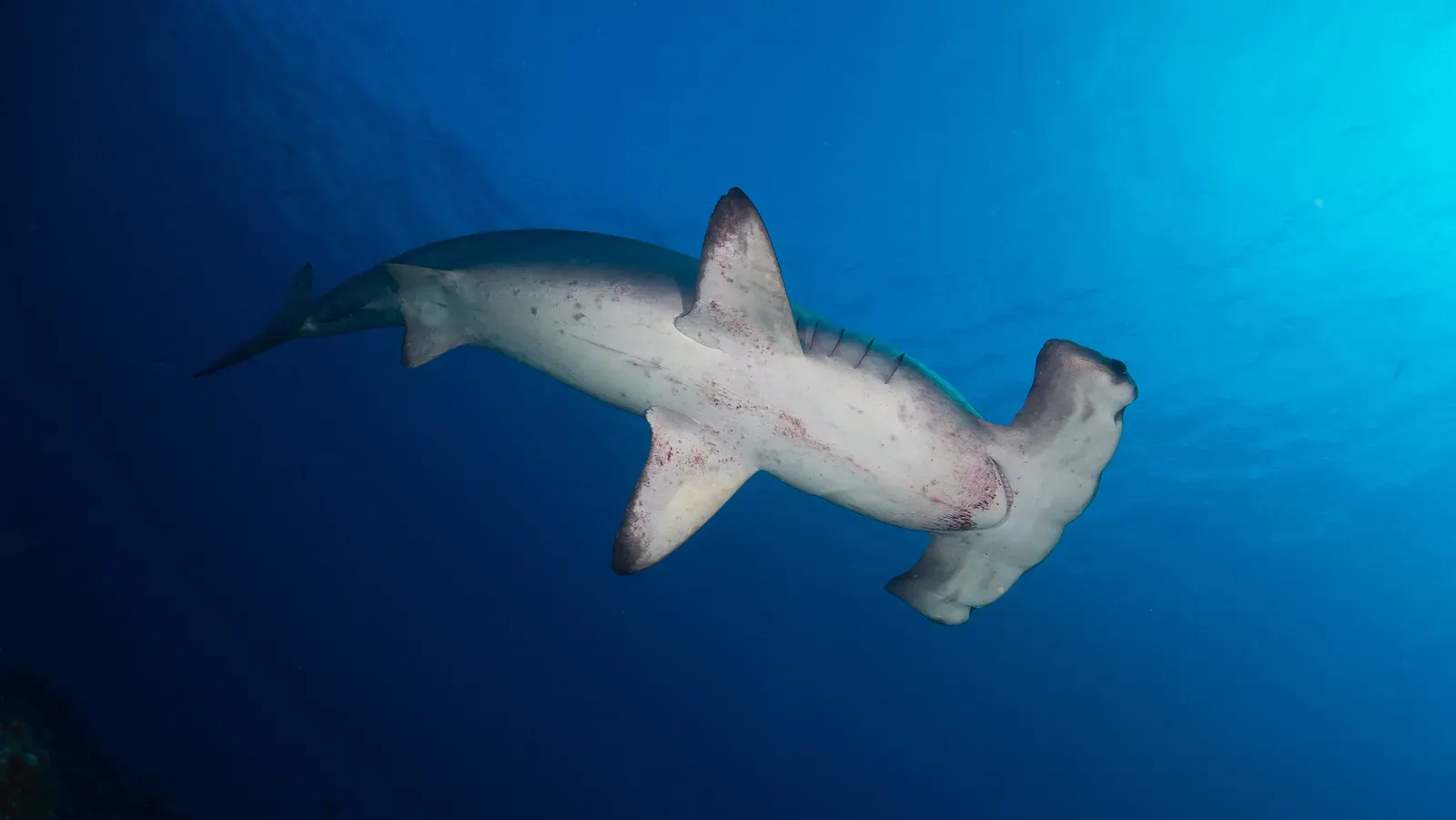
The scalloped hammerhead is a remarkable shark with one of the most unusual heads in the ocean. Its head is stretched out wide and flat on both sides, with its eyes at the far ends. The front edge has gentle bumps and dips, a bit like the scalloped edge of a shell, and that is how this shark got its name.
That amazing head is not just for looks. It is packed with hundreds of tiny sensors that can feel the faint signals given off by other animals. This helps the hammerhead find fish and other prey hidden under the sand. The wide shape also spreads the sensors far apart, which helps the shark steer and even feel the Earth’s own magnetic field, a little like a built-in compass.
Scalloped hammerheads are graceful swimmers. In the daytime they often come together in big groups called schools, and sometimes hundreds of them circle slowly over the same underwater spot. At night they spread out to hunt for fish, squid, and other sea creatures.
Even though it can grow longer than a car, this shark is calm and shy around people. It usually swims away from divers and is not considered dangerous to swimmers. Watching a school of them glide by is one of the great sights of the ocean.
Sadly, scalloped hammerheads are in real trouble. So many have been caught by people, especially for their fins, that their numbers have dropped very steeply. The worldwide list of threatened species (kept by the IUCN) now marks them as Critically Endangered, which is its most serious warning before a species is lost from the wild. Rules that protect sharks and their pups are helping to give these gentle giants a chance to recover.
My home
Coastal waters, open ocean, coral reef
Where I live
Pacific Ocean, Atlantic Ocean, Indian Ocean
What I eat
Sardines, mackerel, squid, octopus, rays, small sharks
How long I am
1.5–4.3 m
How heavy I am
29–152 kg
How long I live
35 years
The scalloped hammerhead's wide, flat head is covered in tiny sensors that help it find food hidden in the sand and even feel the Earth's magnetic field to help it steer.
During the day these sharks often gather in big schools, and sometimes hundreds of them swim together over the same spot in the sea.
Even though it is a large shark, the scalloped hammerhead is shy around people and is not thought to be dangerous to swimmers.
Every scalloped hammerhead can feel happy, scared and loved — just like you.
Looking after my friends
Needs lots of helpVery few are left in the wild — and many kind people are working hard to save them.
You can help by learning their names, keeping wild places clean, and telling someone why this animal matters.
Where this came from
- Sphyrna lewini (Scalloped Hammerhead) — Red List Assessment — IUCN Red List of Threatened Species
- Sphyrna lewini (scalloped hammerhead shark) — Animal Diversity Web, University of Michigan Museum of Zoology
- Scalloped hammerhead — Wikipedia