 ← All animals
 mammal · Ailurus fulgens
Red panda
Gallery
4 photos Real photograph 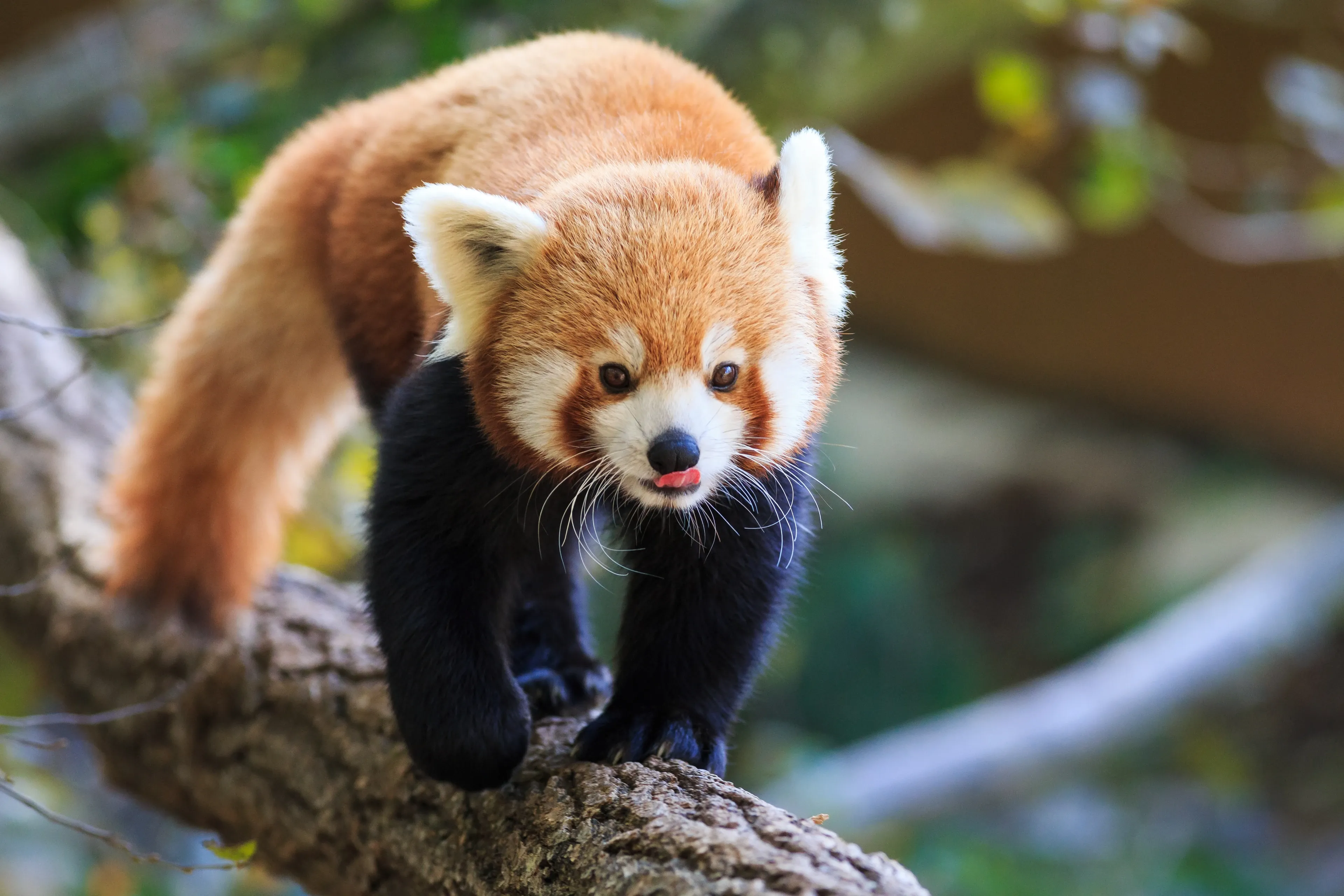 Real photograph
 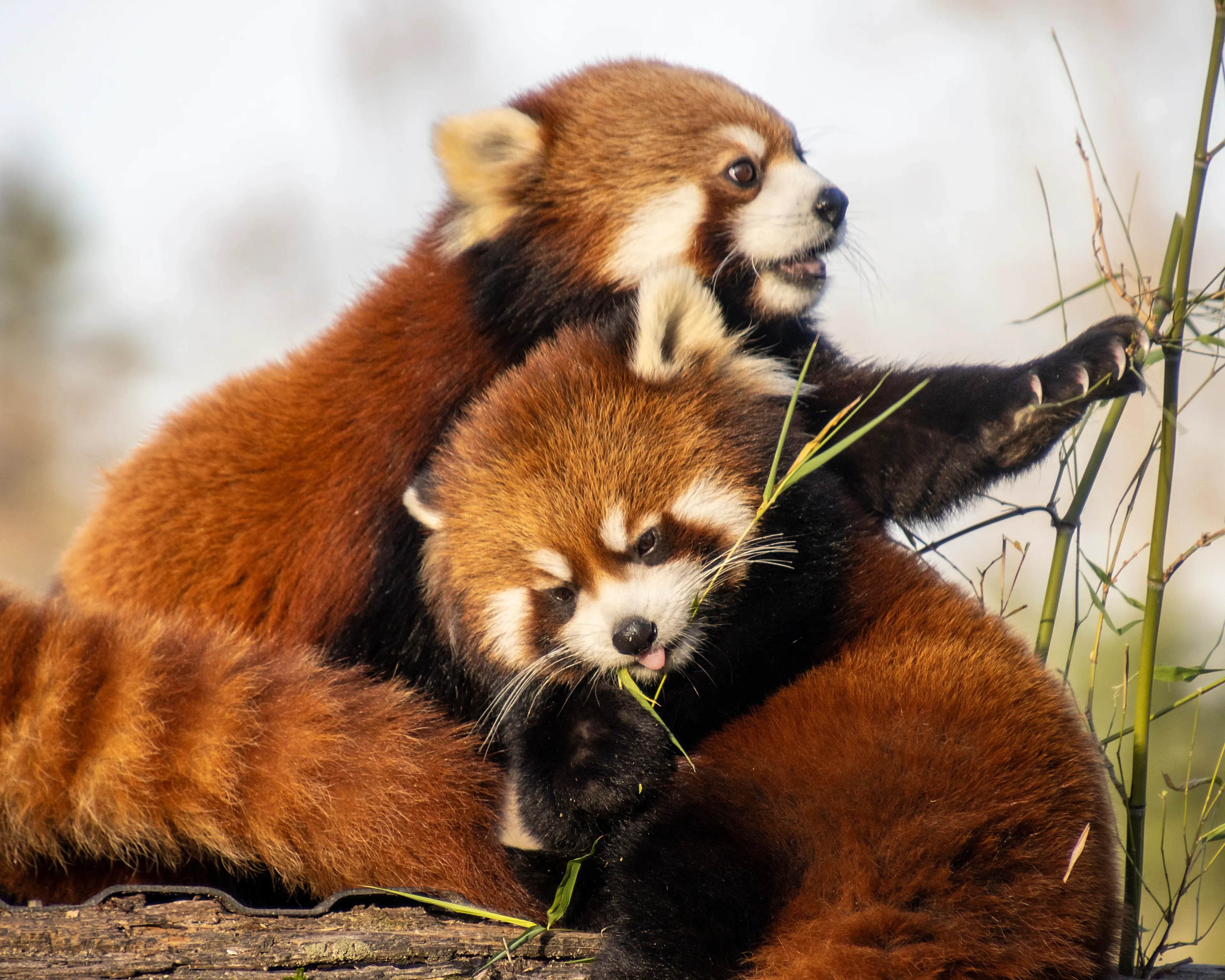 Real photograph
 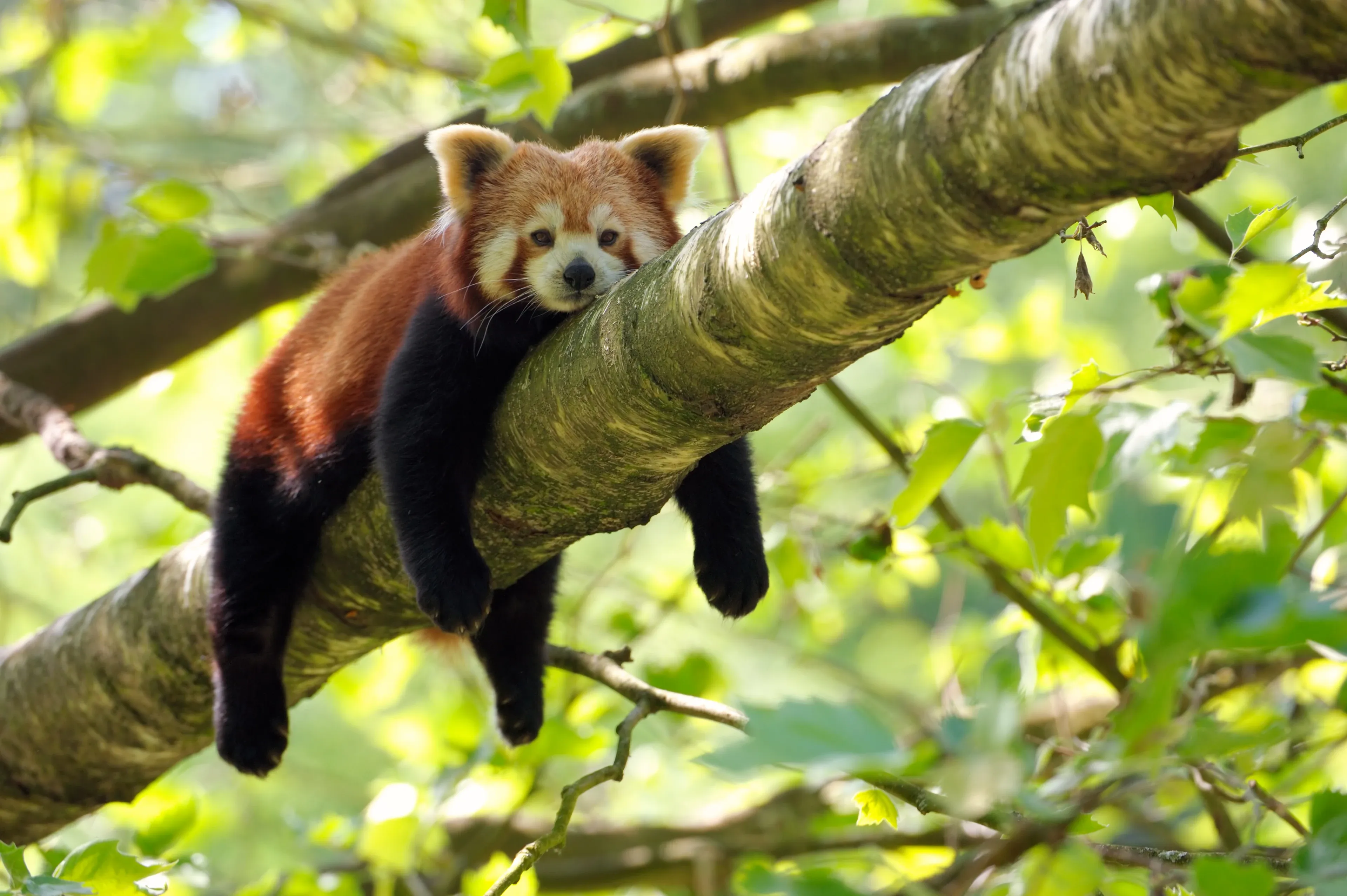 Real photograph
 Why we love them
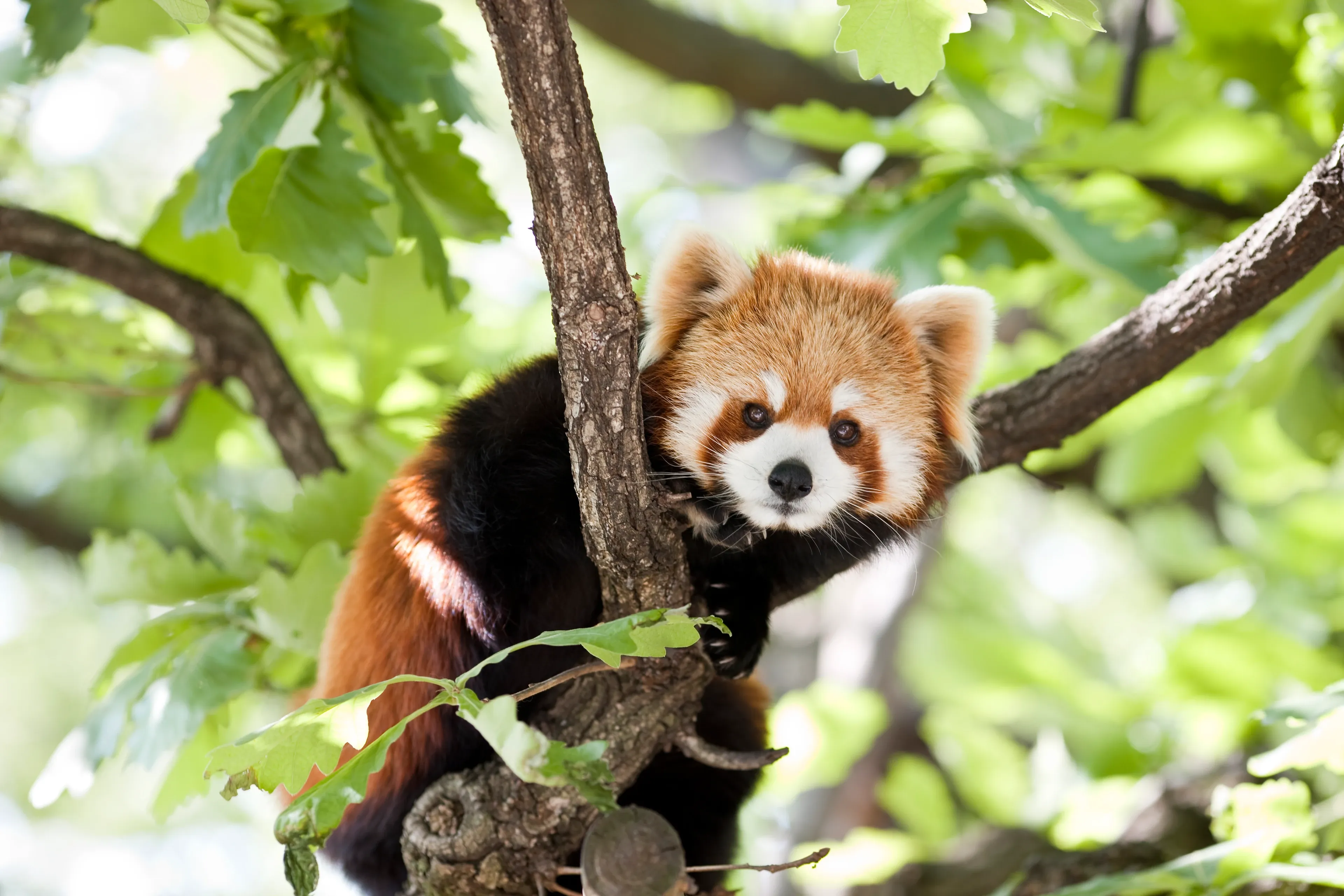
Meet the red panda, a small, russet-furred mammal from the cool mountain forests of Asia. It lives where trees rise above thick patches of bamboo, from the Himalayas eastwards into parts of China. Its long, ringed tail can help it balance on branches and keep it snug when the air turns cold.
Life among the trees calls for clever climbing gear. Curved claws and flexible ankles help a red panda travel along branches and climb down trunks headfirst. Fur on the soles of its feet adds warmth and grip. It also has a false thumb—a special wrist bone that presses against its paw so it can hold bamboo.
Bamboo leaves and shoots make up most of a red panda's meals, even though the animal belongs to the order Carnivora. It chooses tender parts of the plant and may sometimes eat fruit, insects, eggs or other small animal matter. Red pandas can be active by day, by night or around dawn and dusk, so there is no single daily timetable that fits them all.
Red pandas usually live alone. They leave scent marks that carry messages for other red pandas. When a mother is expecting cubs, she prepares a soft-lined nest in a tree hollow or another sheltered place. A litter often has two cubs, and the youngsters may remain with their mother for about a year while they grow.
Red pandas are Endangered, and their wild population is decreasing. In 2015, experts judged that fewer than 10,000 mature individuals remained in the wild, but that old range-wide figure is uncertain and is not a precise count of how many are alive today. Forest loss, roads, farming, livestock, roaming dogs, disease, snares and a changing climate can all cause trouble in different parts of their range. Protecting and reconnecting forests, working with local communities, caring for domestic dogs, preventing poaching and carefully monitoring wild animals can give red pandas a better chance.
This page uses the scientific name _Ailurus fulgens_ for red pandas across their range. Scientists are still studying whether two different lineages should be called two species—_Ailurus fulgens_ and _Ailurus styani_—or two subspecies within one species. For now, it is honest to say that the answer is still being debated.
My home
Mountain bamboo forest, montane forest
Where I live
Asia
What I eat
Bamboo leaves, bamboo shoots, fruit, insects, eggs, small animal matter
How long I am
0.56–0.625 m
How heavy I am
3.6–7.7 kg
A red panda has a special wrist bone called a false thumb that helps it hold bamboo while it eats.
Flexible ankles and curved claws help a red panda climb down a tree headfirst.
Thick fur covers the soles of a red panda's feet, helping with warmth and grip.
A red panda's long, bushy tail helps it balance and can wrap around its body like a warm scarf.
Although red pandas belong to the meat-eating order Carnivora, most of their food is bamboo.
Red pandas carefully choose tender bamboo leaves and shoots instead of eating every part of the plant.
The pale markings on each red panda's face have their own pattern, which can help people tell individuals apart.
The red panda was given the name “panda” before the giant panda received it.
Every red panda can feel happy, scared and loved — just like you.
Looking after my friends
How many are there?
Up to 10,000 mature wild red pandas were estimated worldwide in 2015.
The IUCN wording is fewer than 10,000, not a census; it combines incomplete range-wide evidence and does not provide a precise current abundance.
The population in global wild population was decreasing in 2015.
How are they doing?
EndangeredThis species has a very high risk of extinction in the wild, so protecting it matters greatly.
You can help by learning their names, keeping wild places clean, and telling someone why this animal matters.
Where this came from
- Ailurus fulgens — International Union for Conservation of Nature
- Red panda — Smithsonian's National Zoo and Conservation Biology Institute
- Red Panda Fact Sheet — San Diego Zoo Wildlife Alliance
- Ailurus fulgens and Ailurus styani — American Society of Mammalogists, Mammal Diversity Database
- Red Panda Status in Bhutan: National Red Panda Survey Report 2023 — Bhutan Department of Forests and Park Services / WWF
- Genomic evidence for two phylogenetic species and long-term population bottlenecks in red pandas — Science Advances
- Red Panda Phylogenetic Conundrum: Are There Two Distinct Species? — Journal of Biogeography