 Real photograph
 Platypus
Ornithorhynchus anatinus
say it PLAT-ih-puss
Why we love them
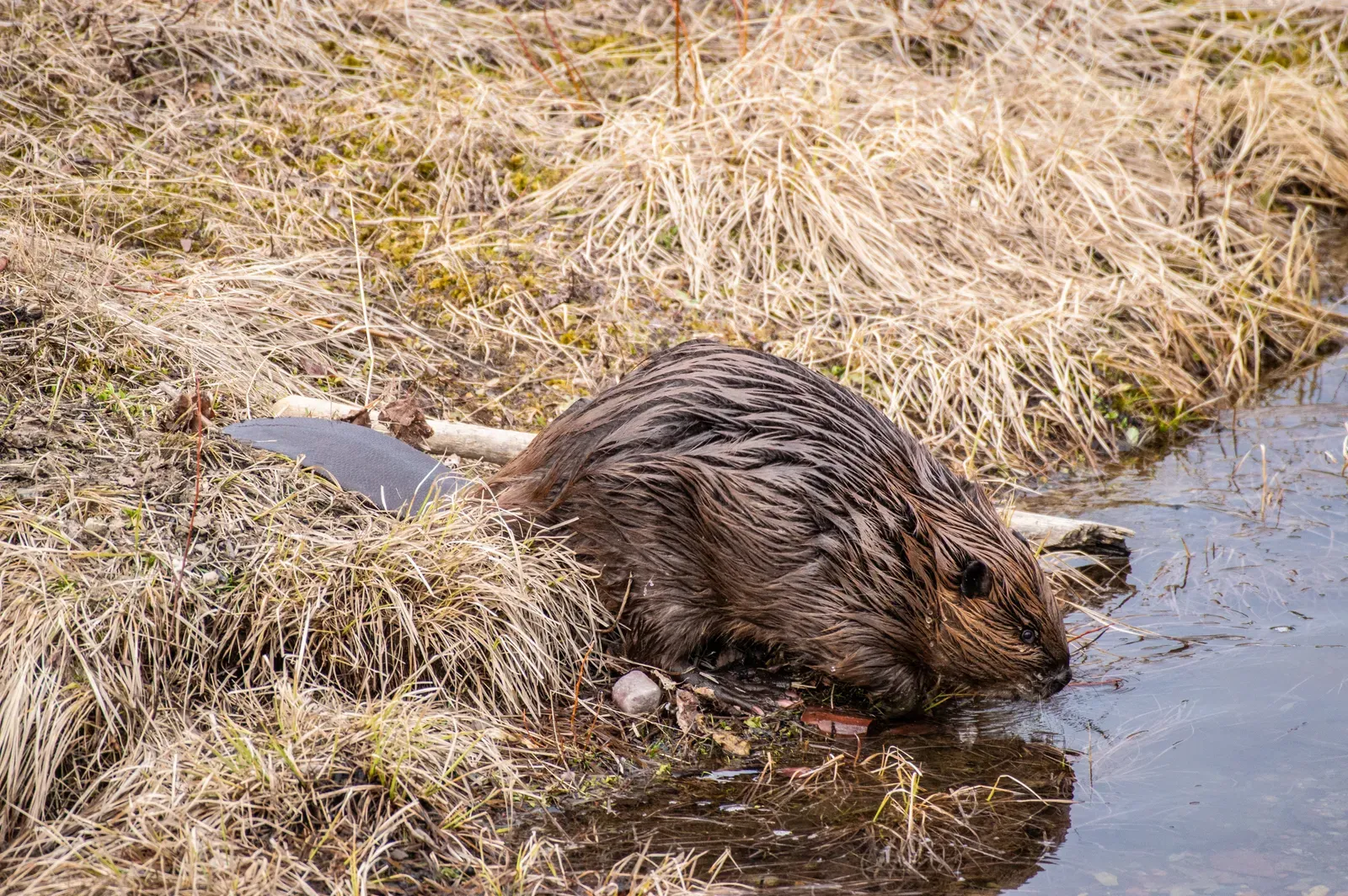
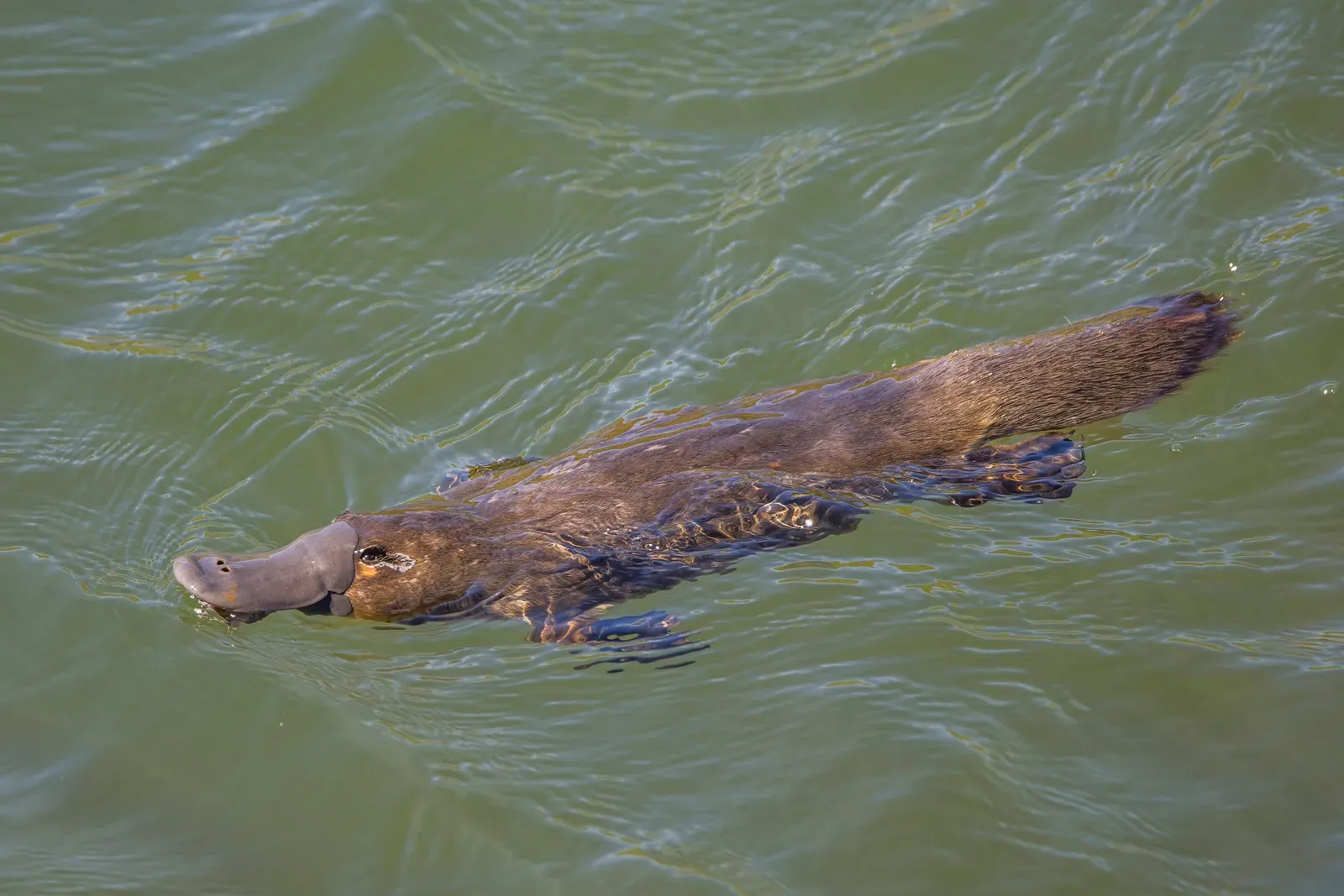
The platypus is one of the most surprising animals on Earth. It has a bill like a duck, a tail like a beaver, and webbed feet like an otter, all on one small, furry body. It lives in the rivers and streams of eastern Australia, where it swims and dives to find its food.
The platypus is a very special kind of mammal called a monotreme. Almost all other mammals give birth to live babies, but the platypus and its cousin the echidna lay eggs. The mother curls around her tiny eggs in a cosy burrow she digs into the riverbank, and when the babies hatch they drink her milk.
When a platypus dives, it closes its eyes, ears, and nose and cannot see at all. Instead, it uses its soft bill to feel its way along the bottom. The bill can even sense the little sparks of electricity made by wriggling worms, shrimp, and insect grubs. The platypus scoops up its snacks and tucks them into cheek pouches to munch when it comes back up for air.
Here is a calm but amazing fact: the male platypus has a small pointed spur on each back ankle. It can deliver a sting with venom in it. The platypus is a gentle, shy animal and would rather swim away than bother anyone, so people simply give wild platypuses room and let them go about their day.
Platypuses are mostly active at night and around dusk, resting in their burrows during the day. There are fewer platypuses than there used to be, because some of the rivers they need have changed or dried up. People in Australia are now looking after rivers and streams so these one-of-a-kind animals have clean, healthy water to swim in.
My home
River, freshwater stream, lake
Where I live
Oceania
What I eat
Insect larvae, freshwater worms, shrimp, crayfish, freshwater snails
How long I am
0.4–0.6 m
How heavy I am
0.7–2.4 kg
How long I live
12–21 years
The platypus is one of only a handful of mammals in the whole world that lay eggs instead of giving birth to live babies.
A platypus finds its food with its soft, rubbery bill, which can sense the tiny bursts of electricity that swimming creatures make.
Male platypuses have a little spur on each back ankle that can give a painful, venomous sting.
Every platypus can feel happy, scared and loved — just like you.
Looking after my friends
Worth watchingThey are doing okay, but people keep a careful eye on them so they stay safe.
You can help by learning their names, keeping wild places clean, and telling someone why this animal matters.
Where this came from
- Ornithorhynchus anatinus (Platypus) — Red List Assessment — IUCN Red List of Threatened Species
- Ornithorhynchus anatinus (duck-billed platypus) — Animal Diversity Web, University of Michigan Museum of Zoology
- Platypus — Wikipedia (English)