 Real photograph
 Pīwakawaka
Rhipidura fuliginosa
say it FAN-tayl
Why we love them
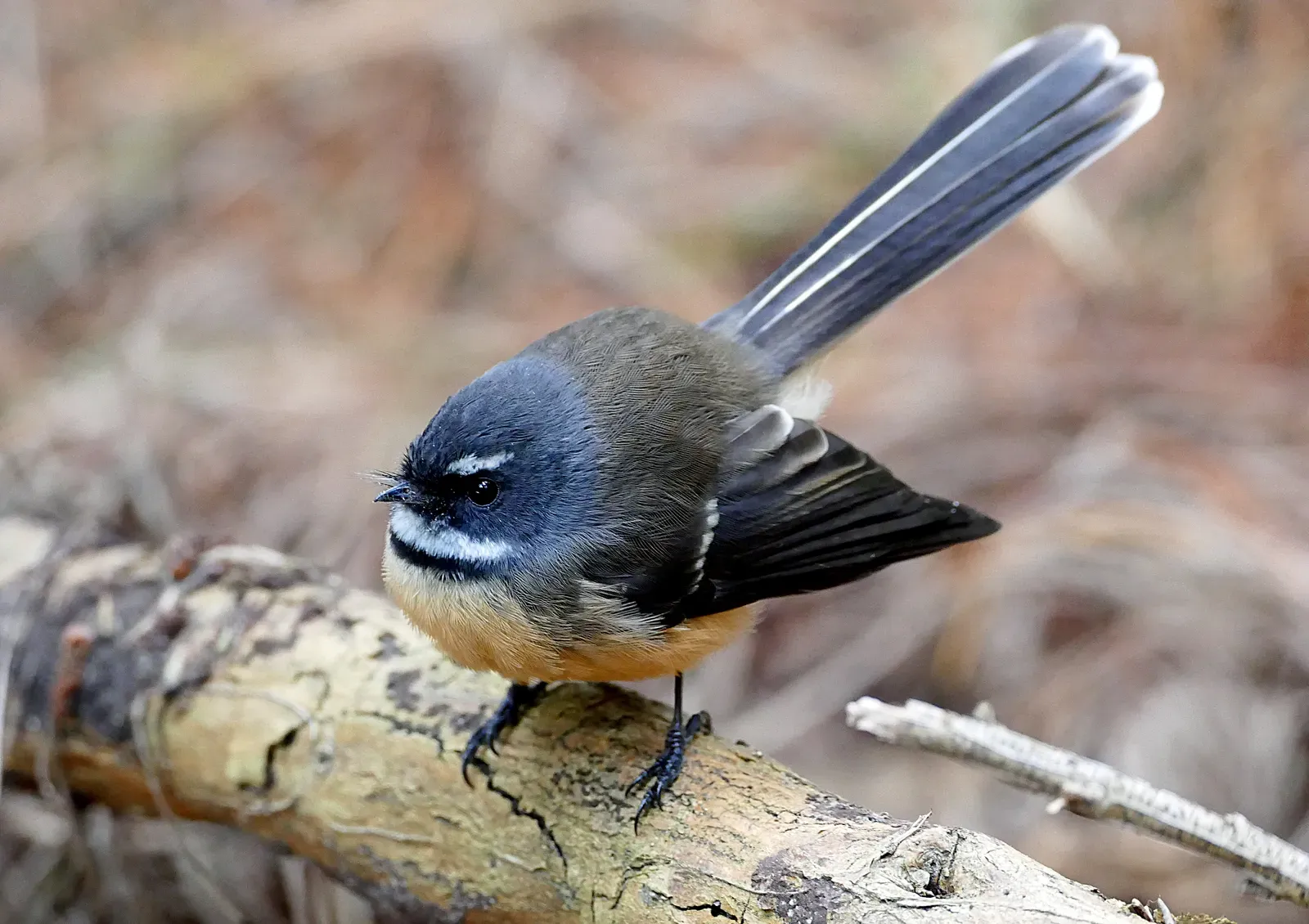
The New Zealand fantail, or pīwakawaka, is a tiny, friendly bird with a very special party trick: it can spread its long tail out into a wide fan. With its greyish head, white eyebrows, warm cinnamon tummy, and that fluttering black-and- white tail, it is one of the country’s best-loved and most familiar little birds.
Fantails are wonderfully bold for something so small. They often flit within a metre or two of people walking in the forest or the garden. There is a clever reason for this friendliness. As you walk or dig, you stir up tiny insects from the leaves, and the fantail zips in to catch them in mid-air.
While it is awake, a fantail is almost never still. It darts from twig to twig, turning and twisting and fanning its tail as it snaps up flying insects. Because it eats insects it is called an insectivore, and all that endless movement helps it chase down its fast, buzzing meals.
Not every fantail looks the same. There are two colour forms, called morphs. Most are the common pied form, but there is also a rarer dark morph, which makes up about 5 in every 100 fantails in the South Island. Spotting one of these smoky dark birds is a lovely surprise.
Fantails live in forests, shrublands, parks, and leafy gardens from the far north right down to Stewart Island, and they are listed as Least Concern. They can find homes in many kinds of trees, which helps them stay common. Planting native trees and keeping gardens safe for wildlife gives these cheerful tail-fanners plenty of places to flit and feed.
My home
Forest, shrubland, park, garden
Where I live
Oceania
What I eat
Flying insects, moths, flies, small invertebrates
How long I am
0.16–0.16 m
How heavy I am
0.008–0.008 kg
How long I live
5 years
The fantail often flits within a metre or two of walkers, catching the tiny insects that people stir up as they move.
While it is awake the fantail is almost never still, darting from twig to twig to snap up flying insects.
Pīwakawaka come in two colour forms, a common pied one and a rarer dark one that makes up about 5 in every 100 birds in the South Island.
Every pīwakawaka can feel happy, scared and loved — just like you.
Looking after my friends
Doing wellThere are lots of these animals in the wild right now. That is good news!
You can help by learning their names, keeping wild places clean, and telling someone why this animal matters.
Where this came from
- Rhipidura fuliginosa (New Zealand Fantail) — Red List Assessment — IUCN Red List of Threatened Species / BirdLife International (Red List Authority for birds)
- New Zealand fantail | Pīwakawaka — Rhipidura fuliginosa — New Zealand Birds Online (Te Papa / Ornithological Society of New Zealand)
- New Zealand fantail — Wikipedia