 Real photograph
 Mediterranean wolf spider
Lycosa tarantula
say it ly-KOH-suh tuh-RAN-tew-luh
Why we love them
The Mediterranean wolf spider is a large, sturdy spider that lives on warm, dry ground around the Mediterranean, especially in southern Europe. She is coloured in soft browns and greys, which help her blend into the soil and pebbles. She is a shy creature who spends most of her time close to home, and she is far more interested in beetles and crickets than in people.
This spider does not spin a web to catch her food. Instead, she hunts like a little wolf — that is how wolf spiders got their name. She digs a cosy burrow in the ground and waits quietly at the doorway. When an insect passes by in the night, she dashes out, chases it down, and carries it back home. She has excellent eyesight for spotting movement in the dark.
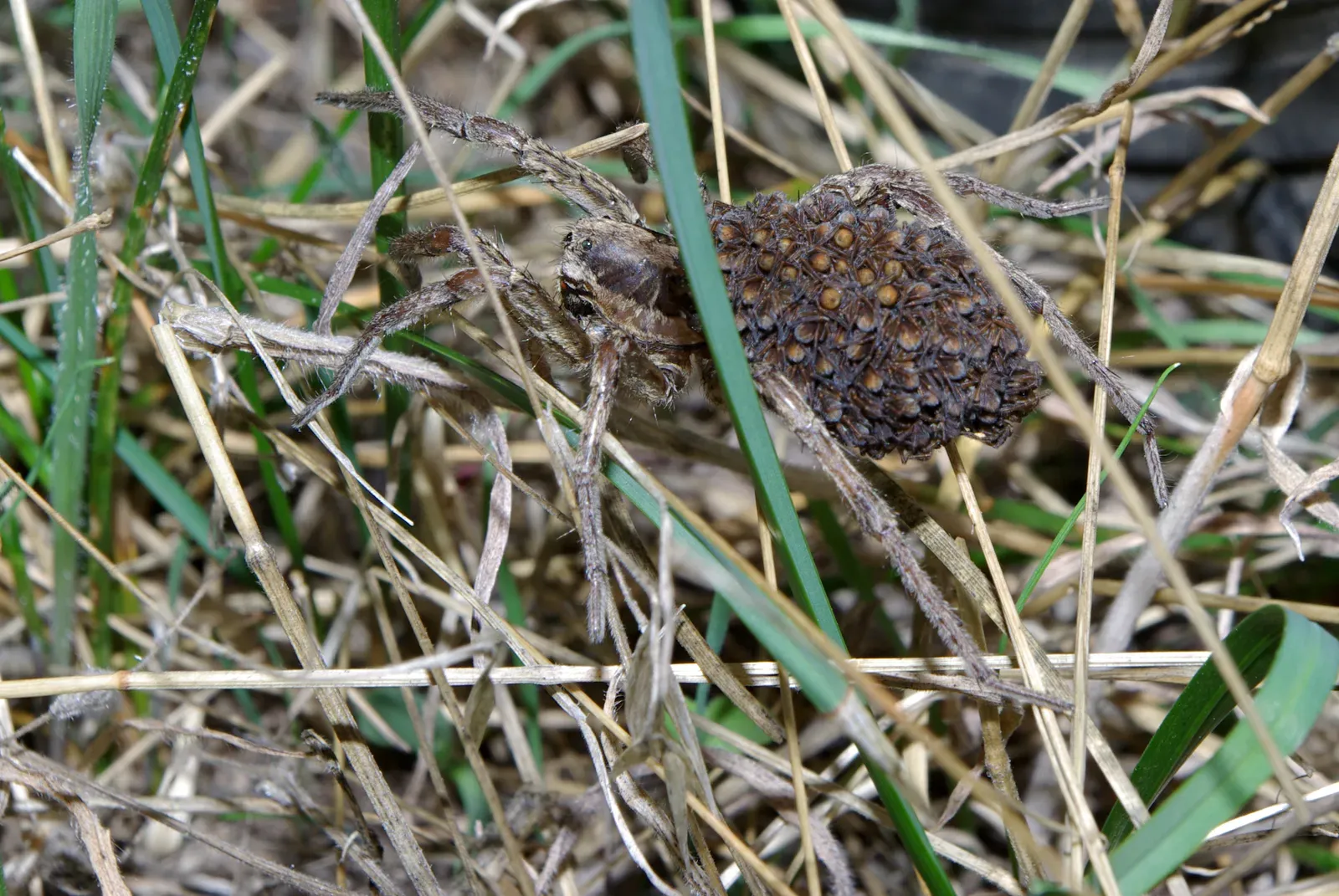
Mother wolf spiders are among the most devoted parents in the spider world. She wraps her eggs in a silk ball and carries it with her wherever she goes, fixed to the back of her body. When the babies hatch, dozens of tiny spiderlings climb up onto her back and ride there together, snug and safe, until they are big enough to head off and dig burrows of their own.
Long ago in the town of Taranto in southern Italy, people gave this spider the name “tarantula.” They even had a lively folk dance, the tarantella, tied to old stories about its bite — though its bite is actually mild and nothing to fear. The big, hairy tarantulas many people picture today are a completely different group of spiders that simply borrowed the very same name.
These spiders spend the day resting in their burrows and come out at night to hunt, so people hardly ever see them. They have not been listed as needing special protection. By catching insects on warm hillsides and fields, the Mediterranean wolf spider plays a quiet, useful part in keeping the countryside healthy and full of life.
My home
Grassland, scrubland, dry open ground, burrow
Where I live
Europe
What I eat
Insects, beetles, crickets, other ground arthropods
How long I am
0.019–0.03 m
How long I live
2–4 years
This spider doesn't spin a web to catch food — it hunts on the ground like a little wolf, chasing prey at night.
A mother wolf spider carries her egg sac with her, and once the babies hatch they climb onto her back and ride around until they are big enough to live on their own.
She was the original "tarantula," named long ago after the town of Taranto in Italy — the big hairy tarantulas people picture today are a completely different group of spiders.
Every mediterranean wolf spider can feel happy, scared and loved — just like you.
Looking after my friends
Not checked yetNo one has counted them carefully yet.
You can help by learning their names, keeping wild places clean, and telling someone why this animal matters.
Where this came from
- Lycosa tarantula — IUCN Red List (no assessment found) — IUCN Red List of Threatened Species
- Lycosa tarantula — Animal Diversity Web (classification) — Animal Diversity Web (University of Michigan Museum of Zoology)
- Lycosa tarantula — Wikipedia