 Real photograph
 Mandarin duck
Aix galericulata
say it MAN-duh-rin duck
Why we love them
The mandarin duck is a small, beautiful duck that comes from the woodlands and lakes of East Asia. Today you can also spot these ducks in parks and rivers in Britain and other parts of Europe, where they have made new homes. They are a little smaller than many other ducks and love water with plenty of trees nearby.
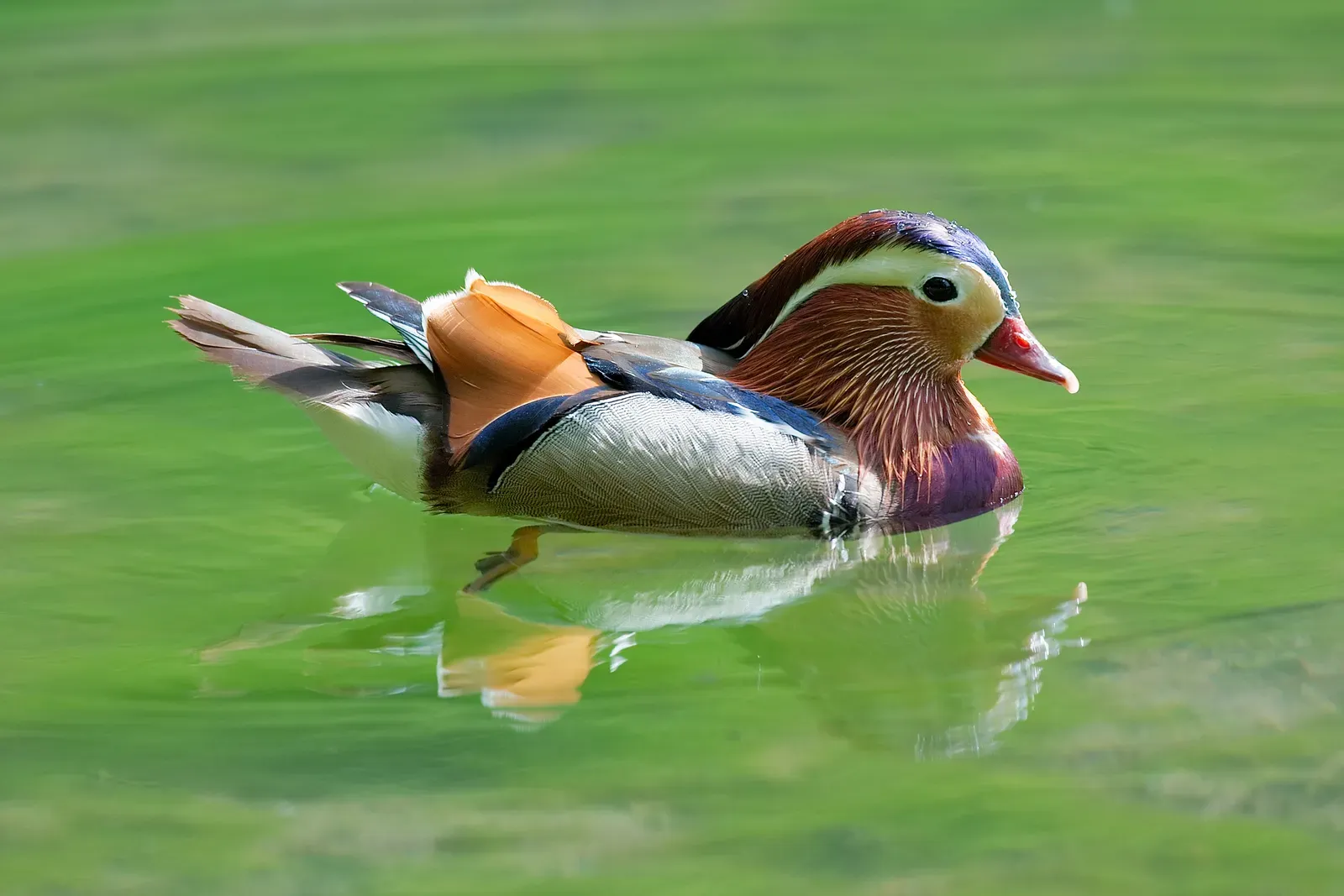
The male mandarin duck is famous for being wonderfully colourful. He has a red bill, a fluffy crest, a purple chest, and bright orange feathers on his back that point up like tiny sails. The female is softer in colour, with grey-brown feathers and a neat white ring around each eye, which helps her stay hidden while she cares for her eggs.
Mandarin ducks like to eat all sorts of things. They nibble seeds, acorns, and water plants, and they also enjoy snails, insects, and little fish. They often look for food in the early morning and the evening, dabbling in the water or walking along the ground.
These ducks build their nests in a surprising place: inside holes in trees, high above the ground and close to water. In spring the mother lays her eggs there and keeps them warm. When the fluffy ducklings hatch, they leap out of the tree nest and follow their mother straight to the nearest pond or stream.
Experts still list mandarin ducks as least concern, which is happy news, even though logging and loss of wooded nesting places have hurt some Asian populations in the past. Looking after clean rivers, ponds, and woodlands with old nest trees helps make sure these pretty ducks always have a place to swim, nest, and raise their ducklings.
My home
Woodland, lakes, rivers, ponds, marshes
Where I live
Asia, Europe
What I eat
Seeds, acorns, beech mast, aquatic plants, snails, insects, small fish
How long I am
0.41–0.49 m
How heavy I am
0.43–0.69 kg
The male mandarin duck is one of the most colourful ducks in the world, with orange feathers on his back that stand up like little sails.
Mandarin ducks make their nests inside holes in trees, high up and close to water.
When the ducklings are ready, they hop out of their tree nest and tumble gently down to follow their mother to the water.
Every mandarin duck can feel happy, scared and loved — just like you.
Looking after my friends
Doing wellThere are lots of these animals in the wild right now. That is good news!
You can help by learning their names, keeping wild places clean, and telling someone why this animal matters.
Where this came from
- Aix galericulata (Mandarin Duck) — Red List Status — IUCN Red List of Threatened Species
- Mandarin Duck Aix galericulata — Species Factsheet — BirdLife International
- Aix galericulata (Mandarin duck) — Animal Diversity Web, University of Michigan
- Mandarin duck — Wikipedia