 Real photograph
 Hippopotamus
Hippopotamus amphibius
say it hip-uh-POT-uh-muss
Why we love them
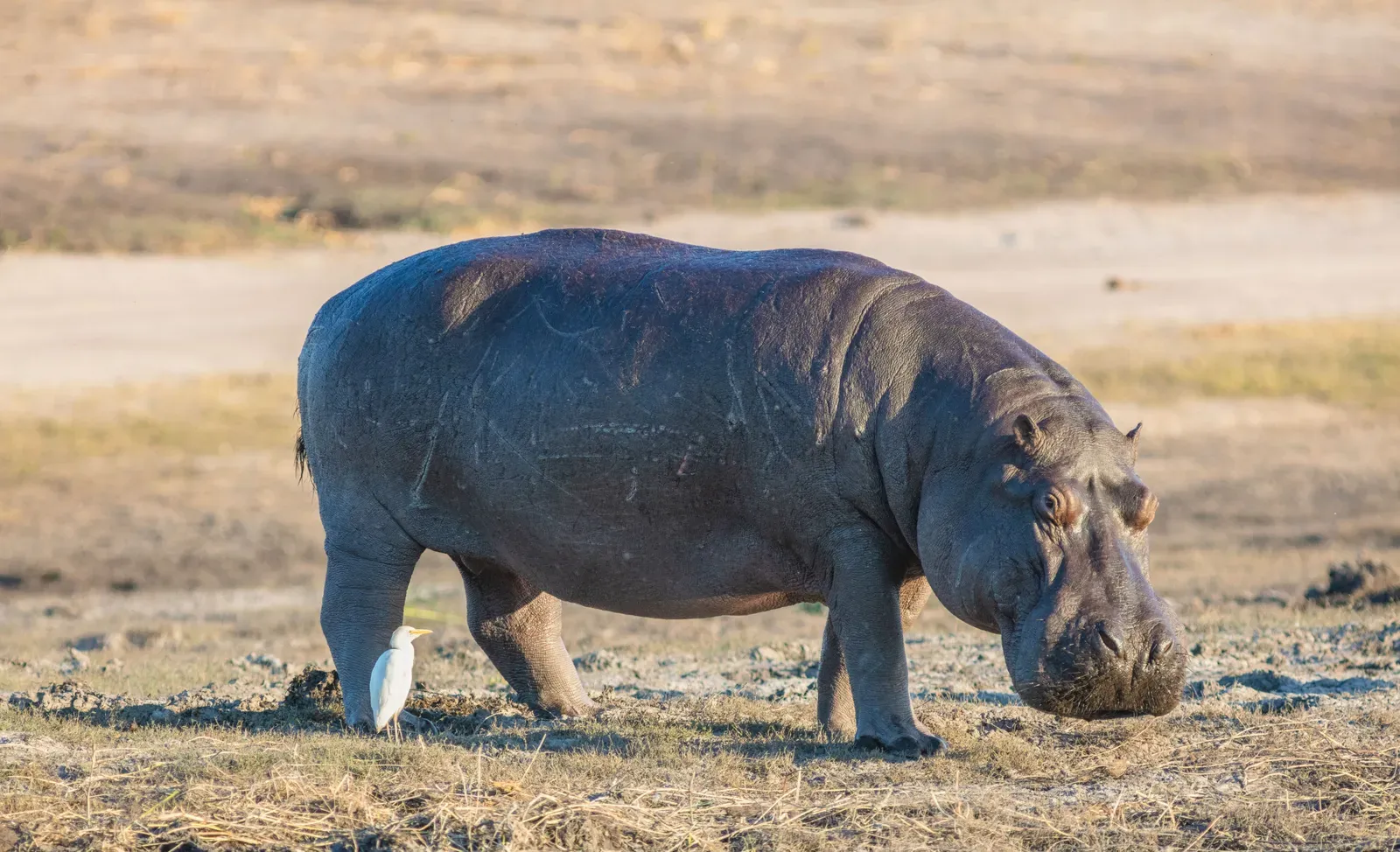
The hippopotamus, or hippo for short, is a huge, round, plant-eating mammal that lives in the rivers, lakes, and swamps of Africa. Its name comes from old Greek words meaning “river horse”. After the elephant and the rhinoceros, the hippo is one of the heaviest land animals of all, and a big male can weigh as much as a small truck.
Hippos love the water. They spend most of the day resting in rivers and lakes to stay cool and keep their skin from drying out in the sun. Their eyes, ears, and nostrils sit high on top of their head, so they can see, hear, and breathe while the rest of their body stays hidden underwater. They can even close their nostrils and walk along the riverbed while holding their breath.
A hippo’s skin is special. It makes an oily reddish liquid that works like a natural sunscreen, protecting the hippo from sunburn and helping to keep its skin healthy. Long ago people thought hippos were sweating blood, but it is really just their own clever skin cream.
When the sun goes down, hippos climb out of the water and follow well-worn paths to grassy areas to feed. They use their wide, strong lips to pull up grass, and a single hippo can eat around 40 kilograms in one night. After a few hours of grazing they head back to the water before morning.
Hippos live together in groups, sometimes with dozens of animals resting in the same stretch of water. They can be grumpy and are best given plenty of space, but among themselves they grunt, bellow, and even “talk” to one another both above and below the water.
There are fewer hippos than there used to be, mainly because they are losing the grassy land and clean water they need, and because they are sometimes hunted. National parks and reserves now protect many hippos, giving them safe rivers to rest in and grass to eat.
My home
River, lake, swamp, wetland, grassland
Where I live
Africa
What I eat
Grasses, reeds, shoots
How long I am
3.3–5 m
How heavy I am
1300–3200 kg
How long I live
40–50 years
Hippos spend most of the day resting in rivers and lakes to keep cool, and can hold their breath and walk along the bottom underwater for about five minutes at a time.
A hippo's skin makes its own natural sunscreen, an oily reddish liquid that protects it from the hot sun and helps keep its skin healthy.
Even though they spend their days in water, hippos come out at night to eat grass, and one hippo can munch around 40 kilograms of it in a single night.
Every hippopotamus can feel happy, scared and loved — just like you.
Looking after my friends
Needs our helpTheir numbers are getting smaller, so people are working to protect their homes.
You can help by learning their names, keeping wild places clean, and telling someone why this animal matters.
Where this came from
- Hippopotamus amphibius (Hippopotamus) — Red List Assessment — IUCN Red List of Threatened Species
- Hippopotamus amphibius (hippopotamus) — Animal Diversity Web, University of Michigan Museum of Zoology