 Real photograph
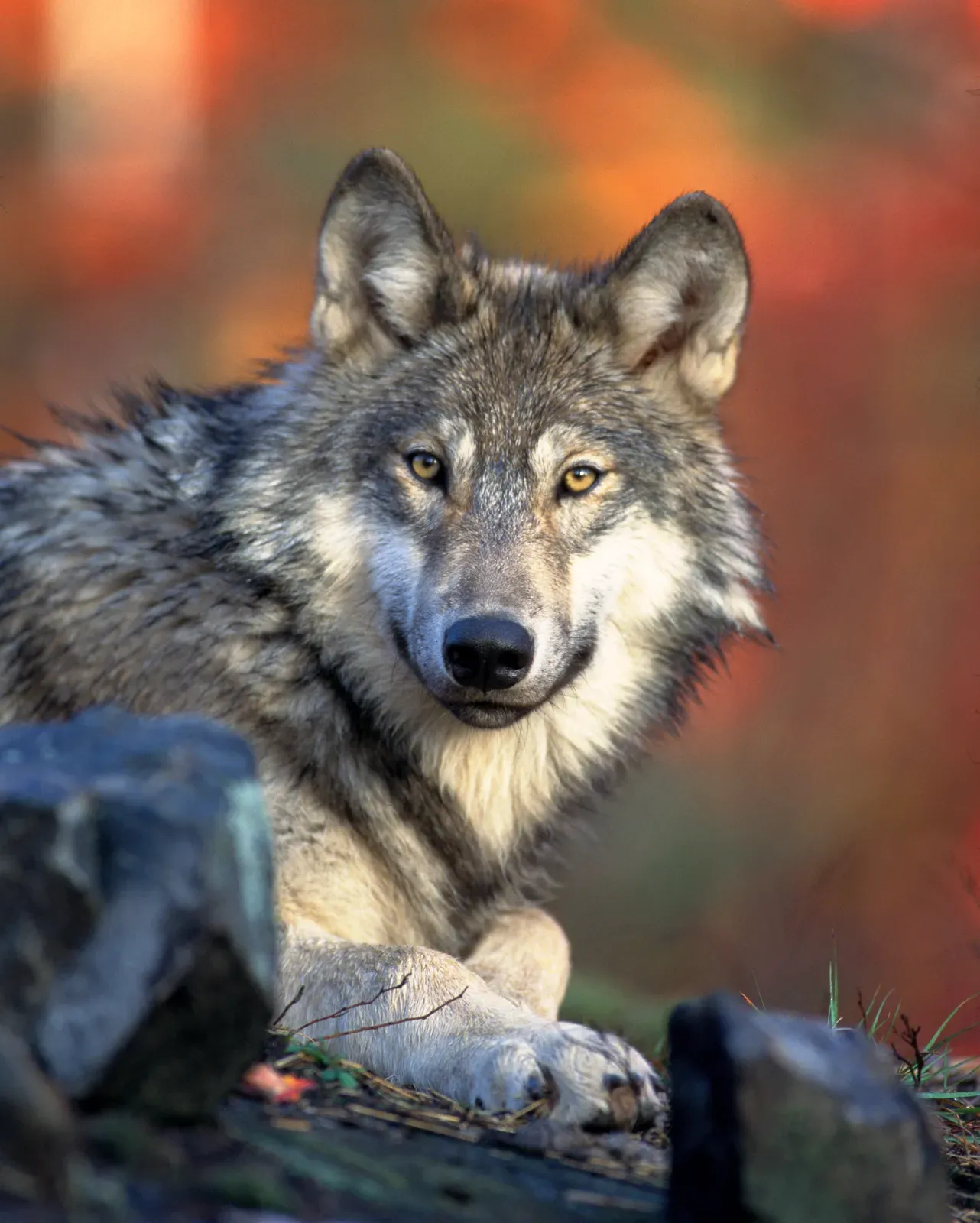
 Grey wolf
Canis lupus
say it GRAY WULF
Why we love them
The grey wolf is the biggest wild member of the dog family. It has a bushy tail, pointed ears, and a thick coat that can be grey, brown, black, or almost white. Wolves are strong walkers and can travel a very long way in a single day. They live in many places across North America, Europe, and Asia, from cold snowy lands to forests and open grassland.
Wolves are very sociable animals. They live in family groups called packs, usually a mother and father and their young. Everyone in the pack helps to look after the little ones and to find food, so a wolf is almost never alone.
One of the most special things about wolves is their howl. A wolf tips back its head and makes a long, musical call. Howling helps the pack stay together when they are spread out, and it tells other packs, “This is our home.” Wolves also whine, growl, and use their tails and faces to share how they feel.
Wolves are hunters that work as a team. Together a pack can follow and catch large plant-eaters like deer, moose, and elk, and they also eat smaller animals when they can. By hunting the weakest animals, wolves help keep the wild herds healthy.
Baby wolves are called pups. They are born in a cosy den, and at first the whole pack brings them food and keeps them safe. Long ago there were far fewer wolves, but with new laws to protect them their numbers have grown steadily, and today the grey wolf is listed as least concern. People and wolves are still learning how to share the land so both have room to live.
My home
Forest, tundra, grassland, mountains
Where I live
Asia, Europe, North America
What I eat
Deer, moose, elk, caribou, smaller animals
How long I am
0.87–1.3 m
How heavy I am
23–80 kg
How long I live
5–13 years
Wolves live and hunt together in close family groups called packs.
Wolves howl to talk to one another and to tell other packs where they are.
All pet dogs, from tiny puppies to big ones, are related to the grey wolf.
Every grey wolf can feel happy, scared and loved — just like you.
Looking after my friends
Doing wellThere are lots of these animals in the wild right now. That is good news!
You can help by learning their names, keeping wild places clean, and telling someone why this animal matters.
Where this came from
- Canis lupus (Grey wolf) — Red List Assessment — IUCN Red List of Threatened Species
- Wolf — Wikipedia (Wikimedia Foundation)
- Canis lupus (gray wolf) — Animal Diversity Web, University of Michigan Museum of Zoology