 Real photograph
 Great Horned Owl
Bubo virginianus
say it BOO-boh vir-jin-ee-AH-nus
Why we love them
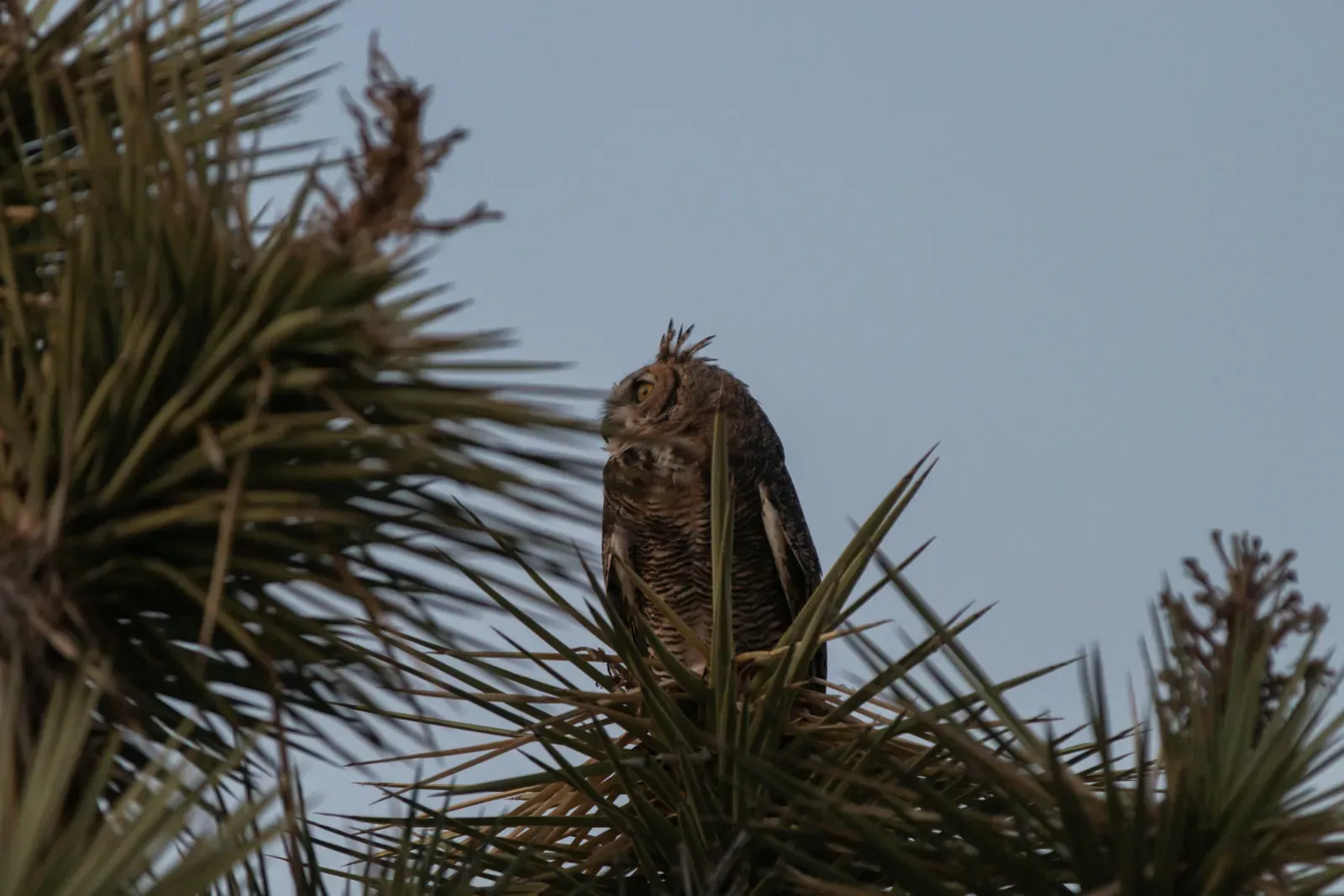
The great horned owl is a big, powerful owl with two feathery tufts on its head that look a little like horns or cat ears. It has huge yellow eyes, a soft brown-and-grey coat of feathers, and a deep, booming voice. You can find these owls all across the Americas, from icy forests in the north to warm woodlands far to the south.
The “horns” that give this owl its name are a bit of a mystery. They are not ears, and they are not real horns. They are simply little bunches of feathers, and scientists think they might help the owl blend in with tree bark or send signals to other owls. The owl’s real ears are hidden on the sides of its head, and they are very good at hearing.
Great horned owls are skilled night hunters. They wait quietly on a branch, watching and listening, then swoop down to catch mice, rabbits, and other small animals. Their feathers have soft, fringed edges that hush the sound of their wings, so they can glide through the dark almost without a whisper. Big, strong feet help them hold on to what they catch.
These owls are most active at night and around sunset, and they rest during the day, often sitting very still in a tree where they are hard to spot. Their large eyes gather the tiny bit of light there is after dark, which helps them see when the world looks black to us.
In spring you might hear a great horned owl before you ever see one. Its deep “hoo-hoo-hoo” floats through the evening air, and a pair will often hoot back and forth to each other. Each owl’s call is a little different, so they can tell who is who.
Great horned owls are doing well, and there are millions of them living across the Americas. They are happy in forests, deserts, and even city parks, as long as there are tall trees or ledges for resting and nesting. Looking after wild places, and being careful with the poisons used to control rats and mice, helps keep these clever night birds thriving.
My home
Forest, woodland, desert, grassland, city parks
Where I live
North America, South America
What I eat
Rabbits, hares, mice, voles, squirrels, birds
How long I am
0.43–0.64 m
How heavy I am
0.9–1.8 kg
How long I live
13–28 years
The pointy "horns" on a great horned owl's head are not ears or horns at all. They are just tufts of feathers, and no one is quite sure what they are for.
These owls fly almost silently. Soft, comb-like edges on their feathers hush the sound of the air, so their supper never hears them coming.
A great horned owl's deep hoot can carry far across the dark, and pairs often answer each other back and forth, like a call and reply.
Every great horned owl can feel happy, scared and loved — just like you.
Looking after my friends
Doing wellThere are lots of these animals in the wild right now. That is good news!
You can help by learning their names, keeping wild places clean, and telling someone why this animal matters.
Where this came from
- Bubo virginianus (Great Horned Owl) — Red List Assessment — IUCN Red List of Threatened Species / BirdLife International (Red List Authority for birds)
- Bubo virginianus (great horned owl) — Animal Diversity Web, University of Michigan Museum of Zoology
- Great Horned Owl Life History — Cornell Lab of Ornithology — All About Birds
- Great horned owl — Wikipedia