 Real photograph
 Giant panda
Ailuropoda melanoleuca
say it eye-loo-ROP-oh-duh mel-an-oh-LOO-kuh
Why we love them
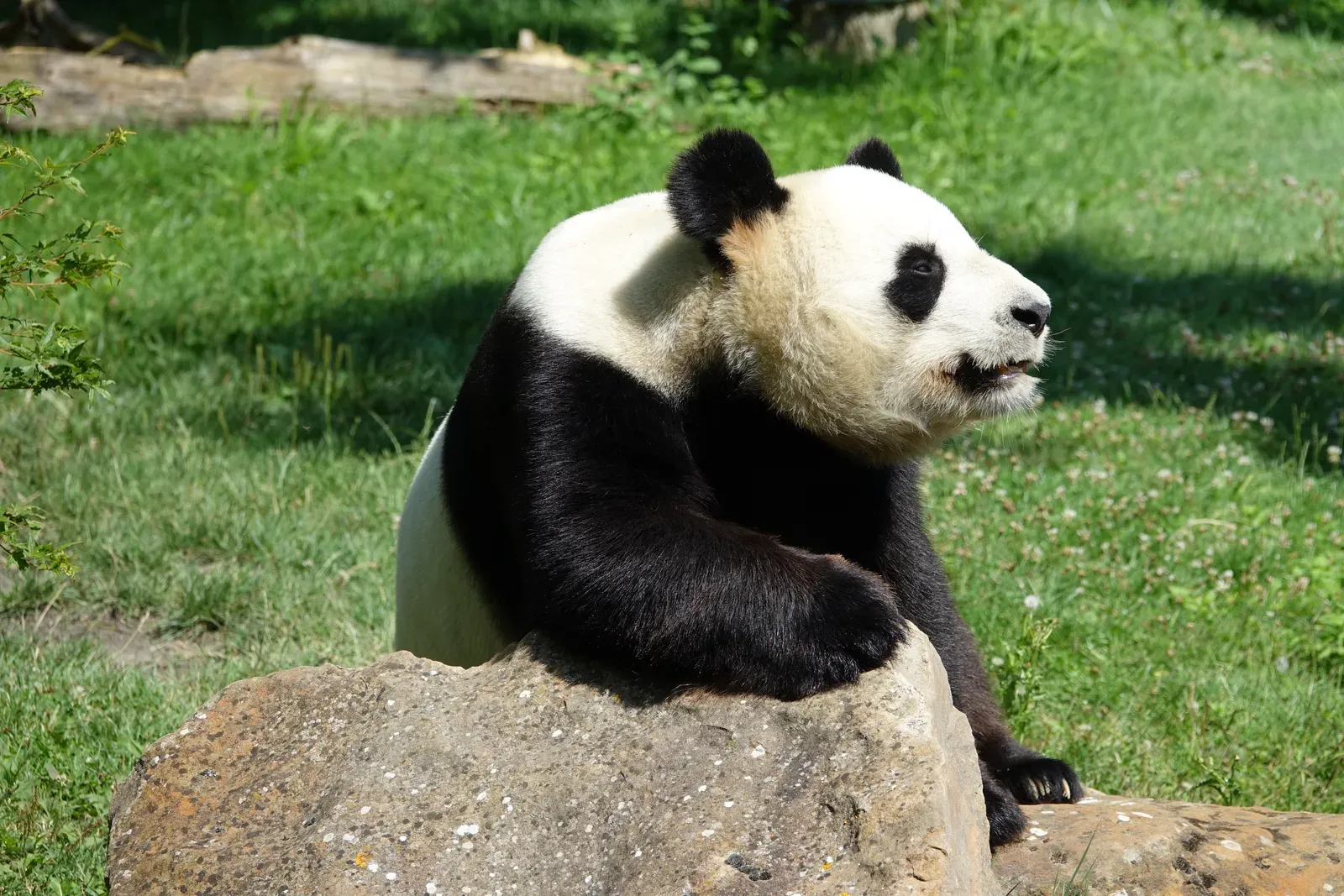
The giant panda is a big, cuddly-looking bear with a soft white coat and black patches around its eyes, ears, and legs. Pandas live high up in the misty mountain forests of China, where thick groves of bamboo grow.
Bamboo is a panda’s favourite food by far. Almost everything a panda eats is bamboo, and it takes a lot to fill up such a large bear. A panda can spend about ten to twelve hours a day eating, sitting up like a person with its snack held in its front paws.
Pandas have a clever trick for holding their food. A special bone in the wrist sticks out like an extra thumb, so a panda can grip a bamboo stalk and strip off the leaves. Its strong jaws and flat teeth then crunch right through the tough, woody stems.
Baby pandas begin life very small. A newborn cub is pink, blind, and only about the size of a stick of butter, which is tiny next to its big mother. The cub grows quickly on its mother’s milk and may stay close to her for a year or more before living on its own.
For a long time there were very few pandas left, but careful work has helped them. People in China have protected big areas of bamboo forest and planted more bamboo to join the forests together. Thanks to this help, the number of wild pandas has been slowly growing.
My home
Mountain bamboo forest, montane forest
Where I live
Asia
What I eat
Bamboo, bamboo shoots, fruit, small animals
How long I am
1.5–1.8 m
How heavy I am
80–125 kg
How long I live
15–20 years
A giant panda can spend more than half of its day eating, munching bamboo for around ten to twelve hours.
Pandas have a special wrist bone that works like an extra thumb, helping them grip bamboo stalks while they eat.
A newborn panda cub is tiny and pink, about the size of a stick of butter, even though its mother is very big.
Every giant panda can feel happy, scared and loved — just like you.
Looking after my friends
Needs our helpTheir numbers are getting smaller, so people are working to protect their homes.
You can help by learning their names, keeping wild places clean, and telling someone why this animal matters.
Where this came from
- Ailuropoda melanoleuca (Giant Panda) — Red List Assessment — IUCN Red List of Threatened Species
- Giant panda — Smithsonian's National Zoo and Conservation Biology Institute
- Ailuropoda melanoleuca (giant panda) — Animal Diversity Web, University of Michigan Museum of Zoology