 Real photograph
 European Hedgehog
Erinaceus europaeus
say it eh-rih-NAY-see-us yoo-roh-PEE-us
Why we love them
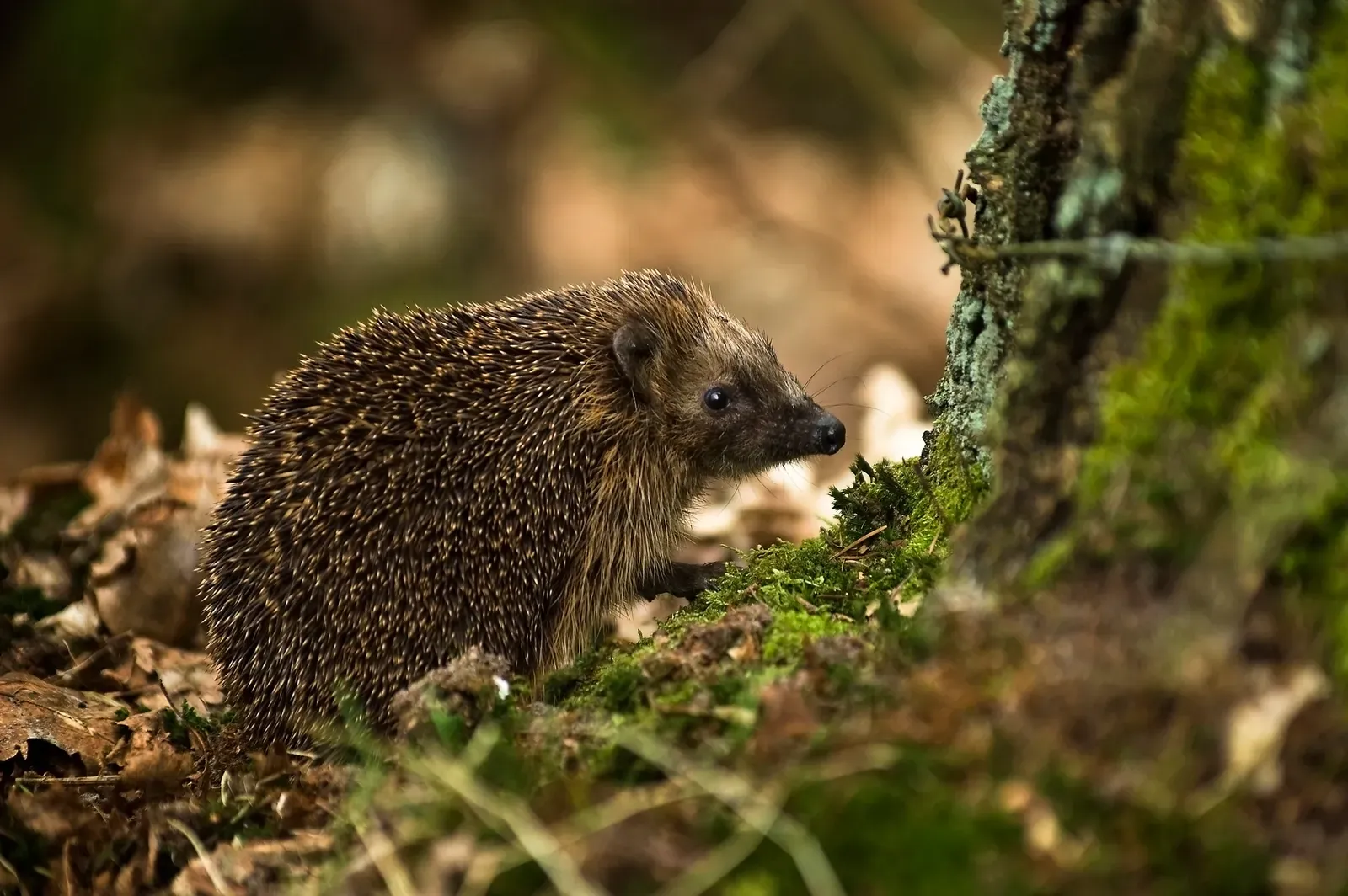
The European hedgehog is a small, round animal covered in thousands of short, stiff spines. It lives across much of Europe, in woodlands, grassy fields, leafy hedgerows, and even in parks and gardens. Its face, tummy, and little legs are covered in soft fur instead of spines, so it looks a bit like a prickly ball with a friendly nose peeking out.
Hedgehogs come out mostly at night to look for food. They have a wonderful sense of smell and snuffle along the ground searching for beetles, earthworms, caterpillars, slugs, and snails. As they trundle about, they often stop to sniff the air, then carry on with their busy hunt.
A hedgehog’s spines are its clever way of staying safe. Each spine is hollow so it stays light, and the hedgehog can raise them all at once. If something worries it, the hedgehog curls up into a tight ball, tucking its soft parts inside so that only the prickles show on the outside.
Baby hedgehogs are called hoglets. They are born blind, with their first spines soft and hidden just beneath the skin so they don’t hurt their mother. Within a day or two those first spines push through, and soon a darker set grows in too. A mother usually looks after four to six hoglets, keeping them warm in a nest until they are big enough to explore on their own.
When the weather turns cold, European hedgehogs hibernate. They build a snug nest of leaves and fall into a deep sleep that saves their energy until spring. In recent years there are fewer hedgehogs in many countries than there once were, partly because the hedgerows and quiet corners they love have been disappearing. Lots of people now help by leaving wild patches, gaps in fences, and dishes of water so hedgehogs have safe places to roam.
My home
Woodland, grassland, hedgerow, garden, farmland
Where I live
Europe
What I eat
Beetles, earthworms, caterpillars, slugs, snails
How long I am
0.14–0.27 m
How long I live
2–7 years
Baby hedgehogs are called hoglets, and they are born with their first soft, pale spines hidden just under the skin, so they don't hurt their mother as they are born.
When a hedgehog feels worried, it can curl up into a tight ball so that only its prickly spines point outwards, tucking its soft face and tummy safely inside.
In cold winters, European hedgehogs hibernate, which means they fall into a deep, long sleep that saves their energy until the warm days of spring return.
Every european hedgehog can feel happy, scared and loved — just like you.
Looking after my friends
Worth watchingThey are doing okay, but people keep a careful eye on them so they stay safe.
You can help by learning their names, keeping wild places clean, and telling someone why this animal matters.
Where this came from
- Erinaceus europaeus (Western European Hedgehog) — Red List Assessment — IUCN Red List of Threatened Species
- Erinaceus europaeus (western European hedgehog) — Animal Diversity Web, University of Michigan Museum of Zoology
- European hedgehog — Wikipedia