 Real photograph
 Common ostrich
Struthio camelus
say it OSS-trich
Why we love them
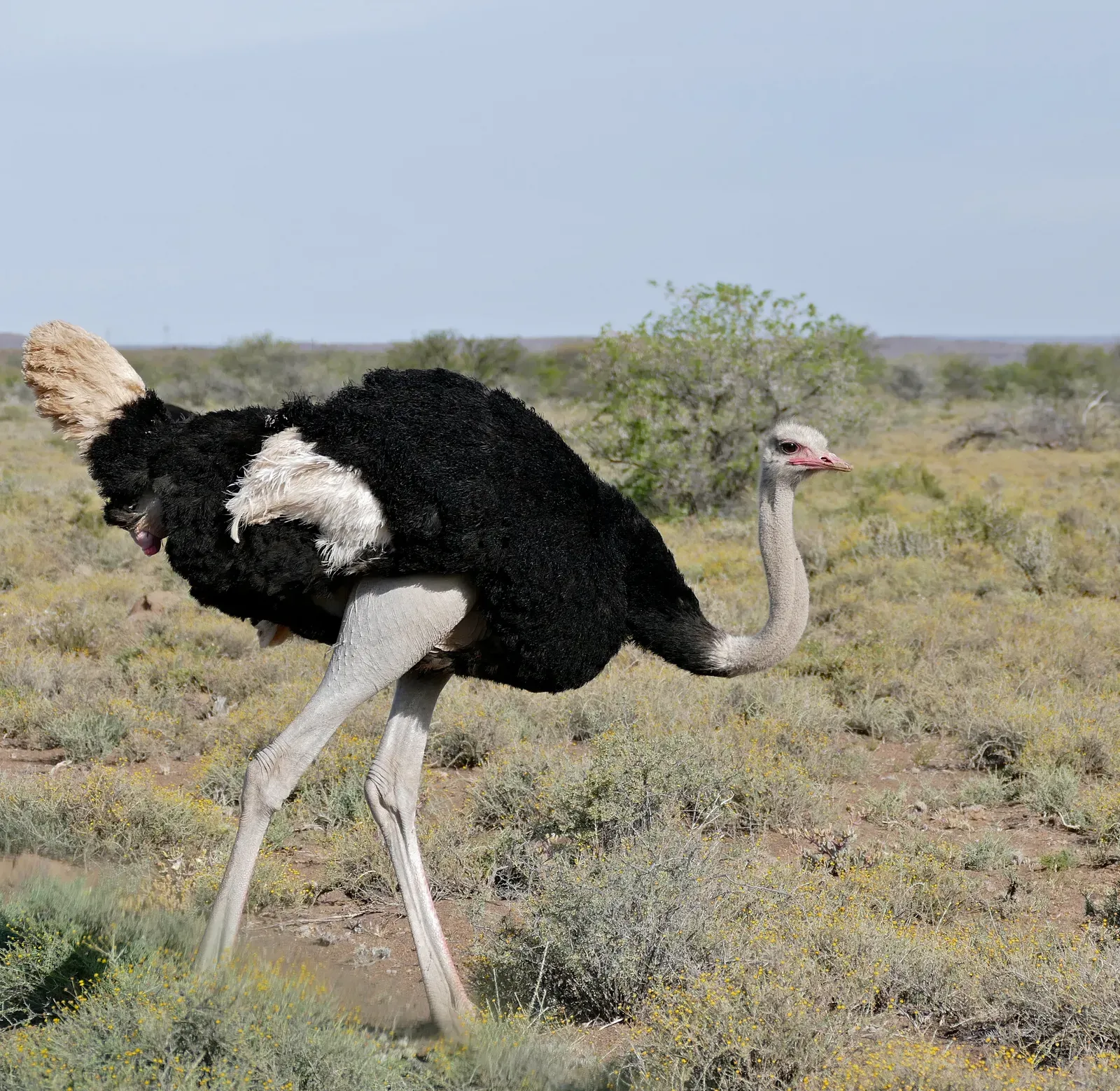
The common ostrich is the biggest bird in the whole world. It is so tall that a grown-up ostrich can look right over the top of your head, and it is much too big and heavy to fly. Instead of flying, the ostrich walks and runs on two long, strong legs. It lives on the wide, dry grasslands of Africa.
An ostrich has a long bare neck, a small head, and very big eyes that help it spot things far away. Each foot has just two toes, while most birds have four, and those special feet help the ostrich run. Grown-up males have black feathers with white wing tips, while females and young ostriches are soft grey and brown.
Ostriches mostly eat plants, such as seeds, grasses, fruit, and flowers, and sometimes they snap up an insect too. They have no teeth, so they swallow little stones that sit in their tummy and help mash up their food. Ostriches can also go for several days without a drink of water.
Ostriches like to live together in groups and often wander near other grazing animals like zebras and antelopes. When it is time to raise chicks, an ostrich scrapes a shallow nest right into the ground and lays big, shiny eggs there. An ostrich egg is the biggest egg of any bird alive today. The parents take turns keeping the eggs safe, with the father watching at night and the mothers in the daytime.
There is a funny old story that ostriches bury their heads in the sand, but that is not really true. When an ostrich wants to hide, it lies flat on the ground and stretches its neck out low, and from far away it can look as if its head has disappeared. There are still many ostriches living in the wild, and people work to look after the open lands where they roam.
My home
Savanna, grassland, dry scrubland
Where I live
Africa
What I eat
Seeds, grass, plants, fruit, flowers, insects
How heavy I am
90–130 kg
The ostrich is the tallest and heaviest bird alive today, and a big male can stand taller than a grown-up reaching up high.
An ostrich has only two toes on each foot, while most birds have four, and this helps it run.
Ostriches have no teeth, so they swallow little stones that stay in their tummy and help grind up their food.
Every common ostrich can feel happy, scared and loved — just like you.
Looking after my friends
Doing wellThere are lots of these animals in the wild right now. That is good news!
You can help by learning their names, keeping wild places clean, and telling someone why this animal matters.
Where this came from
- Struthio camelus (Common Ostrich) — Red List Assessment — IUCN Red List of Threatened Species
- Struthio camelus (ostrich) — Animal Diversity Web, University of Michigan Museum of Zoology
- Common ostrich — Wikipedia
- Common Ostrich Struthio camelus — Species Factsheet — BirdLife International