 Real photograph
 Common earthworm
Lumbricus terrestris
say it lum-BRIK-us ter-RES-tris
Why we love them
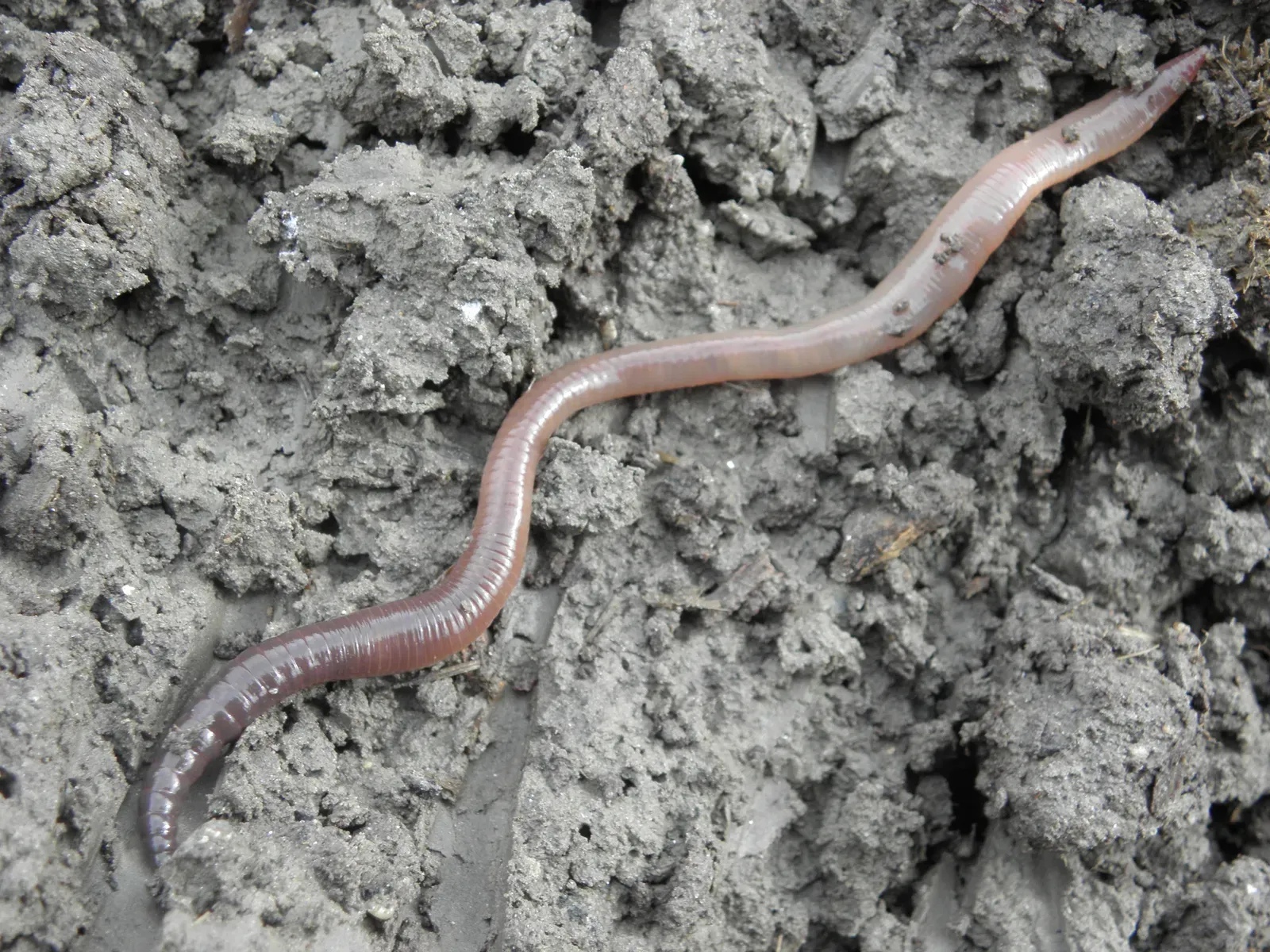
The common earthworm is a long, soft, pink animal that lives quietly under our feet. Its body is made of many little rings, and though it has no bones, no legs, and no eyes, it is one of the most helpful creatures in the garden. People also call it the lob worm or the nightcrawler.
An earthworm spends most of its life underground, gently pushing through the soil. It grips the sides of its tunnel with tiny bristles and stretches and squeezes to move along. Gardeners notice it most after rain, when worms may appear near the surface.
The earthworm feeds on decaying plant matter and other organic bits in the soil. As the food passes through its body, it comes out as rich crumbs called casts that can help make soil better for plants to grow.
All that digging does something wonderful in managed soils. The worm’s tunnels let air and rain soak deeper into the ground, and they mix the soil so roots can spread. Farmers and gardeners often treat healthy earthworm numbers as a sign of good soil care.
So the next time you see an earthworm after the rain, you can say hello to a quiet soil helper. Kind soil practices — less unnecessary digging and careful use of chemicals — help earthworms keep doing their important underground work.
My home
Soil, garden, grassland, woodland
Where I live
Europe, North America
What I eat
Dead leaves, decaying plant matter, soil
How long I am
0.09–0.3 m
It digs tunnels that let air and water reach deep into the soil.
At night it pulls fallen leaves down into its burrow to eat.
Every common earthworm can feel happy, scared and loved — just like you.
Looking after my friends
Not checked yetNo one has counted them carefully yet.
You can help by learning their names, keeping wild places clean, and telling someone why this animal matters.
Where this came from
- Earthworms — Natural History Museum — Natural History Museum, London
- Soil Tech Note 10A — Earthworms — USDA Natural Resources Conservation Service
- Lumbricus terrestris — Animal Diversity Web — University of Michigan Museum of Zoology