 Real photograph
 Bath sponge
Spongia officinalis
say it BATH SPUNJ
Why we love them
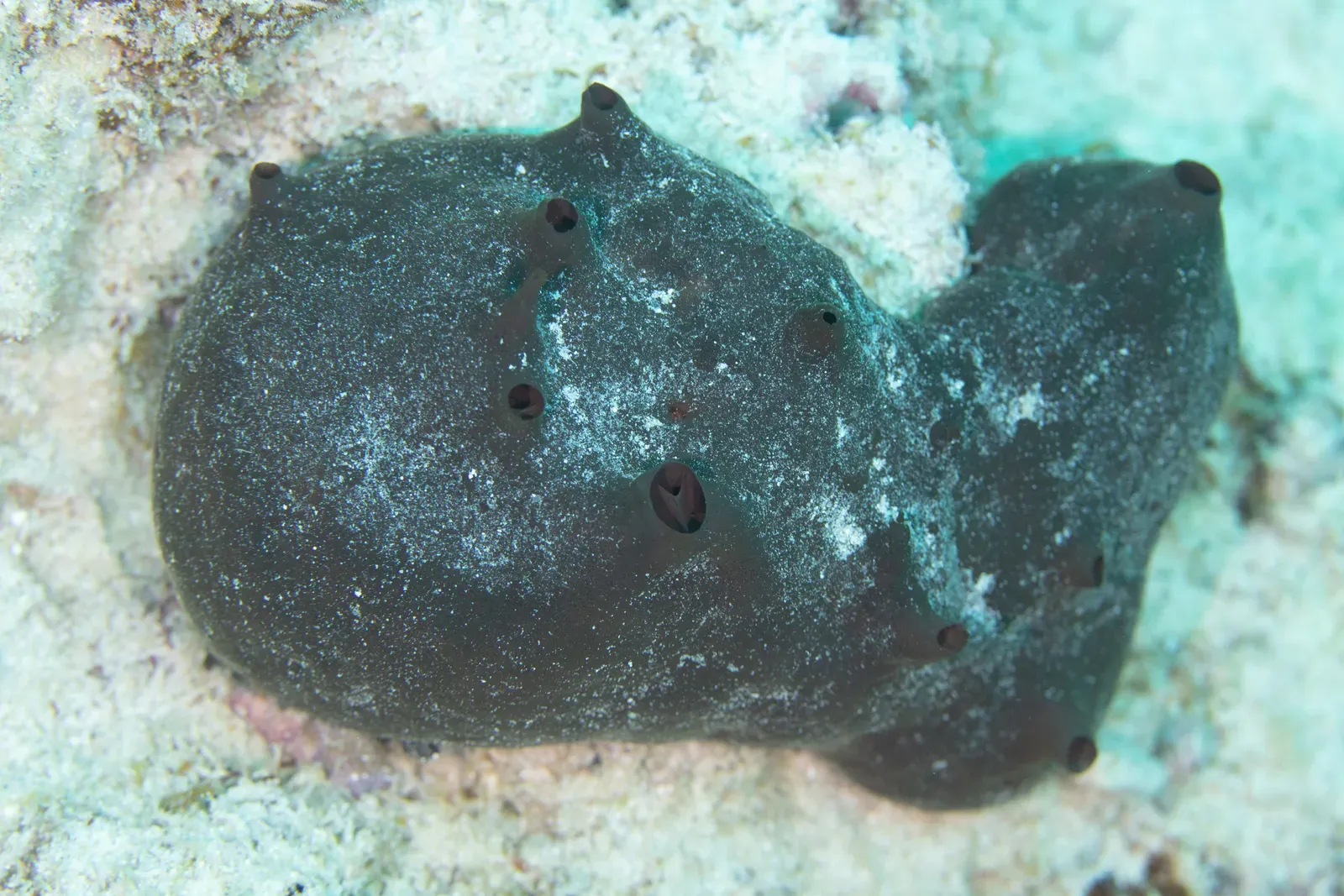
The bath sponge is one of the simplest animals in the whole sea. It has no brain, no heart, and no bones — not even a face! It looks like a soft, lumpy blob resting on the rocky seabed of the warm Mediterranean Sea. If you gave it a gentle squeeze underwater, it would feel springy and full of tiny holes.
So how does such a simple animal live? A sponge is a champion filter-feeder. Its whole body is covered in little holes, and it pulls seawater in through them all day long. As the water flows through, the sponge catches tiny specks of food and bits of floating bacteria, then pushes the clean water back out. It never has to chase a meal.
Bath sponges live stuck to rocks and the seabed, from shallow sunny spots down to water deeper than a swimming pool is long. They stay in one place their whole lives, gently swaying as the currents wash past. Grown-ups can be as big as a football, growing in rounded, lumpy shapes with a rust-coloured surprise hidden inside.
People have loved natural sponges for a very long time. Long ago in ancient Greece, and then all across Europe, people used soft bath sponges for washing themselves and cleaning their homes. That is exactly how the bath sponge got its name. The very same kind of sponge has been helping people stay clean for thousands of years.
Sponges are among the oldest and simplest animals on Earth, and they are surprisingly tough. If a sponge breaks into pieces, the pieces can often grow into brand-new sponges. People can use this ability to grow sponge fragments on underwater farms, a method that may reduce some harvesting pressure on wild sponges. Protecting healthy sponge grounds still matters, especially as warming water and disease can cause local die-offs.
My home
Rocky seabed, coastal waters, sea cave
Where I live
Europe, Atlantic Ocean
What I eat
Plankton, bacteria, tiny floating particles
How long I am
0.35 m
A bath sponge is one of the simplest animals in the sea — it has no brain, no heart, and no bones, yet it lives by pulling seawater through its body to filter out tiny bits of food.
People have used soft natural sponges for washing since ancient Greece, thousands of years ago, and that is exactly how the bath sponge got its name.
Sponges are among the oldest and simplest animals on Earth, and if one breaks into pieces, the pieces can often grow into brand-new sponges.
Every bath sponge can feel happy, scared and loved — just like you.
Looking after my friends
Not checked yetNo one has counted them carefully yet.
You can help by learning their names, keeping wild places clean, and telling someone why this animal matters.
Where this came from
- Spongia officinalis — Red List status — IUCN Red List of Threatened Species
- Spongia officinalis Linnaeus, 1759 — WoRMS — World Register of Marine Species
- Spongia officinalis — Wikipedia