 Real photograph
 Atlantic blue crab
Callinectes sapidus
say it at-LAN-tik BLOO krab
Why we love them
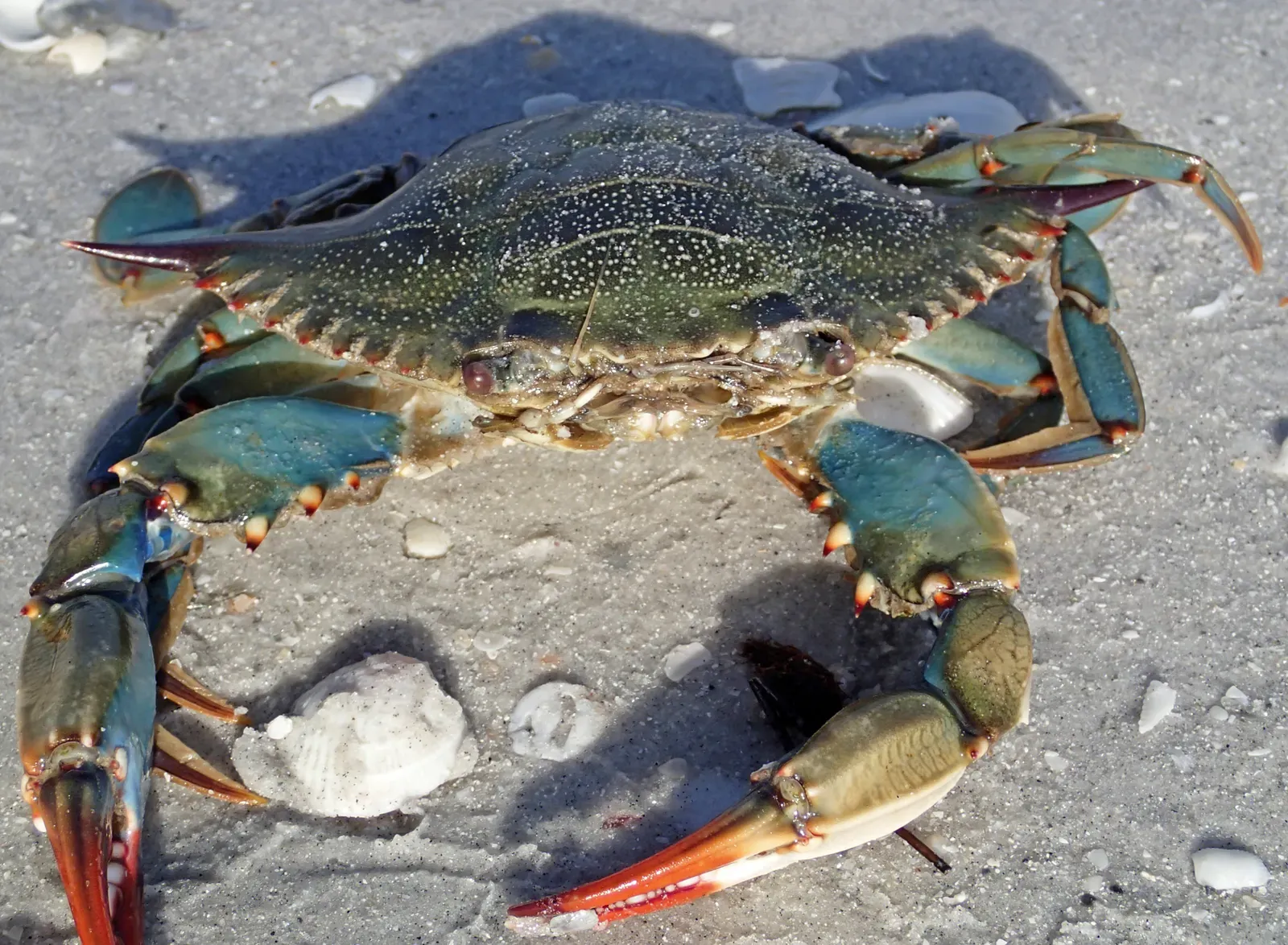
The Atlantic blue crab is a beautiful swimming crab from the western Atlantic Ocean. Its shell is a bluish olive-green, but its claws shine bright blue, which gives the crab its name. Grown-up females wear pretty red tips on their claws too. Blue crabs live in warm bays, river mouths and shallow coastal waters, in the places where the salty sea and fresh rivers gently mix together.
The blue crab has a clever trick that many crabs cannot do — it can swim. Its back pair of legs are flattened into wide paddles that whirl round like little oars. With them, the crab can dart sideways through the water as well as walk along the seabed. This makes the blue crab a fast and graceful mover in its watery home, gliding wherever it likes.
Those bright claws are useful tools. A blue crab uses them to gather food and to keep itself safe. It is an omnivore, eating clams, oysters, mussels, small fish and bits of plants. It even helps clean the sea by nibbling scraps of food that have drifted down to the bottom. Careful crab-watchers know to give a nipping claw plenty of room and let the crab go about its day.
A blue crab can grow a shell up to about 23 centimetres wide — as wide as a big dinner plate. Like all crabs, it wears its skeleton on the outside, so to get bigger it wriggles out of its old shell and grows a fresh, larger one. Blue crabs are found all along the coast from North America down to South America, and right the way around the Gulf of Mexico.
Most blue crabs live for around three years. People love to catch them for food, so fishers and scientists work together to look after them. They set gentle rules about which crabs may be kept, and they return egg-carrying mothers to the water. This care helps keep plenty of blue crabs swimming and paddling happily in the bays they call home.
My home
Estuary, bay, seagrass bed, coastal waters
Where I live
North America, South America, Atlantic Ocean
What I eat
Clams, oysters, mussels, small fish, crustaceans, plants
How long I am
0.23 m
How long I live
3 years
The Atlantic blue crab has bright blue claws, and grown-up females have pretty red tips on theirs.
Its back pair of legs are flattened into wide paddles, so a blue crab can swim through the water as well as walk along the seabed.
Blue crabs are omnivores that eat clams, oysters, mussels, small fish and bits of plants, and they usually live for around three years.
Every atlantic blue crab can feel happy, scared and loved — just like you.
Looking after my friends
Not checked yetNo one has counted them carefully yet.
You can help by learning their names, keeping wild places clean, and telling someone why this animal matters.
Where this came from
- Callinectes sapidus — IUCN Red List status check — IUCN Red List of Threatened Species
- Blue crab (Callinectes sapidus) — Chesapeake Bay Field Guide — Chesapeake Bay Program
- Callinectes sapidus — Wikipedia
- Blue Crab — Species Directory — NOAA Fisheries
- Blue Crabs — What's at Risk — Chesapeake Bay Program