 ← All animals
 bird · Pygoscelis adeliae
Adélie penguin
Gallery
7 photos Real photograph 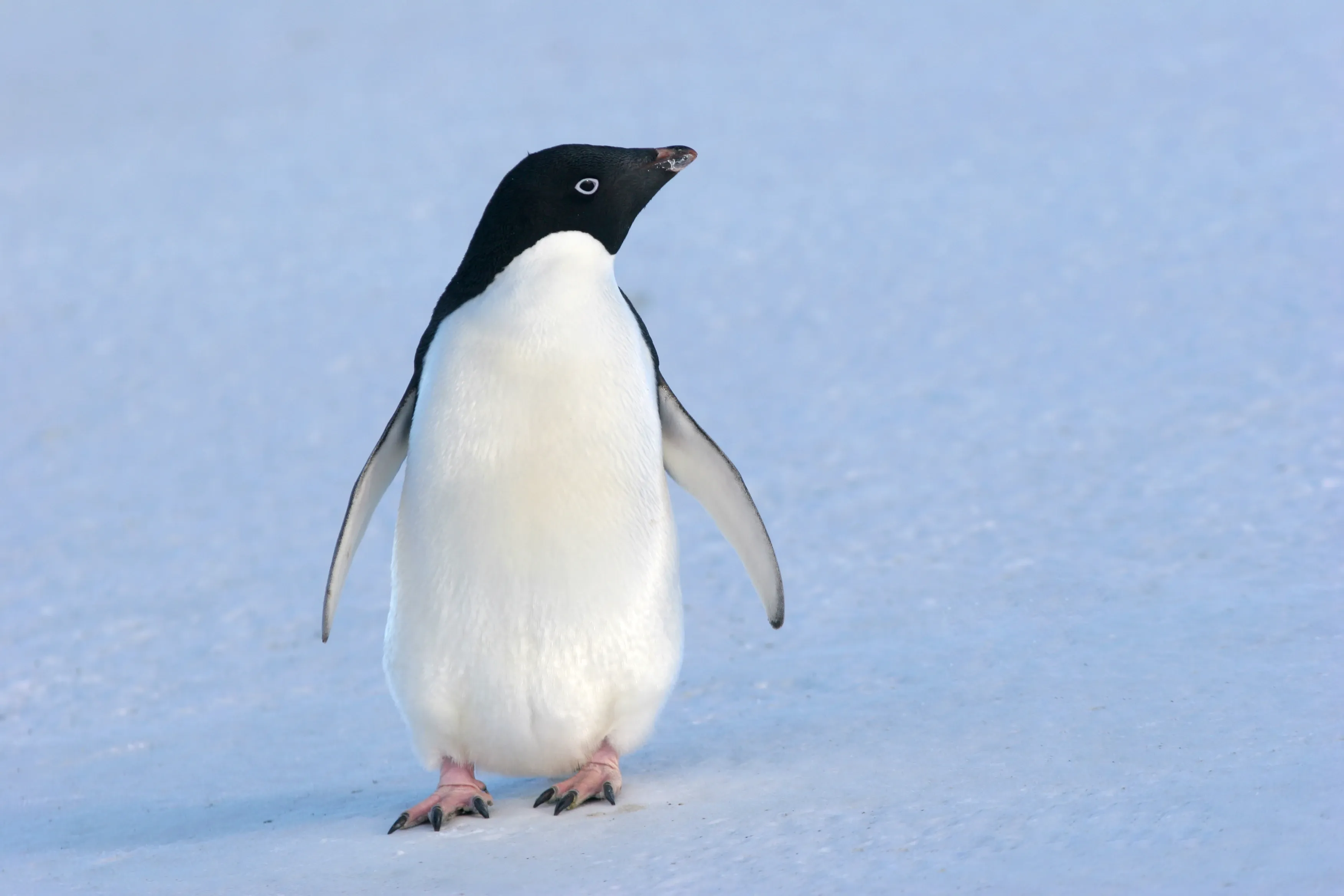 Real photograph
  Real photograph
  Real photograph
  Real photograph
  Real photograph
  Real photograph
 Why we love them
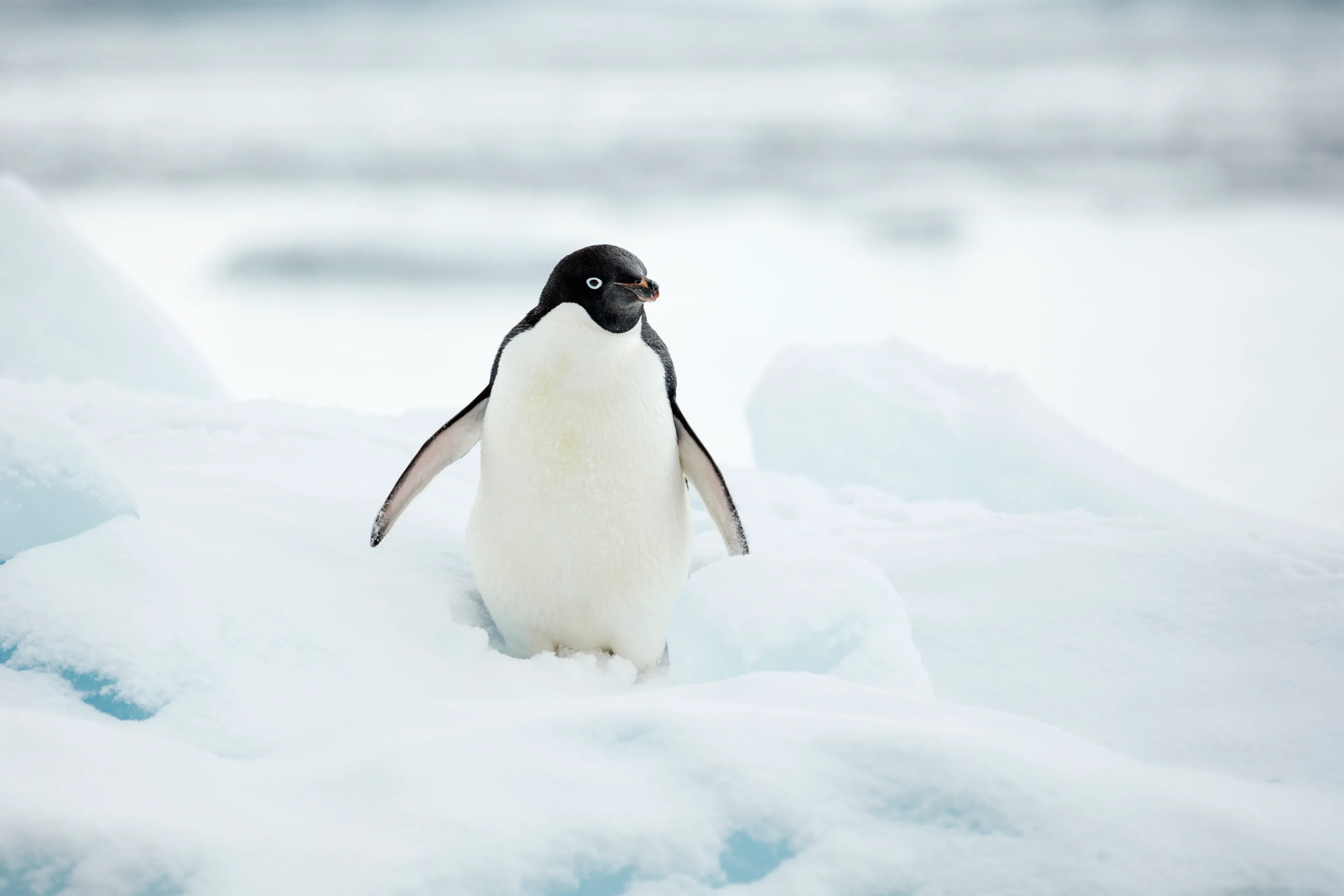
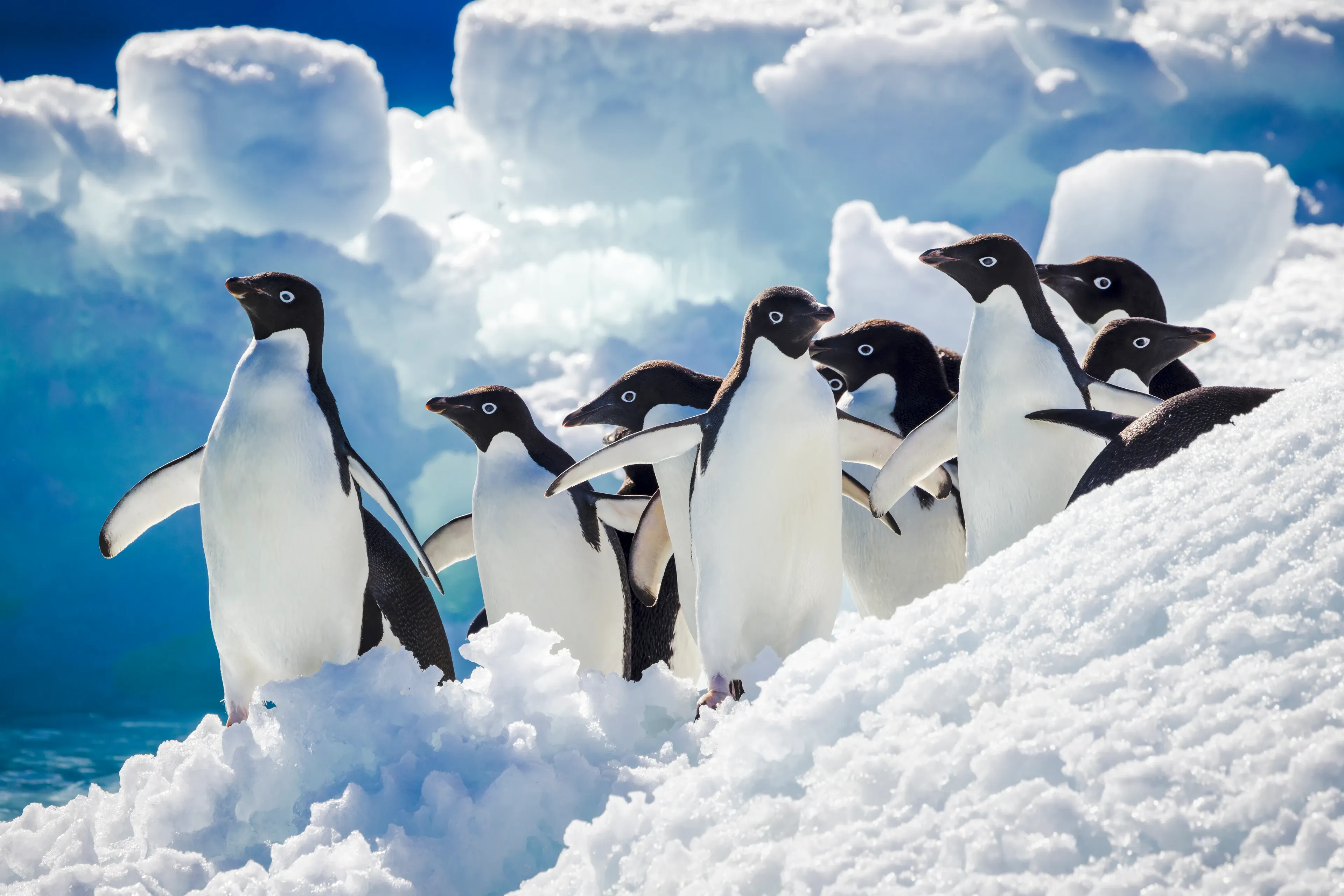
The Adélie penguin is a small, bold Antarctic penguin with a black head, white belly and a neat white ring around each eye. It looks as if it is wearing tiny spectacles. Adélie penguins breed on ice-free rocky coasts around Antarctica and spend much of the rest of the year out on the pack ice and open Southern Ocean.
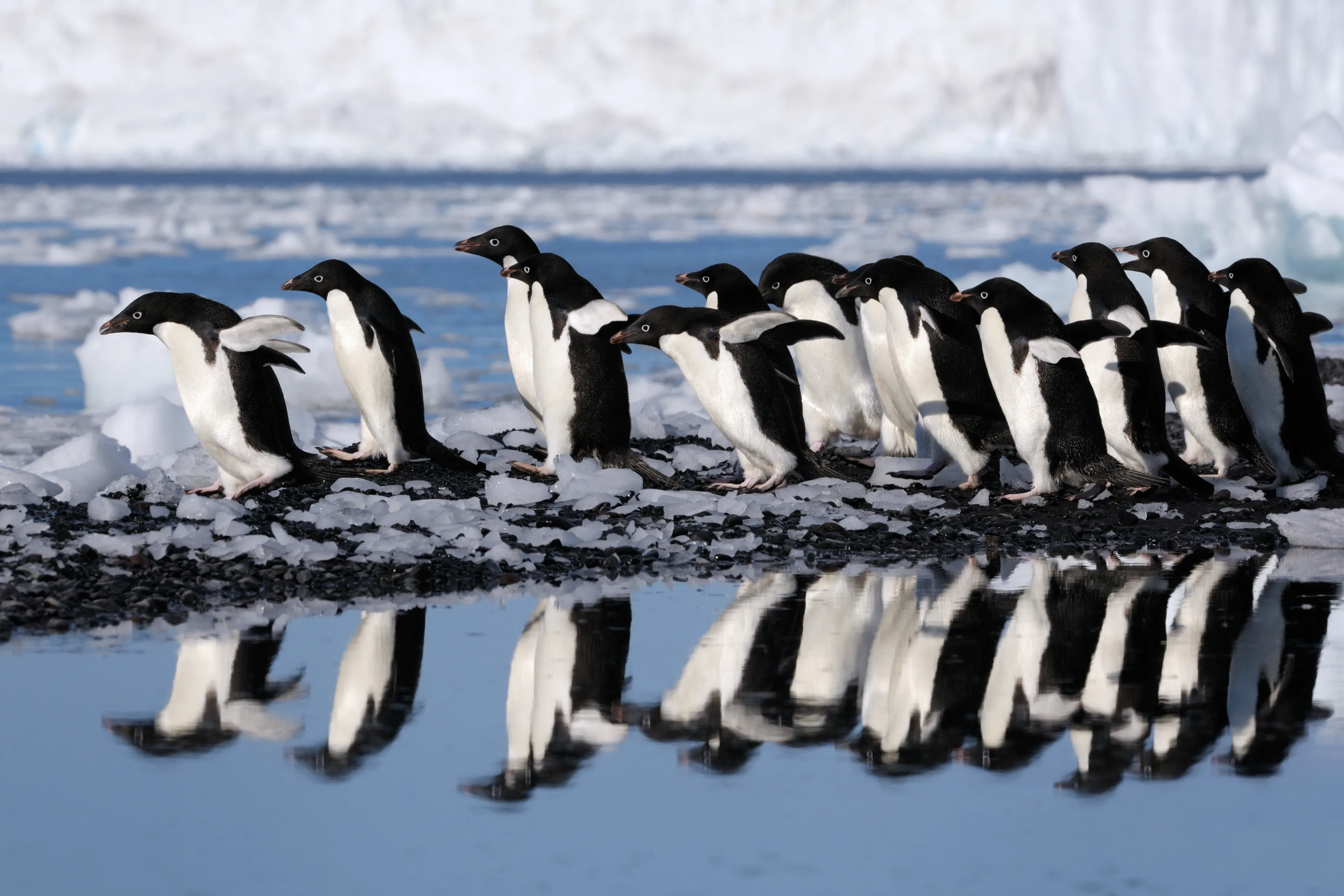
In spring and summer they gather in busy colonies and usually lay two eggs. Both parents take turns keeping the eggs warm and later feeding the chicks. When the chicks are older, they huddle together in groups called crèches while their parents dive for food.
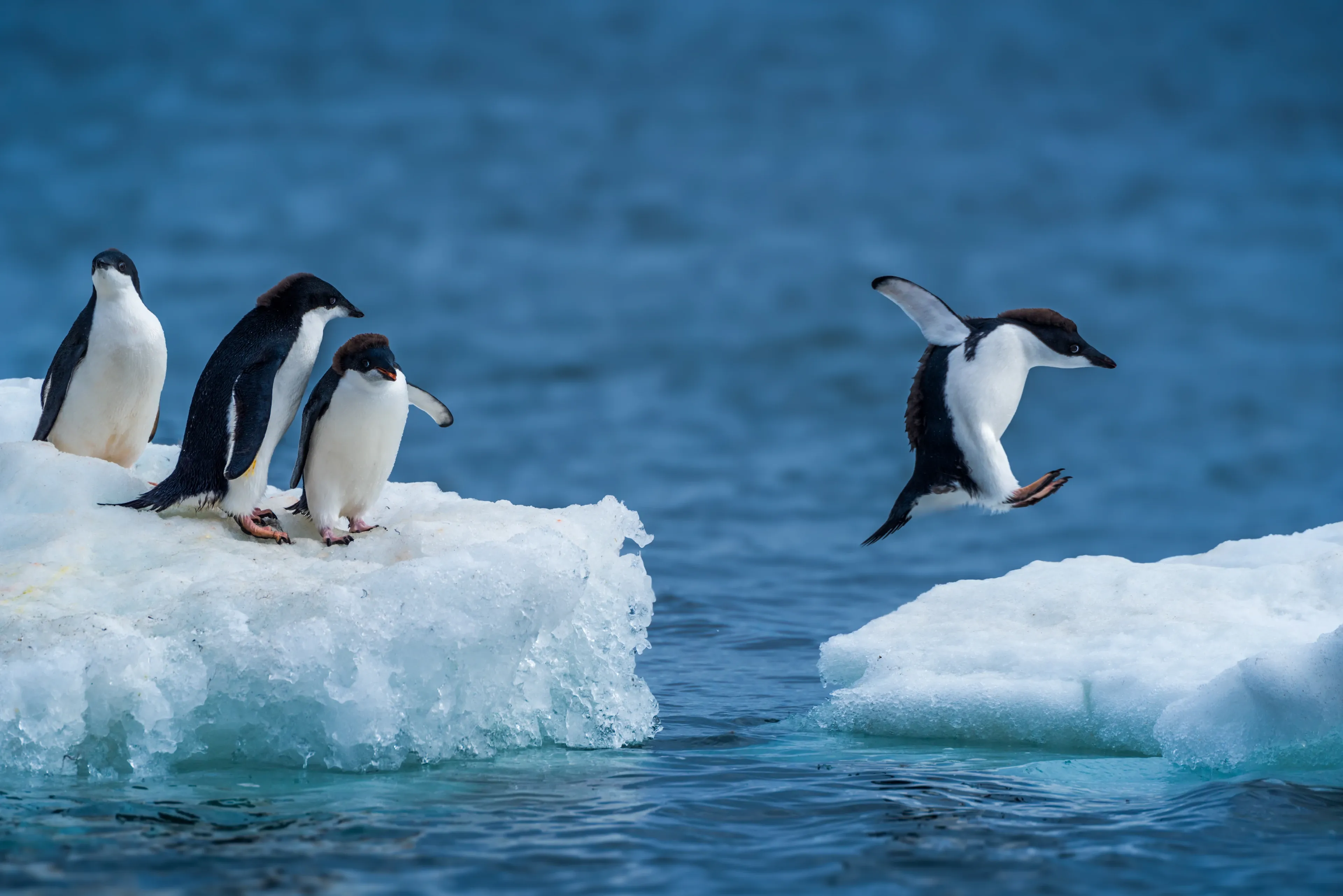
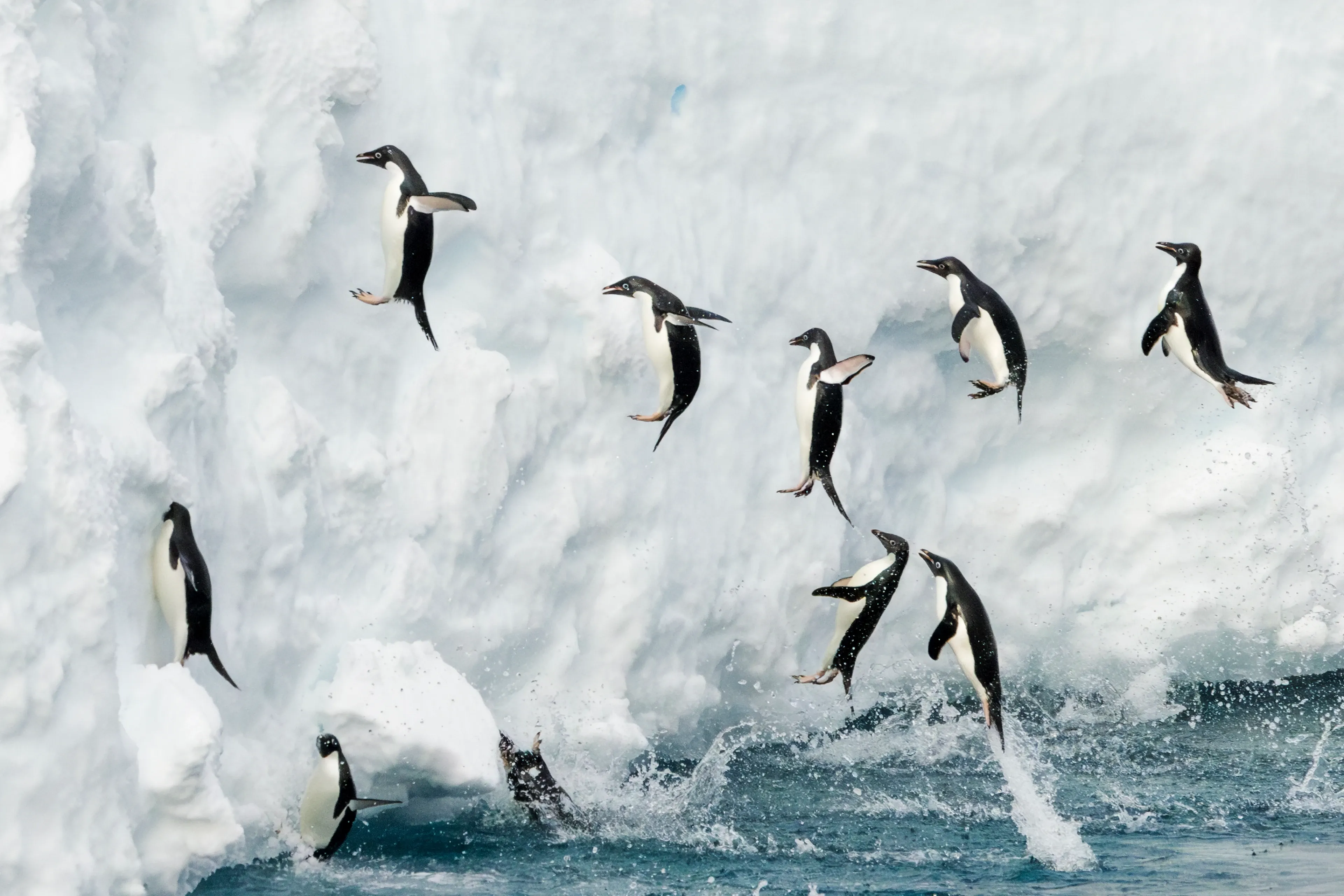
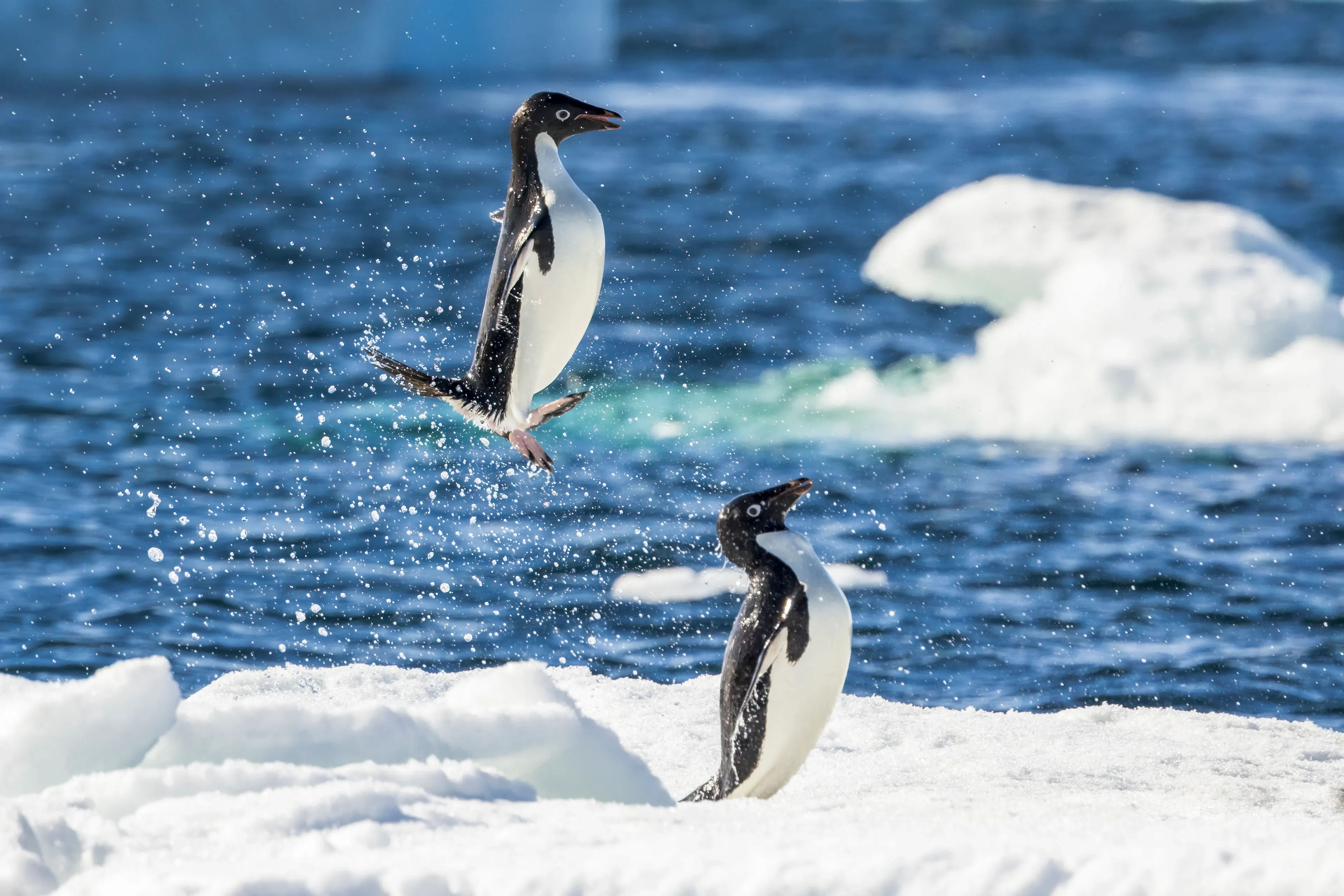
Adélie penguins are skilled swimmers. They chase Antarctic krill, fish such as Antarctic silverfish, and other small ocean animals. They can dive deeper than many people expect — sometimes down to about 175 metres — but they usually hunt closer to the surface.
Scientists watch Adélie penguins carefully because their food and nesting success are linked to sea ice and ocean conditions. Across the whole Antarctic, their numbers are still large and the IUCN lists them as Least Concern. Even so, some colonies have become smaller while others have grown, so each place tells part of a bigger story about a changing polar ocean.
My home
Coastal antarctica, rocky shore, pack ice, southern ocean
Where I live
Antarctica, Southern Ocean
What I eat
Antarctic krill, fish, Antarctic silverfish, amphipods, squid
How heavy I am
3.6–5 kg
A white ring around each eye makes an Adélie penguin easy to recognise.
Parents usually take turns warming two eggs and bringing back food for their chicks.
Young Adélie penguins gather in crèches while both parents go to sea to hunt.
Every adélie penguin can feel happy, scared and loved — just like you.
Looking after my friends
How many are there?
At least 10 million mature Adélie penguins were estimated worldwide in 2020.
BirdLife/IUCN summarise the global total as more than 10 million mature individuals. The global trend is increasing, but some Antarctic Peninsula colonies have declined while parts of East Antarctica have increased.
The population in the world was increasing in 2020.
How are they doing?
Lower extinction riskThis species has a lower global extinction risk right now. Local populations can still grow or shrink.
You can help by learning their names, keeping wild places clean, and telling someone why this animal matters.
Where this came from
- Pygoscelis adeliae (Adélie Penguin) — Red List Assessment — IUCN Red List of Threatened Species
- Adelie Penguin Pygoscelis adeliae — Species Factsheet — BirdLife International (IUCN Red List Authority for birds)
- Adélie penguin — Australian Antarctic Program, Department of Climate Change, Energy, the Environment and Water
- Pygoscelis adeliae (Adelie penguin) — Animal Diversity Web, University of Michigan Museum of Zoology
- Adélie Penguin — British Antarctic Survey